

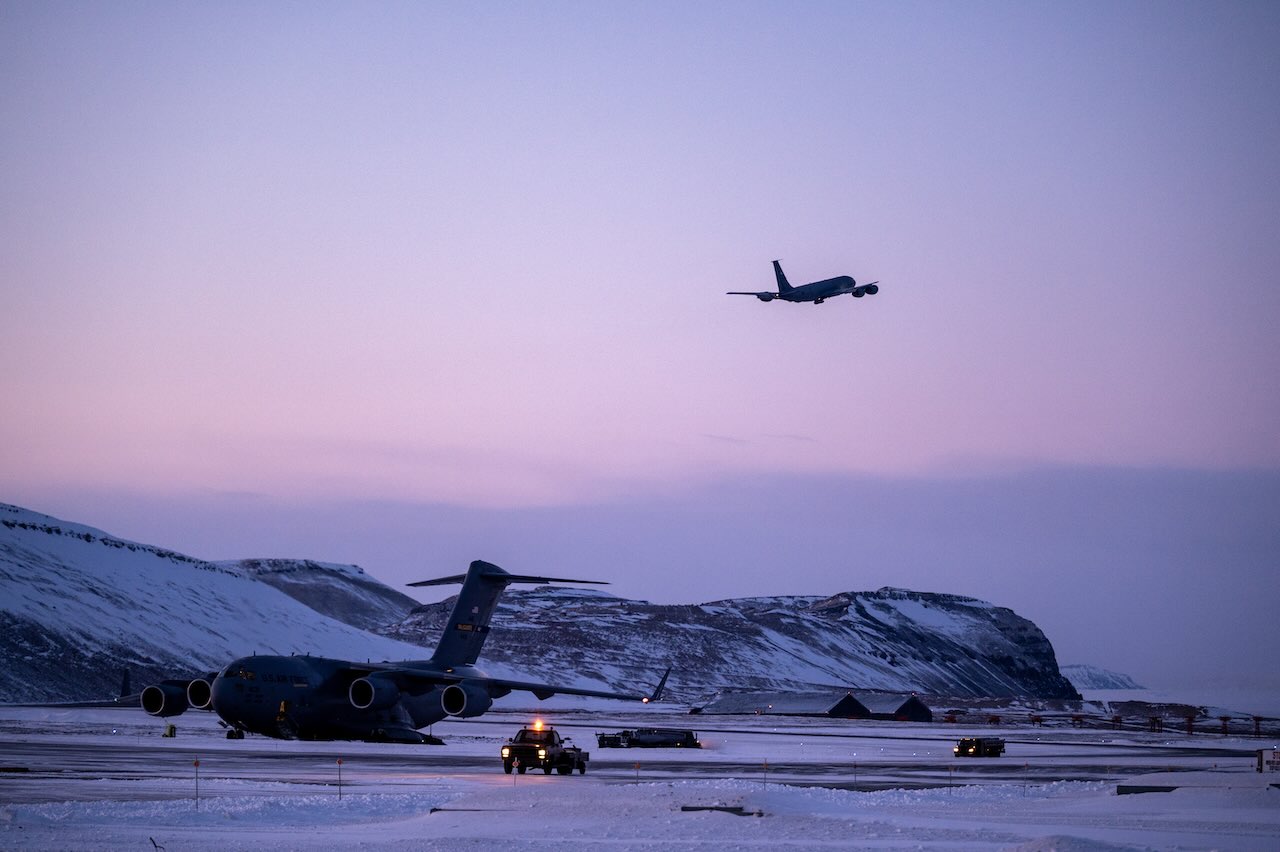
【軍傳媒/國際軍事新聞】隨著美伊戰爭可能爆發,國際輿論的關注焦點逐漸轉移,先前圍繞格陵蘭島的爭議也暫時淡出新聞版面。然而,這並不代表格陵蘭的戰略重要性有所下降。相反地,川普政府多次明確表態希望掌握格陵蘭,正凸顯這座冰封島嶼在大國競逐格局中的獨特軍事價值。
對美國而言,格陵蘭的核心意義在於「看得更早、聽得更遠」。其地理位置使美軍能提早偵知來自北極方向的飛彈、航空器或其他異常軍事行動,為北美本土防禦爭取更充裕的反應時間。同時,格陵蘭位處北冰洋通往北大西洋的要衝,極適合用於監視並制衡敵方潛艦、水面艦艇與遠程航空兵力。在戰時情境下,格陵蘭往往會率先成為情報蒐集、預警、反潛與空防行動的重點區域,等同於扼守高緯度進入大西洋的重要門戶。
相較之下,位於西太平洋的台灣,則扮演著截然不同的戰略角色。台灣本身就是南海通往西太平洋的重要海空通道之一,台灣海峽更是全球最繁忙的商業航線之一,對東亞盟友與區域經貿體系具有高度牽動性,包括日本與南韓的對外貿易都高度依賴此一航道。也因此,一旦美中之間因台海問題爆發衝突,戰事極可能迅速轉化為「海空封鎖與反封鎖、制空制海權爭奪、兩棲行動與飛彈打擊」等高強度、正面對抗的作戰型態。

若將視角拉高至美、中、俄同時對峙的情境,格陵蘭周邊反而更可能成為第一時間升溫的前線之一。然而,這種「前線」的樣貌,與台海戰場存在本質差異。首先必須認清一個現實前提:格陵蘭地廣人稀,基礎建設有限,無論在港口、道路或補給能力上,都遠不如歐洲本土或印太地區的大型軍事基地。這使得各方對格陵蘭的軍事運用,更傾向於以少量但高價值的能力撐起戰略效果,而非在島嶼周邊集結大量兵力進行決戰。
在衝突升高的情況下,最先出現變化的,往往是空中活動的密度。北極與北大西洋方向的偵巡與攔截行動,通常會明顯增加。美國與北約可能強化自格陵蘭、冰島與挪威方向出發的長時間空中巡邏與待命攔截,以防止俄方利用轟炸機或巡弋飛彈的飛行路線測試北約的反應底線。相對地,俄羅斯與中國也可能透過聯合遠程航空巡航,傳達戰略威懾訊號。這類行動在危機時期往往變得更頻繁,導致雙方攔截機起飛次數增加,空中加油機與偵察、電子蒐集機長時間伴隨飛行,形成高度緊繃、但仍刻意避免直接衝突的空中對峙狀態。
相較於空中的公開較勁,北大西洋真正敏感的領域其實在水下。一旦美俄,甚至加上中國,同時進入對峙狀態,水面艦隊的正面交鋒反而不是優先考量,取而代之的是圍繞潛艦活動的暗中攻防。俄羅斯北方艦隊的核潛艦外出行動,將迫使北約把反潛監控列為高度優先事項,並長時間維持高強度監視。同時,海底通訊電纜等關鍵設施也可能成為灰色地帶行動的目標,透過破壞、干擾或佈放不明裝置製造不確定性。這類行動往往難以立即被證實,因此特別適合衝突初期的模糊階段,使名義上的演訓與實質上的封控逐漸常態化,也提高水下跟蹤與反跟蹤行動擦槍走火的風險。

在這樣的脈絡下,全面登陸或佔領格陵蘭,反而並非最合理的選項。此舉不僅成本極高,也會迅速升高衝突門檻,甚至直接觸發北約的集體防禦機制,反而對發動者不利。更符合大國競逐邏輯的做法,是設法讓島上的軍事設施無法正常運作,達到「失去功能即可」的效果。這可能包括針對通訊、衛星鏈路、網路與電子系統的干擾與攻擊,削弱預警與太空監視能力;也可能透過各種手段破壞機場、燃料補給與關鍵交通設施,使增援與維修變得更慢、更不穩定。
俄羅斯對北極的重視,進一步放大了這種風險。對莫斯科而言,北極不只是軍事方向,也是航道與資源外運的關鍵。隨著氣候變遷導致冰層變薄,俄方持續強化破冰能力與北極運輸路線,並配合北方艦隊與基地網的運作,試圖將高緯度地區轉化為自身的戰略優勢場域,迫使北約在氣候、距離與成本上承受更大壓力。
與此形成鮮明對比的是台海衝突的樣貌。台海一旦進入衝突階段,不論是飛彈試射、航道封鎖、空域管制,或是大規模軍機與艦艇進出,都會立刻引發全球媒體高度關注,並迅速衝擊航運與金融市場。無論採取封鎖、奪島或全面作戰的方式,國際社會都很快被迫表態或選邊站隊。相較之下,格陵蘭周邊的對抗,由於地處偏遠且非全球主要經濟航道,其衝突更可能以長時間試探與累積的方式進行,一般社會不易察覺戰爭已在進行。
在戰術層面上,台海衝突的關鍵在於爭奪制空與制海權,這將直接決定誰能在空中飛行、誰能在海上自由航行,因此極可能出現大規模空戰與海戰,屬於對物理空間的直接爭奪。而格陵蘭周邊的衝突,則更可能圍繞預警、通訊、太空相關能力的干擾,以及水下領域的長期較勁,是一種以功能削弱為目的、可能延續數月甚至數年的隱性對抗,更像是一場在暗處進行的耐力賽。

The Fundamental Differences Between Conflict Dynamics in Greenland and the Taiwan Strait
As the possibility of a U.S.–Iran conflict grows, international attention has shifted, and disputes over Greenland have faded from headlines. This does not mean Greenland’s strategic importance has declined. On the contrary, repeated statements by the Trump administration expressing interest in the island highlight its enduring military value in great-power competition.
For the United States, Greenland’s importance lies in the ability to “see earlier and hear farther.” Its location enables early detection of missiles, aircraft, or other military activity approaching from the Arctic, providing additional reaction time for North American defense. Greenland also sits at a key gateway between the Arctic Ocean and the North Atlantic, making it well suited for monitoring and countering adversary submarines, surface vessels, and long-range aviation. In wartime, it would likely become a focal point for intelligence, early warning, anti-submarine warfare, and air defense—effectively guarding a high-latitude entrance to the Atlantic.
Taiwan, by contrast, plays a fundamentally different role in the western Pacific. It lies along a major air and sea corridor linking the South China Sea with the Pacific, while the Taiwan Strait is one of the world’s busiest commercial shipping lanes. This gives Taiwan immense strategic weight for East Asian allies and regional trade, particularly for Japan and South Korea. As a result, a U.S.–China conflict over Taiwan would likely escalate rapidly into high-intensity, direct confrontation involving blockades and counter-blockades, air and sea control battles, amphibious operations, and missile strikes.
In a broader scenario of simultaneous U.S., Chinese, and Russian confrontation, Greenland could become an early area of tension—but in a very different way from the Taiwan Strait. Greenland is vast, sparsely populated, and poorly developed, with limited ports, transport networks, and logistics. Military use of the island would therefore emphasize a small number of high-value capabilities rather than massed forces or decisive ground battles.
As tensions rise, changes would first be visible in the air. Surveillance and interception missions over the Arctic and North Atlantic would increase, with the United States and NATO reinforcing long-duration patrols from Greenland, Iceland, and Norway. Russia—and possibly China—might respond with joint long-range aviation patrols to signal deterrence. Such activity would create a tense but carefully managed aerial standoff designed to avoid direct clashes.
The most sensitive arena, however, lies underwater. In a U.S.–Russia confrontation, surface fleet battles would be secondary to covert submarine operations. Russian Northern Fleet deployments would push NATO to prioritize anti-submarine monitoring, while undersea infrastructure such as communication cables could become targets of gray-zone actions. These ambiguous activities are well suited to early crisis phases, blurring the line between exercises and real confrontation and increasing the risk of accidents beneath the surface.
Within this context, a full occupation of Greenland is unlikely. The costs would be high and could quickly trigger NATO’s collective defense mechanisms. A more plausible approach would be functional denial—disrupting communications, satellite links, networks, and airfields to degrade early warning and reinforcement without seizing territory.
Russia’s focus on the Arctic further intensifies these dynamics. For Moscow, the Arctic is both a military axis and a vital route for shipping and resource exports. As ice recedes, Russia has strengthened icebreaking capacity and northern transport routes, seeking to turn high latitudes into a strategic advantage and impose greater costs on NATO.
This contrasts sharply with a Taiwan Strait conflict. Any escalation there—missile tests, blockades, or major force movements—would immediately draw global attention and disrupt shipping and financial markets, forcing international actors to take positions quickly. Around Greenland, by contrast, confrontation is more likely to unfold gradually and quietly, far from major economic arteries.
At the tactical level, Taiwan Strait conflict centers on direct contests for air and sea control, likely producing large-scale air and naval battles. Around Greenland, conflict would focus on degrading early warning, communications, space-related capabilities, and sustained undersea competition—an opaque, endurance-based struggle that could last months or even years.