

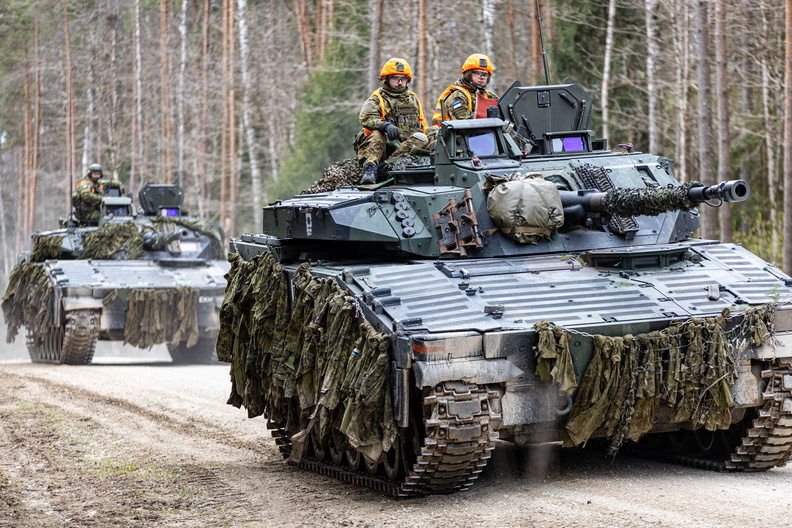
【軍傳媒/國際軍事新聞】2026年4月,波羅的海三小國中的愛沙尼亞政府,決定暫停約5億歐元的新型步兵戰鬥車/裝甲車採購案,原本的採購計劃預訂新車約在 2029~2030年間交付,愛沙尼亞政府暫停此筆採購案後,決定資金將轉向增強防空、反無人機、無人系統與態勢感知能力。現有的CV90裝甲車隊不會立刻汰換,而是投入約1億歐元進行現代化升級。
不是放棄裝甲部隊,而是資源運用先後
俄烏戰爭的經驗,改變了歐洲小國陸戰投資的優先順序,烏克蘭戰場明白顯示,重型裝甲車輛若缺乏防空、反無人機、電子戰與偵蒐保護,很容易暴露在 FPV 無人機、巡飛彈、砲兵校射與精準打擊鏈之下,俄羅斯的龐大裝甲洪流與烏克蘭2023年的夏季反攻就是案例。對此愛沙尼亞國防部長Pevkur就明確表示:「重裝甲裝備的戰場效益正在下降,因此在有限的預算將做最急迫的投資,未來十年內不急於全面汰換現有的CV90裝甲車」。
除了預算的吃緊導致將先後順序重新調配,新裝甲車的採購案也面臨成本與交期風險。由於俄烏戰爭的消耗、美軍因為中東戰爭及川普政府的政策全面裁減駐歐軍隊,歐洲各國同步擴軍,裝甲車、砲彈、防空飛彈、感測器都在漲價,產能也被塞滿,目前處於有訂單但產能跟不上的狀態。愛沙尼亞若現在投入 5 億歐元買新車,最快2029~2030年才能到貨,對目前急迫的形勢幫助有限,也無法立即提升防禦能力,相比之下,目前俄烏戰爭中最大的威脅及需求,包括無人機、反無人機、防空雷達、短程攔截器與相關彈藥庫存等,生產較為容易且能更快形成戰力。
最後的原因其實就是原因是預算不足,無法全都要,只能有所取捨。愛沙尼亞 2026年國防預算將達約24億歐元、約佔GDP 5.4%,在北約國家中已經是非常高的比例;但正因為國家小,即便百分比高,總金額仍有限,在兵力、維保、訓練與基礎設施都要畫前的情況下,不可能同時大規模更新裝甲車、防空、砲兵、無人機與彈藥。根據官方資料,2026~2029 年國防預算中,37% 用於採購、25% 用於彈藥,代表愛沙尼亞參考烏克蘭砲彈短缺的經驗,正在把「可立即消耗、可快速補充、可形成嚇阻」的能力放在前面優先建立。

建立小國高密度拒止戰力
愛沙尼亞的目的不是削弱陸軍,而是把有限預算從固有裝甲平台轉為殺傷鏈中心,不是先買更貴的新履帶裝甲車輛,而是先補強能讓整個戰場透明化、並能有效阻止俄軍推進的能力,包括:
- 強化防空與反無人機。
對愛沙尼亞這種靠近俄羅斯邊境的小國來說,防空缺口比裝甲車老舊更危險。若開戰初期機場、指管中心、彈藥庫、部隊集結地遭無人機與飛彈壓制或摧毀,再新的步兵戰鬥車也難以有效機動。 - 擴大無人系統與偵蒐網。
無人機可提供低成本持續監視、目標獲得、火砲校準射擊與反裝甲打擊。對愛沙尼亞而言,同樣彩嘔一輛裝甲車的價格可以換來數百架反裝甲無人機,這比少量高價裝甲車更符合其「國土防衛、遲滯俄軍、等待北約增援」的需求。 - 保留現有 CV90,避免戰力斷層。
裝甲車輛在戰場上仍有其用處與價值,愛沙尼亞用約1億歐元升級現有 CV90,延長壽命、維持機械化步兵骨幹,再把剩餘資金投向更急迫的戰場空缺。
對周邊國家的影響
對波羅的海三小國另外的拉脫維亞、立陶宛來說,這將會強化其國家往「無人機、防空、邊境拒止、防禦工事」靠攏的趨勢。三國面對的共同問題是戰略縱深不足,不能假設能靠大規模裝甲反攻解決問題,在防禦作戰上大規模裝甲部隊能發揮的有限;更現實的做法是讓俄軍從邊境一開始就付出高成本,無法完全阻止但是能遲滯,如同烏克蘭的狀況,再等待北約集體防禦力量的救援。愛沙尼亞的決策,可能會促使拉脫維亞、立陶宛重新檢視裝甲採購與反無人機投資比例。
因為俄烏戰爭使得芬蘭、瑞典加入北約後,波羅的海與北歐防務已連成一體。愛沙尼亞轉向防空與無人機,可與北邊的芬蘭、瑞典原本的空中監視、海空封鎖、遠程火力軍力形成互補,這有助於把芬蘭灣與波羅的海東岸變成更完整的反介入區域。
由於愛沙尼亞不準備與俄軍打傳統裝甲數量競賽,而是要建立更分散、更便宜、更難一次摧毀的防禦網,這會增加俄軍在戰前壓制與首波突擊的難度,尤其是低空無人機、巡弋飛彈將在整合防空網下更容易被攔截,愛沙尼亞更有效的砲兵火力與無人機攻擊能力,將使俄軍的邊境突穿行動面臨更高風險。


對台灣的啟示
愛沙尼亞這次決策可視為一種小國防衛現實主義,而是承認未來戰場上的改變並預先準備,在有限資源下採取最能快速提升軍力的做法。台灣同樣是小國,同樣在軍費支出上無法與潛在對手相比,因此軍事採購能不能快速形成戰力?能不能大量部署與在外援斷絕下補充?能不能在敵方無人機、飛彈、電子戰與遠程火力下存活?舉例來說,全世界紛紛將M60戰車、M113裝甲車升級魔改,將老舊裝備重新延壽已取得最大效益,台灣反其道而行,國防部宣稱維護成本M60A3戰車與M113系列裝甲車維護成本高於採購新車,台灣經營維護相關車輛數十年,升級後的經濟效益評估高於採購M1A2T? 放眼現在市場的趨勢以及美軍裝備的維保價格,這說法很難說服,且新到的M1A2T已經有引擎送修的案例,國防部的說法讓人很難信服。
台灣過往受限於國際政治,對外軍事採購不易,因此在完全賣方市場下,一有機會趕緊採購新式戰車、新式自走砲,用以替換數十年未更新的裝備,台灣無法常採購新裝備,在原本裝備的更新升級上又守舊緩慢到近乎沒有。愛沙尼亞政府這次給的做法是一個相當務實的選擇,台灣朝野仍在為1.25兆的採購爭論不休,除了政治立場的阻撓,國防部也應反思,為何對台灣有幫助的採購,其推行預算會有如此大的阻力?掩蓋真相說假話的習慣長久以來造成的不信任一次反噬,面對問題、承認問題、解決問題永遠是最有效的進步之道。

No Longer Fixated on Heavy Armor: Estonia’s Procurement Shift Signals a New Model for Small-State Defense
In April 2026, Estonia decided to suspend a planned €500 million procurement of new infantry fighting vehicles (IFVs) and armored vehicles, originally scheduled for delivery between 2029 and 2030. The funds have instead been redirected toward strengthening air defense, counter-drone capabilities, unmanned systems, and situational awareness. At the same time, the existing CV90 fleet will undergo modernization upgrades worth approximately €100 million rather than being immediately replaced.
This move does not signal the abandonment of armored forces, but rather a reprioritization of defense investments. Lessons from the Russia–Ukraine war have shown that heavy armored vehicles, when lacking protection from air defense, counter-drone systems, electronic warfare, and reconnaissance, are highly vulnerable to FPV drones, cruise missiles, and precision strike networks. The traditional advantages of armored warfare are increasingly being eroded. Estonian Defense Minister Hanno Pevkur has emphasized that, under budget constraints, there is no urgent need to fully replace the CV90 fleet within the next decade.
Another key factor is the strain on the European defense industry. Due to the prolonged war in Ukraine and widespread rearmament across Europe, demand for armored vehicles, missiles, and ammunition has surged. Prices have risen, and production capacity is saturated. Even if Estonia were to proceed with procurement now, delivery would not occur until around 2030, offering little immediate benefit. In contrast, systems such as drones, air defense, and ammunition can be produced more quickly and deliver combat effectiveness in a shorter timeframe.
At its core, the decision reflects resource limitations. Estonia’s 2026 defense budget is projected at approximately €2.4 billion, or 5.4% of GDP—one of the highest ratios in NATO. However, the country’s small size means total resources remain limited. Between 2026 and 2029, 37% of the defense budget is allocated to procurement and 25% to ammunition, highlighting a focus on capabilities that can be rapidly consumed, replenished, and used to generate immediate deterrence.
Strategically, Estonia is shifting from a platform-centric approach to a kill-chain-centric model, aiming to build a high-density denial capability. This includes strengthening air defense and counter-drone systems to prevent early suppression of critical infrastructure, expanding unmanned systems and ISR networks to achieve low-cost surveillance and strike capabilities, and upgrading the CV90 fleet to maintain a mechanized infantry backbone while avoiding capability gaps.
Regionally, this decision is likely to influence other Baltic states such as Latvia and Lithuania, reinforcing a shift toward drones, air defense, and border denial strategies rather than reliance on large-scale armored counteroffensives. With Finland and Sweden now part of NATO, Estonia’s focus on air defense and unmanned systems will complement Nordic capabilities, contributing to a more integrated defensive network in the Baltic region.
For Russia, Estonia’s approach signals a move away from traditional armored competition toward a distributed and resilient defense network that is more difficult to neutralize in a single strike. This increases the risks and complexity of any potential offensive operation, particularly against integrated air defense systems and enhanced artillery and drone capabilities.
For Taiwan, Estonia’s decision offers a clear lesson in pragmatic small-state defense. With limited resources, defense procurement should prioritize systems that can rapidly generate combat power, be deployed at scale, and survive in environments dominated by drones, missiles, and electronic warfare. While many countries are extending the service life of legacy platforms such as the M60 and M113 through upgrades, Taiwan has tended to prioritize new acquisitions, sometimes overlooking the cost-effectiveness of modernization. Estonia’s approach demonstrates a more flexible and realistic model—one that emphasizes immediate capability and survivability over the pursuit of high-cost platforms.