

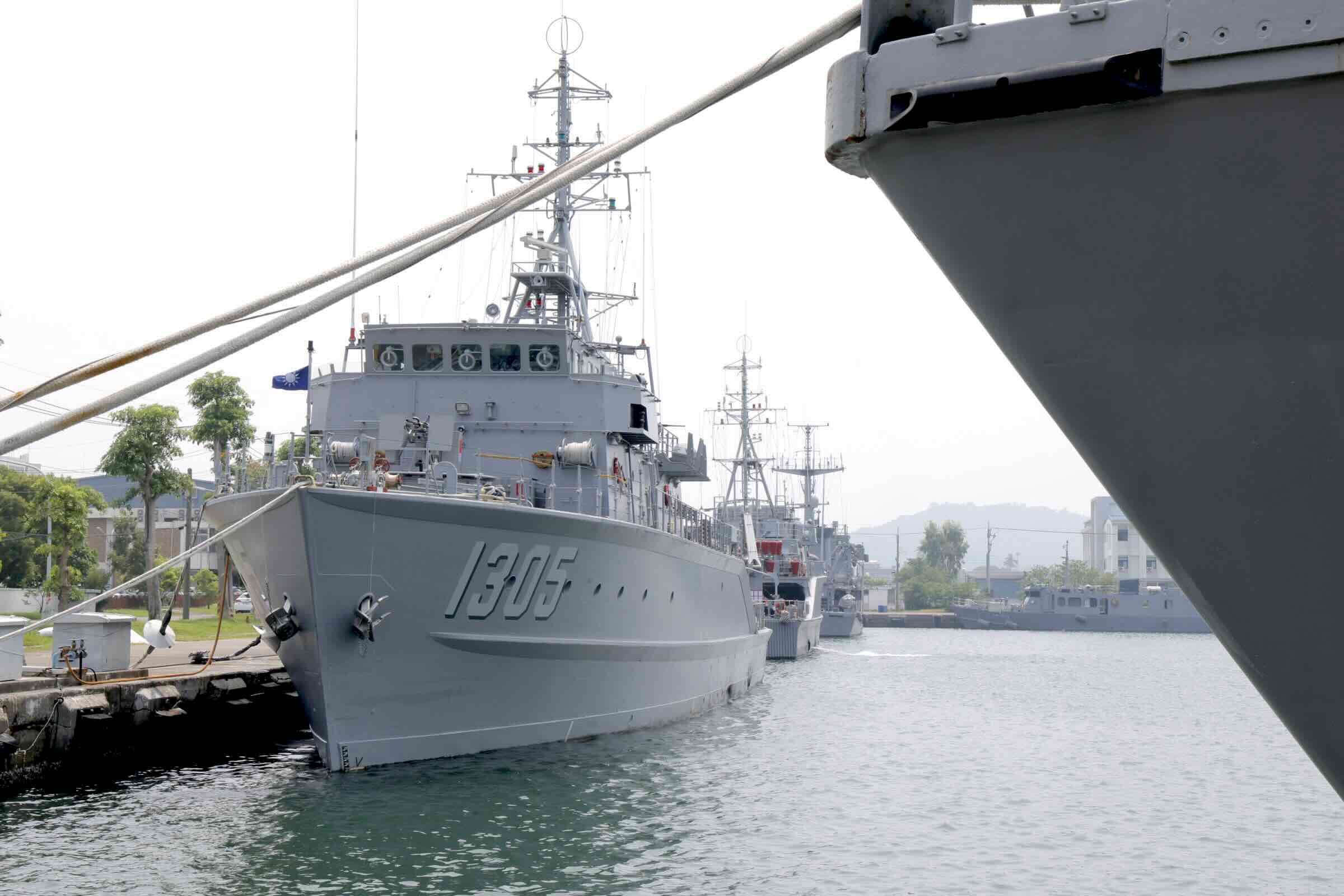
【軍傳媒/從軍我驕傲】水雷戰在現代海戰中仍具有極高的非對稱價值。相較於昂貴的戰艦與飛彈,水雷成本低廉、布設隱密卻能有效封鎖航道,造成敵方艦艇巨大威脅。載可能的台海衝突中,水雷能當作防衛武器,威脅解放軍海軍的艦隊阻止兩棲登陸行動,與能反向成為台灣航道暢通的威脅,因此維持一定的掃雷戰力仍是台灣不可偏廢的能力之一。

來自二戰的美國掃雷艦
永嘉軍艦原為美海軍掃雷艦 (Mine Sweeper Eleet),為美國Guly Shipbuilding造船廠,於 1943 年 3 月 16 日安放龍骨,1943年9 月 6 日下水,1944 年1月 20日在美國阿拉巴馬州成軍,命名為 USS Implicit, AM -264,曾參加二次世界大戰多次戰役,負責執行掃雷任務。1946年11月16 日於菲律賓蘇比灣 (Subic Bay) 從美國海軍除役。
1948年6月15 日美國海軍將該艦列為戰後剩餘物資,以美援名義由菲律賓拖至臺灣高雄港移交我國,我海軍於接收此艦後立即成軍,命名為「永嘉」,編號為47。同時並進廠由我造船廠進行整修及加改裝工程,1948年11月完工後正式服役,先後隸屬海防第二艦隊、海軍第一艦隊、第二艦隊及水雷部隊,擔負警戒、巡弋護航及掃佈雷等任務。
1949年4月23日第二艦隊司令林尊在南京江面叛變,17艘軍艦及16艘砲艇被扣,永嘉軍艦率不願投共的9艘軍艦突圍,在損失2艘的情況下抵達上海,艦長陳慶堃中校因此榮獲青天白日勳章。1970年8月該艦因機件老舊、維修困難而除役。

新時代的重生
在民國78年國防部向德國Abeking & Rasmussen公司採購的『MWW50型獵雷艦』四艘,由於當時台灣處境艱難,這四艘獵雷艦駛以海洋探測船的名義購買,民國79年10月29日從德國行駛回台灣,當時船身漆成白色,船員也都身著中油員工服裝以掩人耳目,民國80年7月12日四艘獵雷艦成軍,在海軍分別命名為永豐軍艦(MHC-1301)永嘉軍艦(MHC-1302)永定軍艦(MHC-1303)永順軍艦(MHC-1305),隸屬於192艦隊236戰隊,成為台灣掃雷的重要戰力。
掃雷艦平時任務是調查台灣周邊水文環境,因此每隔幾個月就會輪調到不同港口進行航道的水文調查,由於水文環境隨時都在改變,且若經過颱風或大型劇烈天候變動後更需要重新確認海底情況,因此可以說是一年四季幾乎沒有空閒的時間。
在戰爭時期,永嘉軍艦依令執行水雷反制作業及安全航道的開闢,也就是說,對於敵方所佈下的攻擊性封鎖水雷區域,獵雷艦就要負責清除水雷,以開闢一條安全的航道,確保大型艦隊能安全進出。

艦艇設計與性能
永嘉軍艦艦長163呎、艦寬31.8呎,最大速率15節,巡航速率12節,動力輸出為兩部 MTU 8V396 TB93型柴油機,但其淺吃水設計非常適合港口與近岸作業。艦身以桃花心木打造,外層包覆玻璃纖維,甲板上層則是消磁的鋁合金結構,由於面對的水雷有可能是音波、震波、磁性觸發,因此每半年都會執行一次全艦消磁。
永嘉軍艦配備Thomson-Sintra 的TSM-2022獵雷聲納、IBISV(Integrated Mine Countermeasures System for Vessels)水雷作戰系統,以及水下獵雷載具PB3。永豐級獵雷艦其設計目標是提供一個「完整鏈條」式的水雷反制作業,從偵測→辨識→水雷處理。先由聲納在水下搜尋,利用高精度的3D成像,區分自然物體或是人工阻礙物(例如沈船),抑或是可疑的水雷。

由於永嘉軍艦屬於二級艦,船身較小,滿載排水量也才588噸,因此駕駛台是稱為舵房而非艦橋,也是控制船艦動力、方向的地點,永嘉軍艦是屬於小型舵,可以左右十度的方式來控制,並以電羅經來確認航行方向,車舵控制器的兩個把手可分別控制左右車葉,同時搭配永豐級特有的VSP推進器(Voith Schneider Propeller),可以操作船艦橫移。通常舵房每一班輪值會有艦長、舵手、雷達手、正副值更官、戰情人員等5~7個人不等,現代海軍船艦都配有電子海圖,但仍維持手繪海圖以交叉比對。
永嘉軍艦雖具備完整獵雷作戰能力,但其服役已超過三十年,艦體結構與自動化程度落後於現代需求。面對解放軍持續推進智慧化、隱蔽性更強的新型水雷,台灣必須加速更新掃雷戰力。自從2017年慶富案爆發,10年過去,海軍並無在推動任何的獵雷艦採購計畫,如今國防特別預算中也只見到新型巡防艦,並未見到掃雷戰力的更新規劃。
在反水雷的道路上,唯有持續投資與技術升級,才能確保台灣在未來潛在衝突中維持港口暢通與航道安全,無人載具技術的興起,其實剛好可以引進新模式的掃雷戰力,同時加強與周邊國家的反水雷演練,戰時才能是真正維持航道暢通的戰力。

Naval mine warfare continues to hold significant asymmetric value in modern maritime conflict. Compared with expensive warships and missiles, naval mines are relatively low-cost, can be deployed covertly, and are capable of effectively blocking sea lanes while posing a serious threat to enemy vessels. In a potential Taiwan Strait contingency, mines could serve as a defensive weapon to threaten PLA Navy surface forces and hinder amphibious landing operations. Conversely, if sea lanes are mined by an adversary, they could also endanger Taiwan’s own maritime access. For this reason, maintaining credible mine countermeasures (MCM) capability remains an indispensable element of Taiwan’s naval defense.
A World War II–Era U.S. Minesweeper
ROCS Yongjia originated as a U.S. Navy minesweeper built during World War II. Constructed by the Gulf Shipbuilding Corporation, her keel was laid on March 16, 1943; she was launched on September 6, 1943, and commissioned on January 20, 1944, in Alabama as USS Implicit (AM-264). During World War II, she participated in multiple operations, performing mine-sweeping missions. On November 16, 1946, she was decommissioned at Subic Bay in the Philippines.
On June 15, 1948, the vessel was classified as surplus war matériel by the U.S. Navy and transferred to the Republic of China under U.S. military assistance. Towed from the Philippines to Kaohsiung, she was formally commissioned into the ROC Navy as Yongjia, hull number 47. Following refit and modification at domestic shipyards, she entered service in November 1948 and was successively assigned to several fleets and mine warfare units, undertaking patrol, escort, and mine countermeasures missions.
On April 23, 1949, following the defection of the Second Fleet commander Lin Zun on the Yangtze River—resulting in the capture of 17 warships and 16 gunboats—Yongjia led nine ships that refused to defect in a breakout operation. Despite losing two vessels, the group reached Shanghai successfully. Her commanding officer, Lieutenant Colonel Chen Qing-kun, was subsequently awarded the Order of the Blue Sky and White Sun. Due to aging machinery and maintenance difficulties, Yongjia was decommissioned in August 1970.
Rebirth in a New Era
In 1989, the Ministry of National Defense procured four MWW50-class minehunters from the German shipbuilder Abeking & Rasmussen. Given Taiwan’s difficult international circumstances at the time, the vessels were purchased under the cover of “oceanographic survey ships.” They sailed back to Taiwan on October 29, 1990, painted white, with crews dressed as employees of the state oil company to avoid attention. On July 12, 1991, the four ships were commissioned into the ROC Navy as Yongfeng (MHC-1301), Yongjia (MHC-1302), Yongding (MHC-1303), and Yongshun (MHC-1305), assigned to the 236th Squadron of the 192nd Fleet, forming a core element of Taiwan’s mine countermeasures force.
In peacetime, minehunters are tasked with surveying the hydrographic environment around Taiwan. Every few months, they rotate among different ports to conduct seabed and channel surveys. Because underwater conditions change continuously—especially after typhoons or severe weather—such surveys are essential, leaving little downtime throughout the year.
In wartime, Yongjia would conduct mine countermeasures operations to clear hostile minefields and open safe sea lanes, ensuring that major naval forces can transit in and out of ports securely.
Ship Design and Capabilities
Yongjia measures 163 feet in length with a beam of 31.8 feet, a maximum speed of 15 knots, and a cruising speed of 12 knots. Propulsion is provided by two MTU 8V396 TB93 diesel engines. Her shallow draft makes her well suited for port and coastal operations. The hull is constructed of mahogany with a fiberglass outer layer, while the upper deck uses degaussed aluminum alloy to reduce magnetic signatures. Because naval mines may be acoustic-, pressure-, or magnetically triggered, the ship undergoes full degaussing every six months.
The ship is equipped with the Thomson-Sintra TSM-2022 minehunting sonar, the IBIS-V (Integrated Mine Countermeasures System for Vessels), and the PB3 underwater mine disposal vehicle. The Yongfeng-class design emphasizes a “complete chain” approach to mine countermeasures—from detection and classification to neutralization. High-resolution 3D sonar imagery enables operators to distinguish between natural seabed features, man-made obstacles such as wrecks, and suspected mines.
As a secondary-class vessel with a full-load displacement of only 588 tons, Yongjia uses a wheelhouse rather than a full bridge. Steering is controlled through small-angle rudders, with navigation aided by a gyrocompass. Separate engine controls manage port and starboard propellers, complemented by the class’s distinctive Voith Schneider Propulsion (VSP) system, which allows lateral maneuvering. A typical watch in the wheelhouse consists of five to seven personnel, including the commanding officer, helmsman, radar operator, duty officers, and combat information staff. Although electronic charts are available, hand-drawn charts are still maintained for cross-verification.
Challenges and the Way Ahead
Despite possessing a complete minehunting capability, Yongjia has been in service for more than three decades. Her hull structure and level of automation lag behind modern requirements. As the PLA continues to develop more advanced, intelligent, and stealthy naval mines, Taiwan faces growing pressure to modernize its mine countermeasures forces. Since the Ching Fu scandal in 2017, no new minehunter procurement programs have been advanced, and recent special defense budgets have focused primarily on new patrol vessels rather than MCM modernization.
Sustained investment and technological upgrades are essential if Taiwan is to ensure port access and sea lane security in future contingencies. The rise of unmanned systems offers an opportunity to introduce new approaches to mine countermeasures, while expanded cooperation and joint exercises with regional partners would further strengthen readiness. Only through such efforts can Taiwan maintain the ability to keep its maritime lifelines open in wartime.