

【軍傳媒/軍事科技】近年「武器貨櫃化」(containerized weapon systems)正迅速成為現代軍事部署與戰略衝突的新趨勢,各國紛紛嘗試將傳統飛彈系統、火箭系統、自殺無人機甚至防空/反無人機模組,整合進ISO標準貨櫃 (shipping container) 與模組化底盤中,使其具備商用物流、民用交通工具的高度兼容性。
傳統上,標準貨櫃 (container) 與運送托盤 (pallet) 僅用於物資、彈藥或軍需用品的運輸。國際標準化組織 (ISO) 訂立的20呎或40呎貨櫃尺寸,使其能透過民用碼頭、商船、鐵路與公路網絡,在全球任意港口轉運。這種物流便利性,曾是各國後勤系統的重要支柱。隨著戰場形態的變遷,未來戰場更重視機動、分散、快速部署與低可偵測性,各個軍火公司開始把這種商規模式當作低成本高效益的武器平台。
貨櫃化武器系統之所以快速流行,背後有三大主要驅動力:一是「迅速運送」能力,利用現成的商用運輸管道與吊裝設備,無須建置專屬軍用底盤,即可於短時間內在全球部署;二是「隱蔽與偽裝」能力,由於外觀與普通貨櫃無異,可混入民用航運網絡,降低敵方偵查與預警機會,烏克蘭的蛛網行動就是典型範例;三是「模組化與成本效率」,貨櫃本身成本低,封閉及易改造特性可以做成「發射/儲存模組」,可快速換裝、維護、補給,彈藥生產與儲運效率高。
代表性的系統與國家
俄羅斯先於 2010 年對外展示其「Club-K」貨櫃式導彈系統:標準40呎貨櫃可容納四枚陸射或岸基巡弋導彈,並具備指揮控制與發射系統架構。該系統設計目標是讓任何能搭載ISO標準貨櫃的卡車、火車或商船,都可能轉瞬成為飛彈發射器,避免敵方的偵測與反制,達到突襲的效果。然而目前並無公開證據顯示Club-K已在任何國家進入實戰部署或列裝。
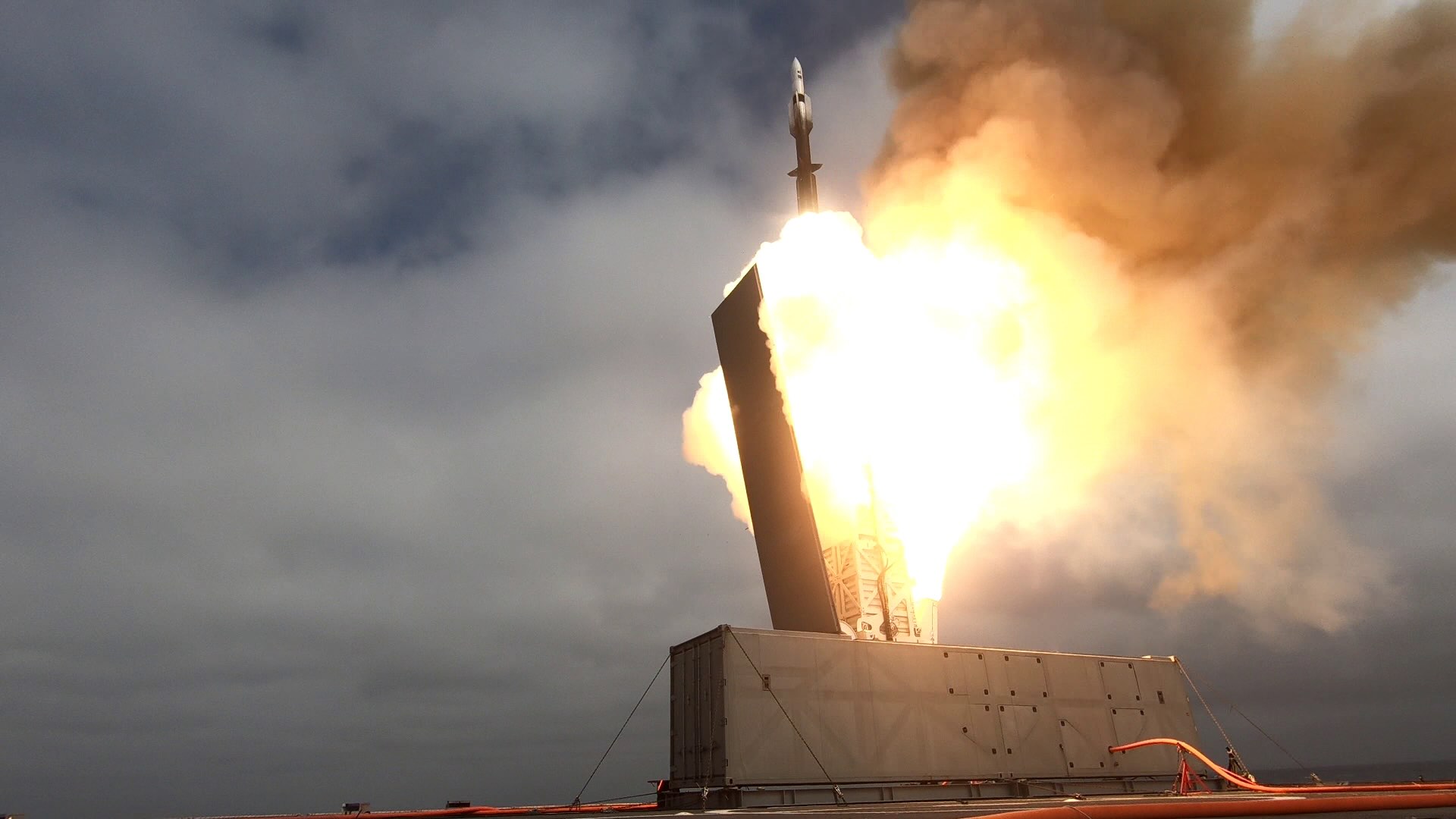
美國與其盟友近幾年也將貨櫃化概念納入其新一代海軍與陸軍火力體系,美國海軍近年發展的 Mk 70 Payload Delivery System (PDS),即是將四個Mk-41垂直發射單元 (VLS) 安裝於40呎ISO容器中,理論上能發射包括SM-6多用途飛彈,魚叉飛彈、甚至戰斧巡弋飛彈等,該系統並於2023年10月在美國海軍「薩凡納號」瀕海戰鬥艦(LCS-28)上試射SM-6。
另外歐洲與美國在內的多家軍火公司,也開始研發「貨櫃化反無人機系統 (C-UAS)」、模組化防空/火箭模組、偵察與彈藥補給模組,整合導彈、感測器、通訊與命令控制 (C2),構成「即插即用 (plug-and-play)」的武裝單元。
去年美國在印太演習部署的堤豐飛彈發射系統就是個範例,美軍希望透過這類系統,在印太具有廣泛海域的地區,以更低成本、更分散、更難預測的架構,迅速擴充水面/兩棲/海上打擊能力。
貨櫃武器的戰略與後勤優勢
貨櫃武器系統之所以對現代軍事力量吸引力極高,原因在於它整合了若干傳統系統難以兼顧的特性:
- 高部署彈性:由於採用ISO標準貨櫃尺寸,這些武器模組可以承載於幾乎任何具備貨櫃吊裝或平板承載能力的交通工具上,無論是卡車、平板鐵路車、商船、補給船、甚至兩棲運輸艦,這意味著在和平時期也能低調運輸、分布於全球各地,到了需要時迅速轉換角色為作戰單元。對軍事預警與敵方情報來說,這種高度模組化與隱蔽性,令識別、追蹤與預防難度大幅提高。
- 成本與產能優勢:傳統軍艦 (如驅逐艦、巡洋艦) 建造時間長、造價高、需要大量維保資源,一艘新型護衛艦或驅逐艦建造可能需要數十億美元與多年時間;但透過貨櫃武器的方式,可以將舊商船或貨運船快速改裝為飛彈發射平台船,以遠低於造艦成本的價格,提供大量分散、具打擊能力的平台。這種分散且隱密的方式,對於防衛作戰、拒止與反介入 (A2/AD) 戰略特別重要。相比以艦艇數量為指標,飛彈數量與其部署方式才能有效抗衡。
- 模組化維護與快速補給:貨櫃內的發射模組、彈藥儲存、C2 與通訊設備,皆可標準化、模組化管理。彈藥和發射單元可以整箱替換,外觀貨櫃更是可以便宜採購,減少複雜維修和重裝時間,也方便戰時後勤補給、保密運輸與快速再部署。對於追求高周轉、高彈量的衝突 (如長期消耗戰或海域封鎖戰) 而言,這樣的分散儲存及生產效率非常重要。
- 隱蔽與欺敵能力:假若這些貨櫃被合法註冊為民用貨物,並透過正常商港與航運體系運輸,那麼在未開火之前,幾乎沒有任何外部徵候 (signature) 表明其內含武器。這種「流動炮台 (mobile battery) + 隱蔽外形」的組合,對偵查、預警與防禦體系都是極大挑戰,也為突襲打擊、戰略欺敵、灰色衝突與非對稱衝突提供平台,在防禦作戰中也增加了戰力保存的能力,避免被對方事先掌握全盤防禦部署。
潛在國際法爭議
然而,貨櫃化武器並非沒有缺點或引發擔憂。隨著越來越多國家與非國家行為者 (如民兵、恐怖組織) 有可能獲得這類模組化武器,相關的風險也在增大。
根據 2025 年一篇針對容器化飛彈/無人機系統的研究,相較於傳統固定基地或專用平台,這類系統更依賴 GPS、通訊、電子系統與數位基礎設施。一旦遭遇電子戰 (EW)、網絡攻擊、干擾、GPS 欺騙或無人機群 (drone swarm) 攻擊,其作戰效能極可能遭受重創。
將貨櫃武器混入民用航運體系,有可能破壞民用與軍用設施之間的分界,造成辨識與信任危機,若導致交戰方未加區分地直接攻擊商船或靠港貨櫃,將引發重大附帶傷害 (collateral damage),甚至構成戰爭法 (LOAC) 中關於 perfidy(偽裝為平民/民用設施以誘敵後再攻擊)的爭議。尤其是在都市與港區密集的地區,這種模式可能導致嚴重的人道危機與基礎設施損失。美國海軍學會與多家政策智庫已對這種「商船-武器化 (merchant ship turned missile ship)」提出警告,不過反過來說,若是站在防禦的一方,將有可能躲過第一擊保存反擊的實力。
低門檻、高模組化意味著中小國、代理人勢力、民兵或非國家武裝都有機會取得長程打擊能力。這將大幅增加全球安全的不穩定性,也使得海域、港口與航運成為新的潛在衝突場域。

防禦比攻擊更適合
近年,隨著技術成熟與防衛工業鏈整合,各種形式的貨櫃化武器陸續出現,且不再限於反艦導彈,而是利用其易於運輸的特性,包括防空、反無人機 (C-UAS)、遠程陸攻、彈藥補給模組與偵察/通訊模組等都逐漸貨櫃化,簡而言之就是利用統一貨櫃尺寸的模組化。
對於海軍而言,這意味著他們可以大幅擴充彈藥庫存以及預先部署點,透過商船、補給船、兩棲運輸艦,快速在多地佈署導彈、巡邏或封鎖任務。甚至傳統艦艇少、無法大量建造的新興海軍,也能以相對低成本擁有分散的反艦/防空能力。這對於疆域廣、島鏈多、海域複雜的區域 (如印太) 特別有利。
對於陸軍/兩棲部隊而言,也可能利用貨櫃式發射器建立「快速部署/機動火力點」,無論在島嶼、沿岸防禦,還是在非對稱衝突中,都適合利用其隱蔽、機動、模組化特質。某些國家 (如澳洲) 已把這類系統列入未來防空與長程打擊能力建設規劃中。
另外反無人機 (C-UAS) 與遊蕩彈藥的貨櫃化概念,也正受到歐洲軍工企業重視,包含萊茵金屬及BAE都有相關裝備,中科院也在多年前就發佈劍翔無人機的貨櫃發射系統。這種「小型、模組化、易運補」的系統特別適合島礁防禦、沿海拒止 (A2/AD)、以及高密度衝突區域。
但是在評估是否採用或防範貨櫃化武器時,仍有幾個關鍵面向必須正視:
- 偵搜與監控機制重構:過去偵測主要關注大型軍艦、飛機、彈道發射井,未對貨櫃/商船進行嚴密區分。但貨櫃化武器的興起,意味著偵測系統必須加入「貨櫃行為訊跡 (container behavior signature)」追蹤,包括吊裝模式、熱成像分析、頂升機構 (如發射時貨櫃可能伸展)特徵、通訊特徵、電力/雷達系統啟動痕跡等來分析研判追蹤。並且結合衛星、海空機艦、無人機巡察監控等方式建立多層次偵查。
- 法律與保險制度修訂:若要使用貨櫃化武器,那麼現有商運保險、港口管理、航運協議與交戰法 (LOAC) 等,都需要重新定義「武器識別標示」、「交戰資格」與「責任承擔」等機制。
- 防禦與反制能力建構:對於防衛方而言,加強情監偵能力,事先預警可能危險,當真的威脅從各方來襲時都能事先料想防禦,並在港口、機場、重要基礎設施部署貨櫃化反無人機系統、多層防空 / 偵戒 / 反制體系 (EW、Cyber、傳統防空),並重建港口/物流安全 SOP。
- 政策與防擴散控制:國際社會要針對 containerized weapons 的流通與買賣建立明確規範。因為這種武器技術門檻低、隱蔽性高,若放任不管,有可能引發武器擴散、灰色地帶軍事化,以及區域安全崩壞。

未來的可能演化
貨櫃化武器系統正改變傳統武器部署與戰爭方式。它把大型導彈、火箭、防空系統,甚至無人機與電子戰模組,濃縮在一個標準貨櫃裡;利用全球現有的商港、鐵道、公路與航運網絡,實現低可偵測、高機動、彈性極強的遠程打擊能力。對於追求「低可見性」「分散部署」「快速投送」「高彈量」的軍事體系,這是一項革命性進展。
不僅是商船、補給船,甚至大規模無人水面載具 (USV)、兩棲運輸艦與後勤船隻,都可能透過貨櫃化模組具備導彈/防空/打擊能力。這將徹底瓦解軍事載台的傳統劃分。這種武器技術門檻低、隱蔽性高,若放任不管,有可能引發武器擴散、灰色地帶軍事化,以及區域安全崩壞。
不只飛彈,連遊蕩彈藥、無人機、電子戰裝置、防空 / C-UAS /反艦火箭模組,都可能被整合進貨櫃中。這將使衝突更加分散、多樣,並大幅增加「灰區戰爭 / 非對稱衝突」的頻率與強度。
隨著國際貨運網絡的廣泛覆蓋,某些港口、航線、物流公司、租船公司可能被動或主動捲入這種混合用途體系,這對國際航運、港口安全、保險產業、甚至人道救援都有深遠影響。容器化武器,既是作戰效率革命,也可能是安全秩序的重大變數。未來誰掌握這種「看不見的火力」,誰就可能在對峙中佔據隱蔽優勢。
In recent years, “weapon containerization” (containerized weapon systems) has rapidly become a new trend in modern military deployment and strategic conflict. Countries are increasingly trying to integrate traditional missile systems, rocket systems, loitering munitions, and even air-defence / counter-UAS modules into ISO standard shipping containers and modular platforms, giving them a high degree of compatibility with commercial logistics and civilian transportation infrastructure.
Traditionally, standard containers and pallets were used only for transporting supplies, ammunition, or military materiel. The 20-foot and 40-foot container dimensions defined by the International Organization for Standardization (ISO) allow them to be moved through civilian ports, merchant ships, rail, and road networks, and trans-shipped at virtually any port worldwide. This logistical convenience used to be a key pillar of national military logistics systems. As the character of warfare changes, future battlefields place greater emphasis on mobility, dispersion, rapid deployment, and low observability. Arms manufacturers have begun to treat this commercial standard as a low-cost, high-efficiency weapons platform.
There are three main drivers behind the rapid rise of containerized weapon systems. The first is rapid transport: by leveraging existing commercial transportation routes and lifting equipment, militaries can deploy these systems globally in a short time without needing purpose-built military chassis. The second is concealment and disguise: because they look no different from ordinary containers, they can blend into civilian shipping networks and reduce the chances of enemy detection and early warning. Ukraine’s “Spider Web” operation is a typical example. The third is modularity and cost-effectiveness: containers are cheap, enclosed, and easy to modify, making them ideal “launch/storage modules” that can be quickly swapped, maintained, and resupplied, while also improving the efficiency of ammunition production, storage, and distribution.
Representative Systems and Countries
Russia was the first to publicly unveil its “Club-K” containerized missile system in 2010. A standard 40-foot container can house four land-attack or coastal cruise missiles and includes an integrated command, control, and launch architecture. The system was designed so that any truck, train, or merchant vessel capable of carrying an ISO standard container could be turned into a missile launcher at short notice, thus avoiding enemy detection and counter-measures and achieving a surprise-strike effect. However, there is currently no open evidence that Club-K has entered operational deployment or service in any country.
In recent years, the United States and its allies have also incorporated the containerization concept into their new-generation naval and land-based firepower systems. The U.S. Navy’s Mk 70 Payload Delivery System (PDS) mounts four Mk-41 Vertical Launch System (VLS) cells inside a 40-foot ISO container. In theory, it can launch weapons such as the SM-6 multi-mission missile, Harpoon anti-ship missile, and even the Tomahawk cruise missile. In October 2023, the system was used aboard the U.S. Navy littoral combat ship USS Savannah (LCS-28) to test-fire an SM-6.
In addition, multiple defence companies in Europe and the United States have begun developing containerized counter-UAS (C-UAS) systems, modular air-defence / rocket modules, reconnaissance modules, and ammunition resupply modules that integrate missiles, sensors, communications, and command-and-control (C2), forming “plug-and-play” armed units.
The Typhon missile system deployed by the United States during exercises in the Indo-Pacific last year is a good example. The U.S. military hopes that through such systems, in vast maritime regions like the Indo-Pacific, it can rapidly expand surface, amphibious, and maritime strike capacity with a lower-cost, more distributed, and less predictable architecture.
Strategic and Logistical Advantages of Containerized Weapons
Containerized weapon systems are highly attractive to modern armed forces because they combine several features that traditional systems find difficult to achieve simultaneously.
High deployment flexibility: Since they use ISO standard container dimensions, these weapon modules can be carried on almost any vehicle capable of lifting or transporting containers—whether trucks, flatbed rail cars, merchant ships, replenishment vessels, or even amphibious transport ships. This means that in peacetime they can be quietly transported and pre-positioned around the world, and when needed, quickly converted into combat units. For military early-warning systems and enemy intelligence services, such a high degree of modularity and concealment makes identification, tracking, and pre-emptive countering far more difficult.
Cost and industrial-capacity advantages: Traditional warships such as destroyers and cruisers take a long time to build, are extremely expensive, and require substantial maintenance resources. Building a new-generation frigate or destroyer can cost several billion U.S. dollars and take many years. By contrast, using containerized weapons, existing merchant or cargo vessels can be rapidly converted into missile-armed platforms at a fraction of the cost of new warships, yet still provide numerous dispersed platforms with real strike capability. This dispersed and covert approach is particularly important for defensive operations and anti-access/area-denial (A2/AD) strategies. Compared with counting the number of hulls, it is missile numbers and deployment patterns that truly determine whether one side can effectively offset the other.
Modular maintenance and rapid resupply: The launch modules, ammunition storage, C2, and communications equipment inside the containers can all be standardized and managed as modules. Both munitions and launch units can be swapped out by replacing entire containers. The containers themselves can be cheaply procured, reducing complex repairs and re-arming time and facilitating wartime logistics, covert transportation, and rapid redeployment. For conflicts that demand high sortie rates and large ammunition expenditure—such as prolonged attrition campaigns or maritime blockades—this kind of dispersed storage and efficient production is extremely important.
Concealment and deception: If these containers are legitimately registered as civilian cargo and moved through normal commercial ports and shipping networks, then before they open fire there are almost no external signatures indicating that they contain weapons. This combination of “mobile battery plus low-observable appearance” poses a major challenge to reconnaissance, early-warning, and defensive systems, and provides a valuable platform for surprise strikes, strategic deception, grey-zone confrontations, and asymmetric warfare. In defensive operations, it also enhances force preservation, making it harder for an adversary to map out and neutralize the defender’s entire deployment in advance.
Potential International Law Controversies
Containerized weapons are not without drawbacks or causes for concern. As more states and non-state actors (such as militias or terrorist organizations) gain potential access to such modular weaponry, the associated risks are growing.
According to a 2025 study on containerized missile and drone systems, compared with traditional fixed bases or dedicated platforms, these systems are more dependent on GPS, communications, electronic systems, and digital infrastructure. Once they are subjected to electronic warfare (EW), cyber attacks, jamming, GPS spoofing, or drone swarm attacks, their operational effectiveness may be severely degraded.
Mixing containerized weapons into civilian shipping networks can blur the line between civilian and military assets and create a crisis of identification and trust. If this leads to parties to a conflict indiscriminately attacking merchant vessels or containers in port, it could result in major collateral damage and might even raise issues of perfidy under the Law of Armed Conflict (LOAC)—that is, feigning civilian or protected status to lure the enemy and then attack. Especially in densely populated urban ports, this model may trigger severe humanitarian crises and damage to critical infrastructure. The U.S. Naval Institute and various policy think tanks have already warned about such “merchant-ship weaponization.” Conversely, from the defender’s perspective, containerization may also allow forces to survive an enemy’s first strike and retain the capability to launch counter-attacks.
Because of the low entry threshold and high modularity, small and medium-sized states, proxy forces, militias, or non-state armed groups may all gain long-range strike capabilities. This will significantly increase global security instability and turn sea lanes, ports, and shipping into new potential theatres of conflict.
More Suited to Defence than Offence
As technology matures and defence industrial chains become more integrated, various forms of containerized weapons have been emerging, no longer limited to anti-ship missiles. Leveraging their ease of transport, systems for air defence, C-UAS, long-range land attack, ammunition resupply, and reconnaissance/communications are all being containerized—in short, making full use of standardized container dimensions and modular design.
For navies, this means they can greatly expand their ammunition stocks and pre-positioned sites. Through merchant vessels, replenishment ships, and amphibious transports, missiles can be rapidly deployed for strike, patrol, or blockade missions across multiple locations. Even navies with few traditional warships and limited shipbuilding capacity can, at relatively low cost, obtain dispersed anti-ship and air-defence capabilities. This is particularly advantageous in vast, archipelagic, and complex maritime regions such as the Indo-Pacific.
For armies and amphibious forces, containerized launchers can be used to establish rapidly deployable, mobile firepoints. Whether on islands, in coastal defence, or in asymmetric conflicts, their concealment, mobility, and modularity make them highly suitable. Some countries, such as Australia, have already included such systems in future air-defence and long-range strike capability development plans.
The containerization concept for C-UAS systems and loitering munitions is also drawing increasing attention from European defence companies. Rheinmetall and BAE Systems both have relevant equipment in this space, and Taiwan’s National Chung-Shan Institute of Science and Technology (NCSIST) several years ago unveiled a containerized launcher for the Chien Hsiang loitering munition. These small, modular, and easy-to-sustain systems are particularly well-suited to island and reef defence, coastal A2/AD, and high-intensity conflict zones.
However, when assessing whether to adopt or counter containerized weapons, there are several critical aspects that must be taken seriously:
Rebuilding detection and surveillance mechanisms: Traditional surveillance has focused on large warships, aircraft, and ballistic launch sites, with little differentiation between containers and merchant ships. The rise of containerized weapons means detection systems must incorporate “container behaviour signatures,” tracking elements such as loading/unloading patterns, thermal imagery, lift-and-raise mechanisms (for example, container extension when preparing to fire), communications features, and traces of power or radar activation. These need to be analysed and tracked, and combined with satellites, maritime and air platforms, and drones to build a multi-layered detection network.
Revising legal and insurance regimes: If containerized weapons are to be used, existing commercial insurance, port management, shipping agreements, and LOAC rules will all have to be updated to redefine “weapon identification markings,” “combatant status,” and “liability and responsibility” mechanisms.
Building defensive and counter-measure capabilities: For defenders, strengthening intelligence, surveillance, and reconnaissance (ISR) is crucial so that potential threats can be detected in advance. When attacks do come from multiple directions, defence plans must already be in place. Containerized C-UAS systems and layered air-defence / early-warning / counter-measure architectures (EW, cyber, and conventional air-defence) should be deployed at ports, airports, and key infrastructure, alongside a reworked security SOP for ports and logistics.
Policy and non-proliferation control: The international community must establish clear rules governing the circulation and sale of containerized weapons. Because of their low technical threshold and high concealability, unregulated diffusion could trigger weapons proliferation, grey-zone militarization, and the breakdown of regional security orders.
Future Evolution
Containerized weapon systems are reshaping traditional patterns of weapons deployment and warfare. They compress large missiles, rockets, air-defence systems, and even drones and electronic-warfare modules into standard containers, using the world’s existing network of commercial ports, railways, roads, and shipping lanes to achieve low-observability, high-mobility, and highly flexible long-range strike capabilities. For military establishments that seek low visibility, dispersed deployment, rapid projection, and high volumes of fire, this is a revolutionary development.
Not only merchant vessels and replenishment ships, but also large unmanned surface vessels (USVs), amphibious transports, and logistics ships may in future gain missile, air-defence, and strike capabilities through containerized modules. This will fundamentally overturn traditional distinctions between different types of military platforms. Given the low barrier to entry and high concealability of this technology, if left unchecked it could drive weapons proliferation, accelerate grey-zone militarization, and precipitate regional security breakdowns.
It is not only missiles that may be containerized. Loitering munitions, drones, electronic-warfare devices, and air-defence / C-UAS / anti-ship rocket modules can all be integrated into containers. This will make conflicts more dispersed and varied, and greatly increase the frequency and intensity of grey-zone warfare and asymmetric confrontations.
As international shipping networks cover ever more of the globe, ports, routes, logistics companies, and ship-leasing firms may—willingly or unwillingly—be drawn into this dual-use ecosystem. This will have far-reaching implications for global shipping, port security, the insurance industry, and even humanitarian relief operations.
Containerized weapons are at once a revolution in operational efficiency and a major variable for the future security order. Whoever masters this kind of “invisible firepower” will likely gain a concealed advantage in future stand-offs.