

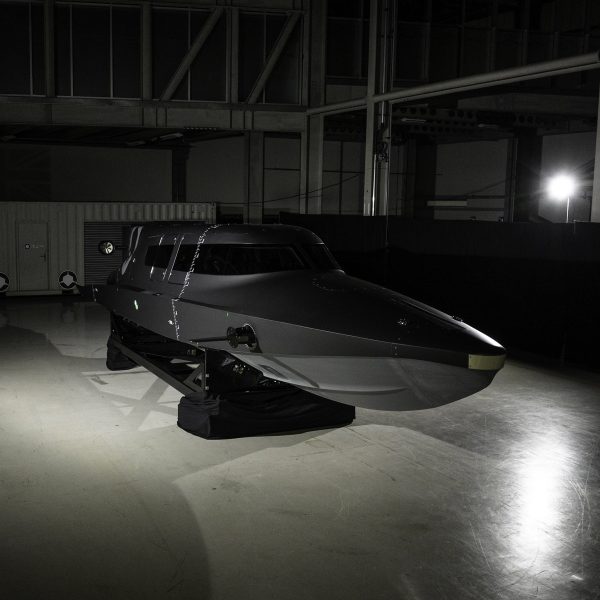
【軍傳媒/軍事科技】之前介紹的英國SubSea Craft公司,VICTA(Delivery and Mobility Platform)為其主打產品之一,且是該公司在多域平台產品的(multi-domain platform)範例,VICTA不但能在水面進行高速移動,亦可轉入水下潛航模式,顛覆目前的常規想像。
根據官方網站的說明,VICTA 設計初始目標為提供「從水面高速航行到水下潛入模式的多域載具」,可用於部署及回收特種部隊、運輸裝備或執行秘密滲透任務。也因此VICTA 被定位為「支援特種部隊與登陸隊伍的插入平台」,適用於近岸與淺海複雜環境。
根據官方簡介,VICTA 水面推進採用 Seatek 柴油引擎搭配 Rolls-Royce Kongsberg Kamewa 水噴推進器,水面航速可達約 40 節(knots),可在水面航行約 250 海浬(nautical miles)左右。水下潛航模式時,採用兩具 20kW 電動推進器加四具垂直控制推進器控制深度,潛速可達約 8 節,而潛航範圍約 25 海浬、潛深最高約 30 公尺。轉換水面至潛行所需時間約 2 分鐘。船艙可搭載8 名作業人員(如 2 名駕駛+6 名作業人員),不過人員艙室為「free-flooding」(也就是水會淹入)的設計,乘員需配備呼吸器系統,船艙提供的空氣可供應約 8 小時。
從官方介紹影片,VICTA 的顯著特色在於其能在水面高速航行,以覆蓋距離、迅速接近;隨後可轉入潛行或「淹沒」狀態,以降低偵察/識別風險。這允許載具從較遠位置進入敵方近岸或敏感區域,再以低可偵察方式完成任務。艙內座椅可拆換以安裝模組化載荷,意味 VICTA 不僅載人,也可載裝備、偵察感測器或特種工具。官方資料顯示,VICTA 具備專為潛行所設計的「任務系統」(mission system),包括水面與水下導航、內建慣性導航系統(INS)、多傳感器融合、碰撞避免聲納、潛水員與艦內通訊界面等。
Previously introduced SubSea Craft in the United Kingdom lists the VICTA (Delivery and Mobility Platform) as one of its flagship products—a representative example of the company’s multi-domain platforms. VICTA is capable not only of high-speed movement on the surface but can also transition into a submerged mode, challenging conventional expectations of maritime special operations craft.
According to the official description, VICTA was originally designed to provide “a multi-domain vehicle capable of transitioning from high-speed surface transit to submerged operation,” suitable for deploying and recovering special forces teams, transporting equipment, or conducting covert infiltration missions. VICTA is therefore positioned as “an insertion platform supporting special operations forces and landing teams,” optimized for complex littoral and shallow-water environments.
Official specifications indicate that VICTA uses a Seatek diesel engine paired with a Rolls-Royce Kongsberg Kamewa waterjet for surface propulsion, achieving speeds of around 40 knots and a surface range of approximately 250 nautical miles. In submerged mode, propulsion is provided by two 20 kW electric thrusters supplemented by four vertical thrusters for depth control, enabling underwater speeds of about 8 knots, an underwater range of roughly 25 nautical miles, and a maximum operating depth of about 30 meters. Transitioning from surface to submerged mode takes approximately two minutes.
The craft can carry eight personnel (e.g., two operators plus six mission members), but the personnel compartment uses a “free-flooding” design, meaning water enters the cabin; occupants must use breathing apparatus, and the internal air supply supports about eight hours of operation.
Official demonstration videos highlight VICTA’s signature capability: high-speed surface transit for quickly covering distance and approaching an objective, followed by a transition to submerged or semi-submerged operation to reduce detection and identification risks. This allows the craft to infiltrate hostile littoral zones or sensitive areas from stand-off distances with low observability. The cabin’s seating can be replaced with modular equipment, meaning VICTA can carry not only personnel but also gear, sensors, or specialized tools. Official information also notes that VICTA incorporates a mission system specifically designed for submerged operations, including surface/underwater navigation, an integrated inertial navigation system (INS), multi-sensor fusion, collision-avoidance sonar, and diver-craft communications interfaces.

未來想定使用情境
- 特種部隊的滲透與回收:VICTA 最直觀的用途在於特種作戰部隊(SOF)滲透回收任務,從遠海的母艦或運輸平台出發,在遠離敵方監視區域處以高速水面航行快速接近目的地後,轉入水下潛航狀態,降低被雷達、聲納與目視偵獲機率,特種部隊隊員可在潛航到最接近點再迅速登陸或返回。
- 情報收集偵查任務:除了載人,VICTA 的模組化設計也使其可承載各式偵察感測器或無人載具。主要艦隊進入敵方海域前,透過VICTA將偵察裝備投放,使艦隊先取得情報優勢。或是利用其潛航能力接近敵方海域,進行長期偵查而不暴露。
- 混合作戰網絡支援:在未來海戰中,人/機協同(Manned-Unmanned Teaming, MUM-T)將成為趨勢。VICTA 可搭配SubSea Craft公司的CADDIS UAV 或無人水面載具協同作戰。透過其水面/潛航兩用特性,VICTA 本身既可作為載具又可作為控制節點或母艦。從官方影片中可見VICTA可從潛航狀態釋放 CADDIS UAV飛行偵察,甚至指揮蜂群無人機作為攻擊用。
Potential Future Operational Scenarios
Special Operations Infiltration and Extraction
VICTA’s most intuitive application is SOF insertion and recovery. Departing from a mothership or transport platform beyond enemy surveillance envelopes, it can approach an objective at high surface speed, then shift to submerged mode to reduce radar, sonar, and visual detection. Special operations personnel may disembark or re-embark at the closest possible point while maintaining stealth.
Intelligence, Surveillance, and Reconnaissance
Beyond personnel transport, VICTA’s modular design allows it to carry various ISR sensors or unmanned systems. Before a main naval force enters a hostile maritime zone, VICTA can deploy reconnaissance packages to establish an information advantage. Its submerged capability also enables covert, prolonged ISR operations near adversary waters.
Supporting Hybrid Maritime Networks
Future naval warfare trends emphasize manned-unmanned teaming (MUM-T). VICTA can operate alongside SubSea Craft’s CADDIS UAV or unmanned surface vessels. Thanks to its dual surface/submerged nature, VICTA can serve both as a transport platform and as a command-and-control node or “mothership.” Footage shows VICTA launching a CADDIS UAV while submerged or semi-submerged for aerial reconnaissance, and even directing drone swarms for offensive purposes.
To emphasize its combat-support role, VICTA was designed from the outset to operate with SubSea Craft’s CADDIS UAV or MARS USV. For example, during silent submerged approach, VICTA can insert divers or equipment, then launch a CADDIS UAV from surface or subsurface to conduct ISR or communications relay. Alternatively, MARS USVs can disperse to perform reconnaissance, deception, or strike-support missions. The advantage lies in “multi-domain fusion”—integrated operations across underwater, surface, and air domains, offering high mission flexibility.

目前為了凸顯支援作戰的特性,設計之初就考慮VICTA搭配同公司推出的CADDIS無人機或MARS無人艇一同運作,例如在潛行階段,VICTA靜默潛航接近目標區域,待潛水員或裝備就位後,從水下或水面發射CADDIS無人機做空中偵察或通訊中繼,提供即時情資。或是透過無人水面載具如MARS作為多節點展開偵察、誘餌或打擊支援。此種搭配優勢在於「多域融合」:水下/水面/空中三域交互運作,並且具備高度任務彈性。
不過英國SubSea Craft公司發展的無人多域作戰也並非沒有風險,最主要的就是潛航距離,雖然目前公布水下速度約8節、航行距離約25海浬,但是真實情況的數據可能會大為打折,借會受限於他的實用性,雖然對於近岸、島礁等地形的特戰滲透仍具一定的價值。
另外就是未來戰場一定會充滿高強度的電子干擾環境,除了自主AI的運行能力,與指揮中心的連結、不同無人平台之間的控制等都會是個考驗;但是其先進的概念,透過無人載具及多域概念降低被發現的機率及提高人員裝備的生存性,無人載具已經成為未來不可或缺的主力。
Challenges and Limitations
SubSea Craft’s ambition for unmanned multi-domain operations is not without risks. The most obvious limitation is submerged endurance: while published figures list an underwater speed of 8 knots and a range of 25 nautical miles, real-world performance is likely to be lower, limiting practicality. Even so, VICTA still offers value for coastal, archipelagic, and island-based SOF infiltration missions.
Future battlefields will certainly feature intense electronic warfare environments. This raises challenges not only for autonomous AI functionality but also for maintaining links with command centers and coordinating among multiple unmanned platforms. Nevertheless, the advanced concept—leveraging unmanned systems and multi-domain operations to reduce detectability and enhance survivability—remains compelling. Unmanned platforms are becoming indispensable elements of future warfare.