

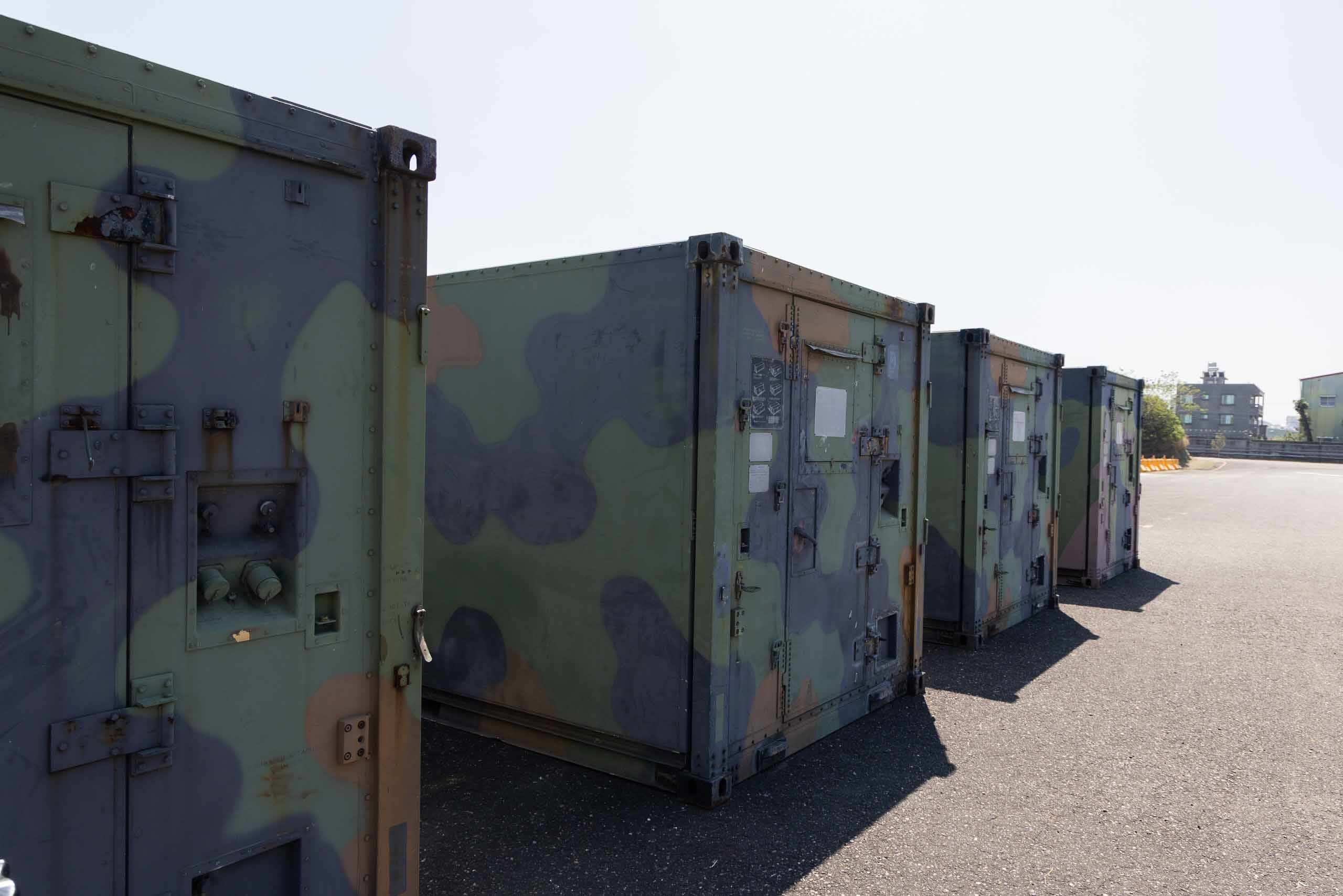
【軍傳媒/軍風大觀園】隨著遠程攻擊武器的普及,任何固定式的建築、工廠等都會遭到鎖定攻擊,因此地下化機動化是必然的趨勢,陸軍航空基地勤務廠(簡稱航勤廠)肩負著陸軍航空部隊的高級後勤維修,這次專訪中也曝光在機動化維修部分的能力。

在飛彈威脅下重塑航空後勤的分散與韌性
為了確保戰時的野戰修復能力,航勤廠有著一整套的機動貨櫃可移動式維修工廠,將小型檢修儀器安裝於標準貨櫃內,戰時以承載車隨時依照需求移動。目前是依照直升機的各個不同的系統來區分不同的保修站,那個每個保修站再以數個貨櫃來開設檢修站,不過因為也為主要考量電力及機台穩定,這是目前的瓶頸。
舉例來說,目前的貨櫃是使用可擴展式,到定點後延伸出一倍的空間,外觀也從原本的標準迷彩逐步去識別化,在戰時可以更好地躲避偵測。由於目前都是以模組化維修更換,因此並不一定需要跟直升機位於同一地方,甚至在學校的教室、倉庫等就可以開設,但需要較準的機台就無法安裝在貨櫃移動,令壞呆有一些大型機台也無法移動,這是目前的痛點,戰時固定設施或機台若被摧毀則很難補充,未來將會逐步考量地下化。
航勤廠廠長蔡惠彣少將就說明,目前每個禮拜都會有實戰化的訓練,安排不總別的人員就貨櫃式維修工廠做訓練,由於機動貨櫃維修站是以所為單位,因此個別所安排人員輪訓,目前在漢光演習或重大眼訓時都已經有實際野外維修演練。


野戰搶修如何撐起前線飛行任務的最後一哩
採訪當天現場剛好有AH-1W眼鏡蛇攻擊直升機的目獲及射控系統正在檢修,也就是光學影像目獲系統以及熱顯像系統,對於野戰搶修來說,除非是被外力損傷,不然主要的故障來源通常是控制面板的旋鈕或按鈕,不是卡住就是後面的電路板損壞,小小一個控制結構就會影響整個作戰效能,野戰檢修站解決的就是類似的問題,他沒辦法解決大型戰損的修復,卻能解決小故障帶來的操作問題。
像旋鈕或按鈕的小零件通常會有庫存,接觸不良的電路板則是整塊先以備用電路板更換,換下來的電路板再後送回到航勤廠基地重新將損壞晶圓移除重新焊接。
以眼鏡蛇直升機的武器選擇旋鈕來說,他可以選擇拖式飛彈、地獄火飛彈、火箭炮、機槍來做攻擊,地獄火飛彈又有射後不理、高彈道、低彈道、直接攻擊幾種不同的方式,可以選擇飛彈先往上飛再俯衝攻擊,攻擊距離就可以達到8公里左右。至於較近的目標就是以低彈道直接攻擊。
航勤廠廠長蔡惠彣 少將指出,目前陸軍航勤廠的女生比例約佔1/5,主要還是及裝在電子修復,畢竟像結構、引擎等部門零件的重量都比較重,仍會以男性較爲合適。而貨櫃機動式支援小組在戰時就會分派成三組個別支援陸航601旅、602旅、以及戰時的飛訓部轉成的603旅。

戰時後勤體系的重要性
在現代戰爭中,航空後勤往往是戰力持續性的關鍵。直升機作為低空支援與機動作戰的重要平台,其維修體系若遭破壞,戰力將迅速下降。
因此,航勤場不僅是平時維修單位,更是陸軍航空力量的戰略後勤中樞。從日常檢修到重大翻修,這些看似不顯眼的維保工作,正是確保直升機能隨時升空、支援地面部隊的重要基石。
在未來作戰環境中,隨著新型直升機與高科技航電系統的引入,航勤場的角色只會更加重要。當前線飛行員在低空執行任務時,真正守護其安全與戰力的,往往正是後方這群專注於機件與結構的維修人員。

Combat Power Inside a Container: Inside the Army’s Mobile Helicopter Maintenance System
As long-range strike weapons become more widespread, fixed facilities such as buildings and factories are increasingly vulnerable, making mobility and dispersion essential. Taiwan’s Army Aviation Maintenance Depot (often referred to as the Aviation Logistics Center) is responsible for high-level maintenance of Army aviation units. This interview reveals its growing capability in mobile maintenance operations.
Rebuilding Resilient Aviation Logistics Under Missile Threats
To ensure wartime repair capability, the unit has developed containerized mobile maintenance workshops, installing inspection equipment inside standard containers that can be deployed and relocated as needed. Maintenance stations are organized by helicopter subsystems, with each station composed of multiple containers. However, power supply and equipment stability remain current limitations.
These expandable containers can double in workspace once deployed and are being adapted with low-signature camouflage to reduce detection. Because maintenance is increasingly modular, repair sites do not need to be co-located with aircraft and can be set up in locations such as classrooms or warehouses. However, large or precision equipment cannot be easily moved, creating a key challenge—if fixed facilities are destroyed in wartime, replacement is difficult. Future plans include greater underground and hardened solutions.
Major General Tsai Hui-wen, the depot commander, noted that weekly combat-oriented training is conducted using these mobile workshops. Personnel rotate through training, and field maintenance exercises are already integrated into major drills such as the Han Kuang Exercise.
Field Repairs: Sustaining Frontline Aviation Operations
During the visit, technicians were repairing the optical targeting and fire-control systems of an AH-1W Cobra attack helicopter. In field conditions, most failures are not major battle damage but small issues such as faulty switches or circuit boards, which can still significantly impact combat performance. Mobile repair units focus on resolving these issues quickly, even if they cannot handle major structural damage.
Small components like switches are typically stocked, while faulty circuit boards are replaced entirely and sent back to base for repair. For example, the Cobra’s weapon selector allows pilots to choose between TOW missiles, Hellfire missiles, rockets, and machine guns, with multiple firing modes depending on engagement range and trajectory.
The depot also has a growing number of female personnel—about 20% of the workforce—primarily in electronics repair roles, while heavier mechanical work remains more physically demanding. In wartime, mobile support teams would be split into groups to support different aviation brigades.
The Critical Role of Wartime Logistics
In modern warfare, aviation logistics is key to sustaining combat power. Helicopters are vital for low-altitude support and maneuver operations, but without a functioning maintenance system, their effectiveness rapidly declines.
The Aviation Maintenance Depot is therefore not just a peacetime repair unit, but a strategic backbone of Army aviation capability. From routine inspections to major overhauls, these behind-the-scenes efforts ensure helicopters remain mission-ready. As new aircraft and advanced avionics are introduced, the importance of such logistics units will only grow—quietly sustaining the combat effectiveness and safety of frontline forces.