

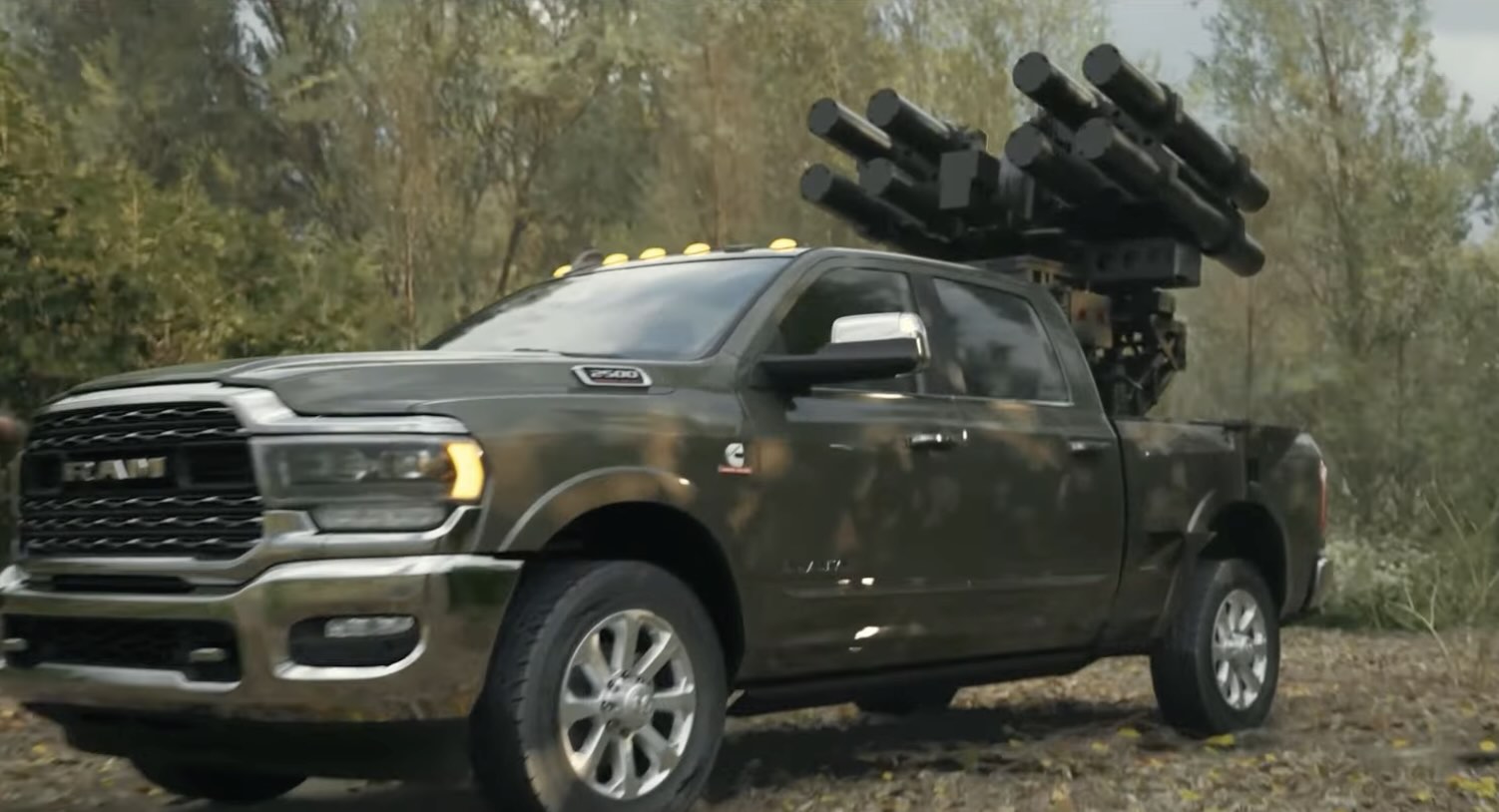
【軍傳媒/軍事科技】原始的 LAHAT(Laser Homing Anti-Tank)是 IAI 在 1990 年代中期開始研發的第三代半主動雷射導引反戰車飛彈,最初研發初衷是讓主戰車可以透過 105mm/120mm 戰車砲管發射導引彈,實現超越傳統砲彈彈道視距的精準打擊。LAHAT的幾項關鍵特徵包括:
- 可由105mm或120mm戰車砲管、直升機、車載或艦載發射筒發射。
- 使用半主動雷射導引,可由射手、前線觀測員、直升機或UAV等外部平台標定。
- 地面發射射程約8–10公里,空中平台發射可以讓射程進一步拉長。
- 串聯HEAT彈頭可對付附加反應裝甲,具頂攻與直接攻擊兩種彈道選擇。
LAHAT已在以色列國防軍(IDF)服役,並外銷至多國,例如印度的Arjun主戰車整合了LAHAT,部分國家直升機也採用四聯裝發射架。然而,隨著俄烏戰爭等衝突暴露出無人機普及、偵測距離拉長,導致過去8–10公里射程的反戰車飛彈在「感測器看得到、火力打不到」的情況下產生縱深缺口,要嘛使用精準火砲攻擊,或是使用中程自殺無人機。IAI 因此推出 LAHAT ALPHA,將反戰車飛彈射程直接翻倍到20公里等級,並在不依賴衛星導航的前提下,把這款導引飛彈重新定位為跨平台的遠程精準打擊工具。

LAHAT ALPHA飛彈諸元與技術特性
根據 IAI 與多家防務媒體公布的資料,LAHAT ALPHA 主要諸元如下:
- 長度:約2公尺
- 重量:約25公斤
- 射程:20公里以上
- 發射平台:地面車載發射器、直升機、其他跨域載具
相較於原始LAHAT系統(約1公尺、13公斤、射程10公里),LAHAT ALPHA在體積與重量上都翻倍,但射程同步翻倍,另外LAHAT ALPHA可以裝備兩種彈頭型式,一種是反戰車HEAT彈頭,能針對主戰車與重裝甲載具,具攻頂能力。第二種是高爆/破片彈頭,可用於對付工事、建築物、一般陣地、登陸快艇與集結的步兵小隊。
另外IAI官方強調ALPHA可對付重裝甲、高強化目標與高速機動目標,使其成為一款可兼具反裝甲與對地打擊的雙用途飛彈。LAHAT ALPHA採用半主動雷射導引(SALH),可由 UAV、直升機、前線觀測員等平台提供雷射標定;且因為不依賴 GPS,因此能在GPS被干擾下的電子干擾環境中可靠運作。
截至2025年11月,LAHAT ALPHA 已完成研發定型,原本LAHAT反戰車飛彈已被以色列、印度、阿塞拜然等國採用,可推測這些國家可能是未來的首波潛在客戶。

LAHAT ALPHA 協同作戰架構
未來戰場上,由於LAHAT ALPHA需要雷射標定導引,因此無人機的角色除了在中高空偵搜敵裝甲、砲兵與高價值目標外,也會負責雷射標定,再由後方的主戰車、車載發射器或直升機發射LAHAT ALPHA進行BLOS(超視距)打擊,這種模式可讓發射單位保持隱蔽,同時發揮遠程精準火力。
由於現役反戰車飛彈ATGM(Spike、Javelin、NLAW等)負責 0.5–8 公里距離的目標,而LAHAT ALPHA則負責20公里遠距打擊,使整體反裝甲體系形成遠中近的分層獵殺,完整覆蓋敵裝甲突破路線的所有縱深階段。由無人機在 30公里外偵搜發現敵裝甲集群,此時遠程砲兵進行第一波攻擊、之後LAHAT ALPHA、標槍等反戰車飛彈接手,最後再由自殺無人機補刀,主戰車火砲成為最後的防禦,在這個模式下,要出現戰車對轟基本上機率降到超級低。
對台灣防衛的啟示
對臺灣而言,LAHAT ALPHA類系統給我們幾個省思,就是任何打擊手段都會與無人載具的偵測高度整合,過往需要依靠偵查小隊的探測完全由無人機取代,大幅延伸預警距離,也補足砲兵火力到直瞄射擊之間的火力缺口,重型裝甲載具在防禦戰的效用大幅降低,裝甲集群衝鋒攻擊的成功率也被大幅削弱,雖然LAHAT ALPHA並沒有在烏克蘭使用,但是其戰術價值已經凸顯,搭配可在不同載具發射的特性,LAHAT ALPHA成為隱藏但致命的殺手。
賴清德總統日前宣示8年預計花費1.25兆的軍費,然而目前為止所採購的裝備皆以過時的思維來選擇,嘴上喊著不對稱作戰,但做的卻是讓敵方可以不對稱作戰的採購,當這些軍費花完時,台灣的軍事實力到底可以提升多少?對抗中國入侵的勝率又提高多少?國防自主能力又提高了多少?就算是交保護費,也要有能獲得的對等價值跟保護!
The original LAHAT (Laser Homing Anti-Tank) was a third-generation semi-active laser-guided anti-tank missile developed by Israel Aerospace Industries (IAI) in the mid-1990s. Its initial purpose was to enable main battle tanks to launch guided munitions directly from 105 mm and 120 mm tank guns, achieving precise strikes beyond traditional ballistic line-of-sight limitations.
Key characteristics of the classic LAHAT include:
- Launchable from 105 mm / 120 mm gun tubes, helicopters, vehicle-mounted launchers, or naval launch containers
- Semi-active laser homing (SALH), with designation provided by the gunner, forward observers, helicopters, or UAVs
- Ground-launched range of roughly 8–10 km, with significantly extended range when launched from aerial platforms
- Tandem HEAT warhead designed to defeat explosive reactive armor (ERA), with selectable top-attack or direct-attack profiles
LAHAT has already entered service with the Israel Defense Forces (IDF) and has been exported to multiple countries. India integrates the missile into its Arjun main battle tank, and some nations field helicopter-mounted four-round launchers.
However, conflicts such as the Russia–Ukraine war have exposed a major gap: with drones dramatically expanding detection distances, many anti-tank guided missiles (ATGMs) with 8–10 km range now face a “sensor-out-ranges-shooter” problem. Forces can see enemy armor at long range, but cannot reach it unless employing precision artillery or medium-range loitering munitions.
To address this gap, IAI introduced LAHAT ALPHA, doubling the missile’s range to the 20 km class—without relying on satellite navigation—reframing the system as a cross-platform long-range precision strike weapon.
Specifications and Technical Features of LAHAT ALPHA
According to information released by IAI and multiple defense outlets, LAHAT ALPHA features:
- Length: ~2 meters
- Weight: ~25 kg
- Range: Over 20 km
- Launch platforms: Ground vehicle launchers, helicopters, and various multi-domain platforms
Compared to the original LAHAT (1 m, 13 kg, ~10 km range), the ALPHA variant roughly doubles both size and weight while doubling its reach. It supports two warhead types:
- Tandem HEAT anti-armor warhead, optimized for main battle tanks and heavy armored vehicles, including top-attack capability
- High-explosive / fragmentation warhead, suitable for fortifications, buildings, landing craft, troop concentrations, and general battlefield targets
IAI further emphasizes that ALPHA can engage heavy armor, hardened targets, and fast-moving threats—positioning it as a dual-use anti-armor and ground-attack missile.
LAHAT ALPHA uses semi-active laser homing and can be designated by UAVs, helicopters, or forward observers. Its independence from GPS allows it to function reliably in environments saturated with jamming or electronic warfare.
As of November 2025, the missile has completed final development. Since the original LAHAT was adopted by Israel, India, Azerbaijan, and other states, these countries are likely first-wave potential customers for the ALPHA variant.
Cooperative Engagement Concept
On future battlefields, LAHAT ALPHA’s SALH guidance means UAVs will play a critical role—not only in mid-altitude reconnaissance of enemy armor, artillery, and high-value assets, but also in providing laser designation. The missile can then be launched from tanks, vehicle-mounted launchers, or helicopters conducting beyond-line-of-sight (BLOS) strikes from concealed positions.
Current ATGMs such as Spike, Javelin, and NLAW typically cover the 0.5–8 km envelope. LAHAT ALPHA fills the 20 km tier, creating a layered anti-armor ecosystem: long-, medium-, and short-range “kill zones” that blanket the enemy’s entire breakthrough depth.
A plausible concept of operation is as follows:
- UAV detects an armored battlegroup at 30 km
- Long-range artillery fires the opening salvo
- LAHAT ALPHA and mid-range ATGMs conduct follow-on strikes
- Loitering munitions finish surviving targets
- Tank guns become the final defensive weapon
Under this model, traditional tank-on-tank duels become extremely rare.
Implications for Taiwan’s Defense
For Taiwan, a system in the LAHAT ALPHA class offers several lessons:
- All strike capabilities will be increasingly fused with unmanned sensor platforms
- Legacy reconnaissance methods are being replaced entirely by UAV surveillance
- Early-warning distance is significantly extended
- Long-range precision munitions fill the gap between artillery and direct-fire systems
- Heavy armored vehicles have diminishing value in defensive warfare
- Armored mass assaults face drastically lower odds of success
Although LAHAT ALPHA has not appeared in Ukraine, its tactical relevance is clear. Combined with its multi-platform launch flexibility, it becomes a hidden yet lethal asset.
President Lai Ching-te recently announced an NT$1.25 trillion defense investment over eight years. However, much of Taiwan’s current procurement still follows outdated logic—claiming asymmetric warfare while purchasing systems that enable the enemy to achieve asymmetry instead. Once this spending is complete, how much will Taiwan’s real combat capability improve? How much will deterrence against a PRC invasion increase? How much will defense-industrial autonomy advance?