

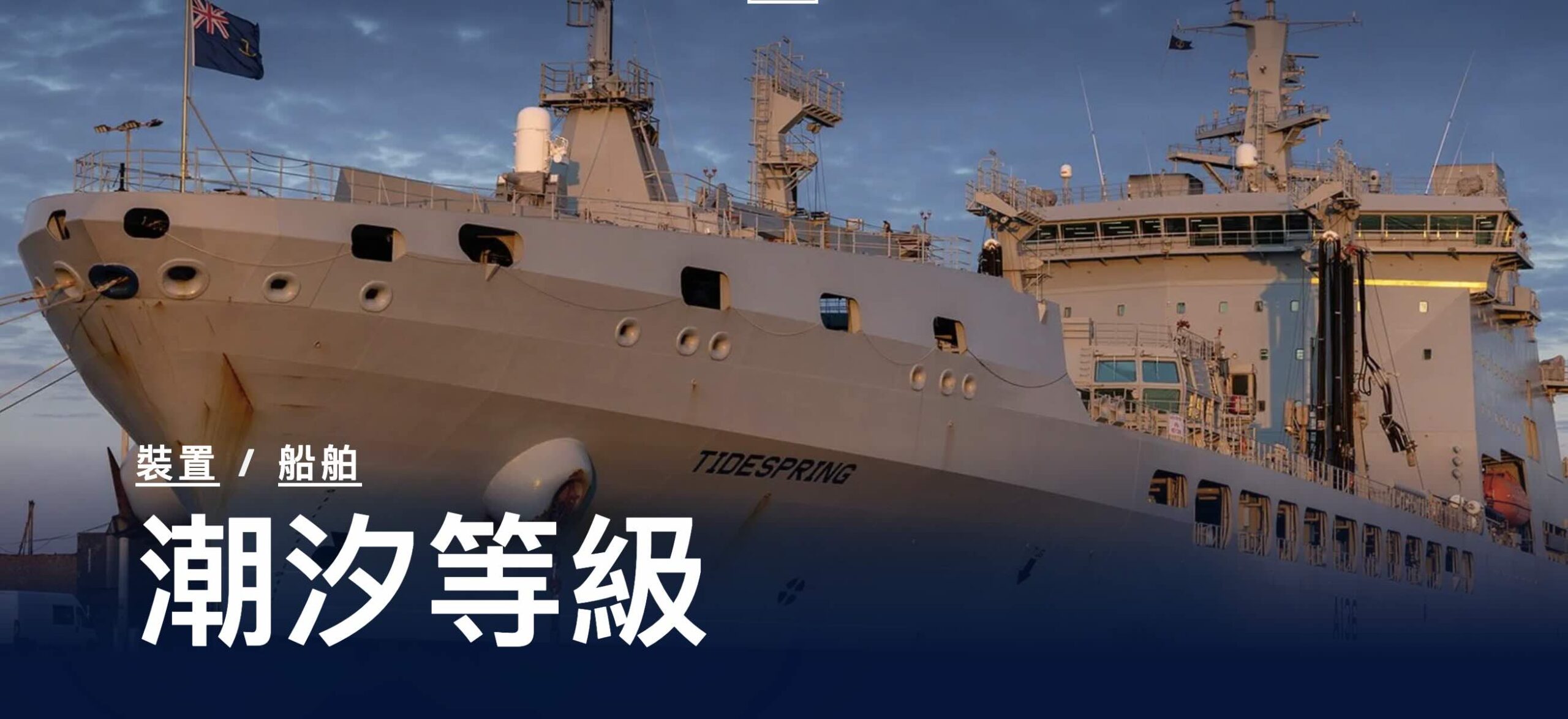
【軍傳媒/軍事科技】英國皇家海軍春潮號(RFA Tidespring、舷號A136)是皇家艦隊輔助隊(Royal Fleet Auxiliary, RFA)的「潮級」(Tide class)油彈補給艦中的第一艘,隸屬英國皇家海軍後勤艦隊,由韓國大宇造船海洋(DSME)公司依英國的AEGIR構型設計建造。於2014年12月安放龍骨,2015年4月下水,2017年11月正式編入 RFA服役,母港為南安普敦附近的Marchwood軍港。
根據英國皇家海軍官方資料,春潮號(RFA Tidespring)排水量39,000噸,擁有雙層船殼,符合MARPOL等環保與安全法規,降低碰撞或擱淺時油料洩漏風險。
春潮號(RFA Tidespring)全長約200.9公尺,舷寬約28.6公尺,吃水約10公尺,採用「CODELOD」複合推進配置,最高航速約20節,續航力約18,200海浬,屬於快速艦隊油輪之一。

春潮號的油艙設計可載運約500萬加侖的柴油與航空燃油,另外可以儲存36萬加侖的淡水,以及機油等潤滑油桶裝儲存空間,並能在甲板上搭載20呎標準貨櫃(TEU),實現液體油料與部分固體補給的分開整合輸送。
除此之外,春潮號具備完整機庫與大型飛行甲板,可操作一架中型直升機(如 Merlin或Wildcat),且甲板經強化,可供像契努克(Chinook)等級的重型直升機起降,這一點也是春潮號與舊型油輪相比的重要升級,對於英國皇家海軍正在測試中的重型運輸無人機來說更不成問題。
春潮號屬於補給艦,因此武裝就僅限輕度自衛能力,其可配置兩座Phalanx CIWS近迫武器系統與兩座30公厘遙控機砲,用以防禦反艦飛彈及小型近迫威脅。春潮號標準編制約60人,另可額外搭載約50名非編制人員(包括登艦的皇家海軍武器系統操作員、海軍航空隊機組、皇家海軍陸戰隊等)。今年的 Operation Highmast演習部署中,實際搭乘人數達到108人,其中75人為RFA 成員,其餘則是皇家海軍武器操作與維修人員、直升機分隊、無人機分隊,以及皇家海軍陸戰隊隊員。

從官方定義來看,春潮號的核心任務是「在全球範圍為皇家海軍提供後勤支援」,以快速艦隊油輪身分執行海上補給(Replenishment at Sea, RAS)作業,為海上任務編隊補給燃油、補給品以及搭載專門人員(包含皇家海軍陸戰隊)。春潮號不僅負責油料補給,也會承擔海上交通線巡護與人道救援等多樣任務,其大型飛行甲板可操作Chinook等重型直升機,使其在運送人員與物資、以及支援特種作戰或災害救援行動時,比以往多數RFA油輪更具彈性。
潮級補給艦在設計上直接對接伊麗莎白級航母的補給需求,潮級右舷設置兩組橫向補給桅杆桁架,間距正好對應伊麗莎白級航母左舷的兩個加油點,可同時接出四條7吋軟管,理論上每小時可向航空母艦輸送約2,000噸燃油,使伊麗莎白級航空母艦在處於威脅環境時,可以縮短兩艦並行補給時間,降低長時間無法機動控制船艦航向的風險。

在目前 RFA 整體艦隊老化嚴重、部分艦艇因結構問題被迫停用的情況下,潮級反而成為少數「狀態良好且仍在全球部署」的亮點船艦。RFA整體維修與人力不足的趨勢正在削弱皇家海軍的遠征能力,而英國皇家海軍春潮號(RFA Tidespring)其實正是英國皇家海軍遠征艦隊能保持戰力實際時間長短的關鍵;伊麗莎白級航空母艦戰鬥群能否在印太巡弋數月、跨三大洋維持高頻率的戰鬥飛行任務,取決於有沒有能跟得上、加得夠快、帶得夠多的補給艦。大量採用商規現成設備以壓低壽期成本和維修難度的潮級將是維持英國武力投射能力的重要支撐。
對比中華民國海軍磐石油彈補給艦 AOE-532,兩艦都屬於「補給艦」,但背後服務的是截然不同的戰略環境,因此在運用策略與實際用法上差異其實滿大。磐石艦全長約196公尺、寬約25.2公尺,滿載排水量約20,859噸,航速約22節,續航力約8,000海浬,載員約165人;任務平時以海上整補、運輸及人道救援為主,戰時則負責油彈整補與戰略物資運輸,以維持艦隊戰力持續,強調油、水、彈、乾貨與醫療的一艦多用,春潮號重點放在高效率、長航程的液態補給能力,乾貨運補能力相對有限,這方面是由另外的船隻負責,春潮號的液態補給能力使英國得以獨立維持遠洋航艦作戰,不需要頻繁往復港口補給為主要原則。島嶼防衛型海軍與遠征航艦型海軍在補給艦運用上舊有根本的差異。
RFA Tidespring (A136), the first ship of the Royal Fleet Auxiliary’s Tide-class fast fleet tankers, plays a pivotal role in the Royal Navy’s logistics force. Built by South Korea’s DSME based on Britain’s AEGIR design, Tidespring was laid down in December 2014, launched in April 2015, and formally entered RFA service in November 2017. Her home port is Marchwood Military Port, near Southampton.
According to Royal Navy data, Tidespring displaces approximately 39,000 tons and features a double-hull configuration compliant with MARPOL environmental and safety regulations, reducing the risk of fuel leakage in the event of grounding or collision. The ship measures 200.9 meters in length, 28.6 meters in beam, with a 10-meter draught, and uses a hybrid CODELOD propulsion system. She reaches a maximum speed of around 20 knots and has an impressive endurance of 18,200 nautical miles, placing her firmly in the category of fast fleet replenishment tankers.
The ship’s fuel tanks can carry roughly 5 million gallons of marine diesel and aviation fuel, along with 360,000 gallons of fresh water and additional space for lubricating oil stored in drums. Tidespring can also embark 20-foot standard containers (TEUs), enabling segregated yet integrated delivery of liquid fuels and certain dry stores.
In addition, Tidespring is equipped with a full hangar and a large flight deck capable of operating a medium helicopter such as the Merlin or Wildcat. The deck is reinforced to accommodate heavy-lift aircraft like the Chinook, representing a major upgrade over older RFA tankers and directly supporting the Royal Navy’s ongoing experiments with heavy transport UAVs.
As a replenishment vessel, Tidespring carries only limited self-defense armament: two Phalanx CIWS mounts and two 30 mm remote weapon stations, offering protection against anti-ship missiles and small, fast-moving threats. She typically operates with a core crew of around 60 personnel, with capacity for about 50 additional embarked staff—including Royal Navy weapon-systems teams, Fleet Air Arm detachments, and Royal Marines. During this year’s Operation Highmast, Tidespring sailed with 108 personnel, including 75 RFA members, plus weapons operators, maintenance teams, helicopter units, UAV detachments, and Royal Marines.
By definition, Tidespring’s primary mission is to “provide global logistical support to the Royal Navy.” As a fast fleet tanker, she performs Replenishment at Sea (RAS) to supply fuel, stores, and personnel to deployed naval forces. Beyond fuel logistics, she also contributes to sea-lane patrol duties and humanitarian assistance missions. Her ability to handle Chinook-class aircraft provides exceptional flexibility for personnel movement, cargo transfer, special operations support, and disaster-relief tasks—surpassing the capabilities of many previous RFA tankers.
The Tide-class was designed specifically to meet the replenishment needs of the Queen Elizabeth–class aircraft carriers. Each Tide-class ship mounts two RAS rigs on the starboard side, spaced to align precisely with the two refueling points on a QE-class carrier’s port side. This configuration allows up to four 7-inch hoses to be connected simultaneously, enabling theoretical maximum fuel transfer rates of approximately 2,000 tons per hour. This significantly shortens replenishment time in contested environments, reducing the risk associated with prolonged, parallel sailing alongside a carrier.
Amid severe aging across the RFA fleet—where several vessels have been withdrawn due to structural issues—the Tide-class stands out as one of the few “healthy and globally deployable” assets. Persistent shortages in maintenance and personnel continue to erode the Royal Navy’s expeditionary reach. In this context, Tidespring is not merely a support ship but a critical determinant of how long the UK Carrier Strike Group can remain combat-effective. The ability of a QE-class carrier group to operate for months in the Indo-Pacific, executing high-tempo air operations across three oceans, depends on whether it has a replenishment tanker that can keep pace, deliver quickly, and carry enough.
Designed with commercial off-the-shelf systems to reduce life-cycle costs and simplify maintenance, the Tide-class vessels are foundational pillars supporting the UK’s power-projection capability.
Comparing Taiwan’s AOE-532 Panshih and the UK’s Tide-Class: Two Ships, Two Strategies
While both Tidespring and Taiwan’s AOE-532 Panshih are classified as replenishment ships, they serve fundamentally different strategic environments, resulting in significant operational distinctions.
ROCN Panshih
- Length: ~196 m
- Beam: ~25.2 m
- Full-load displacement: ~20,859 tons
- Speed: ~22 knots
- Range: ~8,000 nm
- Crew: ~165 personnel
- Mission focus: peacetime logistics, transport, and humanitarian relief; wartime fuel/ammo resupply and strategic sustainment
- Design philosophy: multi-role (fuel, water, ammunition, dry cargo, medical support)
RFA Tidespring
- Emphasis: high-efficiency, long-range resupply of liquid fuel
- Dry stores capacity: limited (handled by separate RFA vessels)
- Strategic aim: sustain long-distance aircraft carrier operations without requiring frequent port calls
Taiwan, as an island-defense navy, requires a versatile multi-mission replenishment platform serving short-to-medium-range operations. The United Kingdom, as an expeditionary carrier navy, relies on specialized tankers optimized for continuous sustainment of distant Carrier Strike Groups.
In short, mission drives design—and Tidespring reflects the needs of a navy operating thousands of miles from home.