

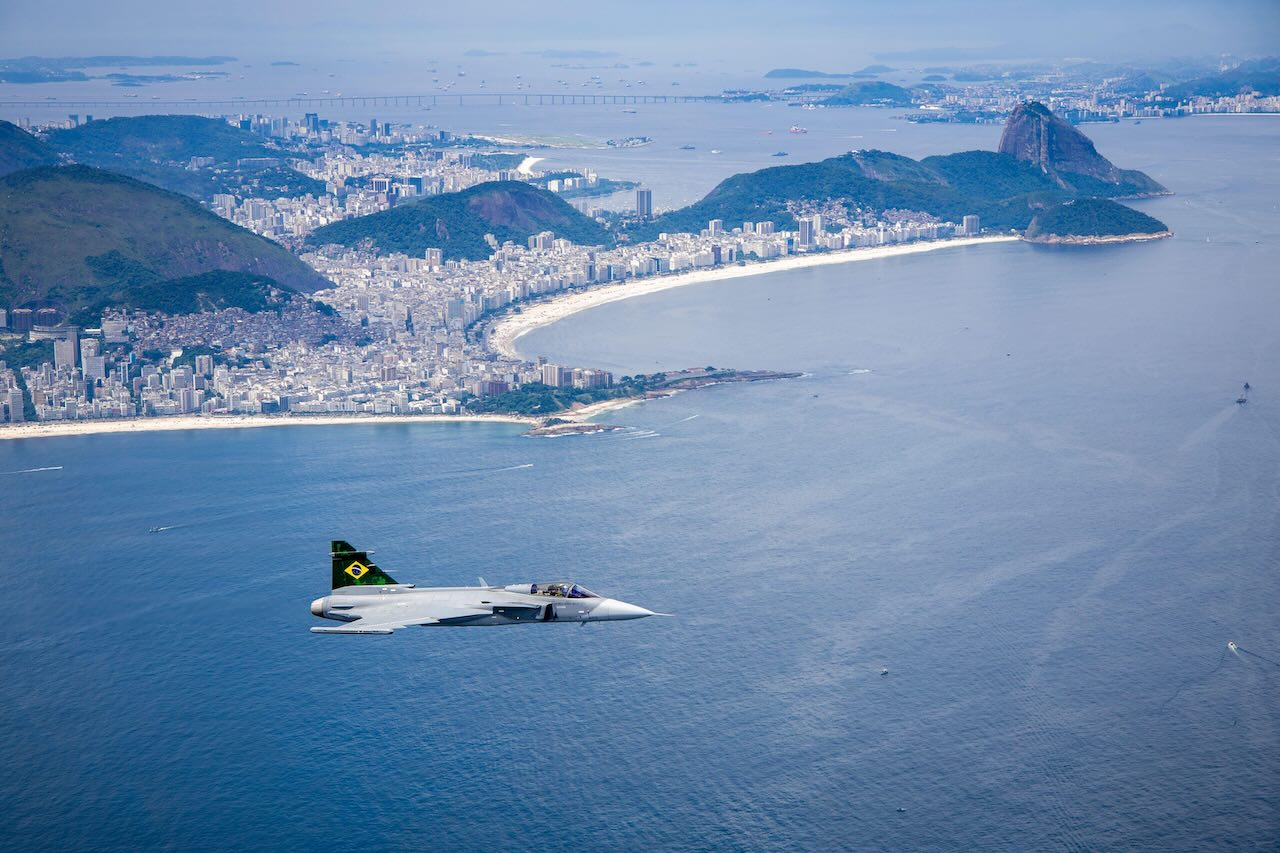
【軍傳媒/俄烏戰爭】在美國退出援烏的行列後,歐洲國家替補了相關的空缺,最近傳出烏克蘭將向瑞典薩博(Saab)公司採購多達150架的鷹獅(Gripen) E/F 戰機,用以重新建立未來的空軍。
過往烏克蘭空軍清一色採用蘇系飛機,包括米格-29戰鬥機、蘇-25戰鬥轟炸機、蘇-24攻擊機和蘇-27/30重型戰鬥機,戰爭開始後三年,烏克蘭空軍除了原本的飛機外,也接收了歐盟國家的二手F-16以及幻象2000戰機,開始逐漸接觸西方航電系統的飛機;而Saab JAS 39 Gripen E/F 是由瑞典設計製造的一款第四代多功能單發戰機,相較於早期的 C/D 型,E/F 採用了更強勁的發動機、更大的內部油量與更現代化電子設備,使其整體性能大幅提升。具體來說,Gripen E 搭載的是通用電氣的 F414G(或稱 GE F414)發動機,使推力與動力都有明顯提升。
由於烏克蘭需要的是防禦作戰的多用途飛機,F-16自然是其首選,不過在目前川普政府對烏克蘭並不友好的情況下,瑞典的Gripen E/F浮上檯面,其機體設計強調靈活性與多任務能力,除傳統空對空作戰,它可執行對地攻擊、偵察、電子戰等任務。Gripen E配備新一代 AESA 雷達、紅外搜尋追蹤 (IRST) 系統、先進通訊與電子戰 (EW) 系統,以及多達十個掛架 (hard-points),可掛載多種飛彈與武裝。這些設計讓Gripen戰機在航程、武器搭載與任務彈性上都有不錯的表現。

要訓練飛行員和地勤人員使用一種全新的、作戰理念不同、系統標識也使用外語的快速噴射戰機並不容易,烏克蘭空軍要從上世紀80年代的蘇聯飛機過渡到本世紀初的北約飛機,必然會帶來許多適應上的問題。此外也要考慮能否融入指揮控制系統發揮戰力,以及備用零件和武器庫存的建立能否符合需求等。
鷹獅Gripen戰機最初設計要符合瑞典的使用需求,設計初衷就是為了能夠在較簡陋、分散、甚至偏遠基地 (austere airstrips) 起降與維護,因此其具備維修與後勤需求相對較低、可以在鄉間的公路上短場起降的能力,降低對高階基地與繁複後勤支援的依賴。這種高效低維護需求的理念,使其對於資源有限及高密度作戰節奏的烏克蘭空軍來說,是一項重要優勢。
對烏克蘭而言,目前正處於高度作戰態勢,前線與支援基地頻繁受到打擊,傳統大型固定基地與高維修需求的戰機,面臨基地易被摧毀、維修補給線脆弱等風險。鷹獅Gripen E戰機正是瑞典為了在與俄羅斯作戰、不穩戰場環境下生存而設計。
除了硬體設計之外,鷹獅Gripen E的電子戰 (EW) 與現代感測器 (AESA、IRST) 對於烏克蘭這種與俄羅斯進行資訊與電子對抗 (information/EW warfare) 的大規模衝突而言,也是一大加分。

烏克蘭採購Gripen的潛在困難
根據最近報導,瑞典與烏克蘭雙方已就採購鷹獅Gripen E戰機達成初步意向簽署(LOI),,距離正式合約、量產交機還有一大段距離。首先是基輔是否有能力採購如此大量的戰機,由於正處在作戰中,烏克蘭的經濟可說受到嚴峻考驗,不過這有可能透過其他的合作轉嫁款項的交付,因此最終應該還是能找到方法。
另外是瑞典Saab的產能是否足夠交付150架的巨量訂單,雖然瑞典Saab之前已經拿下巴西的訂單而開始建立額外的產線,應此應該能適當舒緩產能問題,同時也大幅提升瑞典Saab的能見度,對於其在泰國、菲律賓爭取的訂單也將會有所幫助。
再來就是政治影響,為了挽回印巴空戰失利的顏面,法國也與烏克蘭簽署採購100架飆風Rafale戰機的意向書,以及後續美國會不會強推烏克蘭F-16系列戰機等,不過法國與美國在戰機產能上連線有訂單都在積壓,這對能快速滿足烏克蘭需求的瑞典Saab是一項利多,同時鷹獅Gripen E的主要技術來源集中在英國,比要整合多國技術輸出許可將更容易。
雖然鷹獅Gripen戰機一開始是為了與與俄羅斯對抗而設計的飛機,但它在現代大規模混合戰 (multi-domain warfare)中,在對抗具備高端防空、電子戰、長程打擊能力的敵人上,尚未經歷實戰的驗證,若與達梭的飆風Rafale戰機一樣被俄羅斯遠距離擊落,則將大大打擊相關信任度。
最後,從戰略整合角度看,烏克蘭目前已有多種來源與類型的西方戰機,要將這些機隊完整融合 (包括訓練、指揮控制、彈藥整合、電子戰共用等) 並不容易,若整合不良,反而可能造成總體效率不如想像的反效果。對於目前戰時、後勤環境脆弱、物資流動不穩的烏克蘭而言,保障地勤維修能量、備件供給充足,以及合適的彈藥武器供應鏈,這些仍是現實殘酷的挑戰。

With the United States scaling back its support for Ukraine, European nations have stepped in to fill the gap. Recent reports indicate that Ukraine is considering procurement of up to 150 Saab Gripen E/F fighters from Sweden as a major step toward rebuilding its future air force.
For decades, the Ukrainian Air Force relied exclusively on Soviet-designed platforms such as the MiG-29, Su-25, Su-24, and Su-27/30. Three years into the war, Ukraine has also received second-hand F-16s and Mirage 2000s from European nations, giving its pilots their first real exposure to Western avionics and operational concepts. The Saab JAS 39 Gripen E/F, a fourth-generation single-engine multirole fighter designed and built in Sweden, represents a significant technological leap. Compared to the earlier C/D variants, the E/F model incorporates a more powerful GE F414G engine, increased internal fuel capacity, and modernized avionics, delivering substantial improvements in performance and combat capability.
Since Ukraine requires a multirole fighter optimized for defensive operations, the F-16 was naturally its first choice. However, given the current U.S. political climate—which is increasingly unfavorable toward Ukraine—the Swedish Gripen E/F has emerged as a viable alternative. Its design emphasizes agility and mission flexibility. In addition to air-to-air combat, the aircraft is capable of strike missions, reconnaissance, and electronic warfare. Equipped with a new-generation AESA radar, IRST sensor, advanced communications, integrated EW suite, and up to ten weapon hardpoints, the Gripen provides strong range, payload, and multi-mission versatility.
Training pilots and ground crews to operate an entirely new fighter—one with different tactical doctrine and foreign-language system interfaces—is far from simple. Transitioning from 1980s-era Soviet aircraft to early-21st-century NATO platforms inevitably introduces numerous adaptation challenges. Ukraine must also consider whether these aircraft can be effectively integrated into its command-and-control network, and whether spare parts, maintenance capacity, and munitions stockpiles can be sufficiently established.
The Gripen was originally designed around Sweden’s national defense requirements. This included the ability to operate from dispersed, austere road bases with minimal logistical support. As a result, the aircraft features low maintenance demands and short-takeoff capability from improvised road strips, reducing dependence on large air bases and complex logistics infrastructures. For Ukraine—where resources are limited and combat tempo is high—this philosophy offers a significant operational advantage.
Ukraine currently operates under intense wartime pressure, with both front-line and rear-area bases frequently targeted by Russian strikes. Large fixed bases and maintenance-heavy aircraft face heightened vulnerability. The Gripen, however, was designed precisely for survivability and dispersal in a conflict environment shaped by Russian long-range and electronic-warfare capabilities.
Beyond its physical design, the Gripen E’s modern EW suite and sensors (AESA, IRST) offer valuable advantages in the large-scale information and electronic-warfare battles central to the Ukraine–Russia conflict.
Potential Challenges Facing Ukraine’s Gripen Procurement
According to recent reporting, Sweden and Ukraine have signed a preliminary letter of intent (LOI) for the Gripen E, but the path to a formal contract and mass production remains long. First, Kyiv must assess its financial capacity to procure such a large fleet. Ukraine’s economy is severely strained by wartime demands, although creative financing or multi-nation support packages could ultimately make the acquisition feasible.
Another challenge is Saab’s production capacity. While Saab has expanded its manufacturing lines—partly due to contracts with Brazil—delivering 150 aircraft would still represent an enormous order. Nevertheless, such a contract would significantly enhance Saab’s global profile and may benefit its ongoing bids in Thailand and the Philippines.
Political considerations also loom large. France, eager to offset reputational damage after setbacks in the India-Pakistan air combat narratives, has signed an LOI with Ukraine for 100 Rafale fighters. Meanwhile, the United States may push to prioritize the F-16 for Ukraine. However, both France and the U.S. are already experiencing production backlogs—making Sweden’s more agile supply chain an advantage. In addition, many key Gripen technologies originate primarily from the UK, simplifying export licensing compared to platforms involving multinational supply chains.
Despite being conceptualized as a fighter capable of countering Russia, the Gripen has not yet been tested in a large-scale multi-domain conflict against an adversary with advanced air defenses, EW assets, and long-range strike capabilities. Should it suffer losses similar to reported long-range shoot-downs of Rafales, its operational credibility could be affected.
Finally, from a force-integration perspective, Ukraine is already receiving multiple types of Western aircraft. Integrating these platforms—training pipelines, C2 systems, weapons compatibility, EW interoperability—is a complex undertaking. Poor integration could reduce rather than enhance combat effectiveness. For a country fighting a war with fragile logistics and unstable supply lines, ensuring adequate maintenance capacity, spare parts availability, and reliable access to compatible munitions remains an ongoing challenge.