

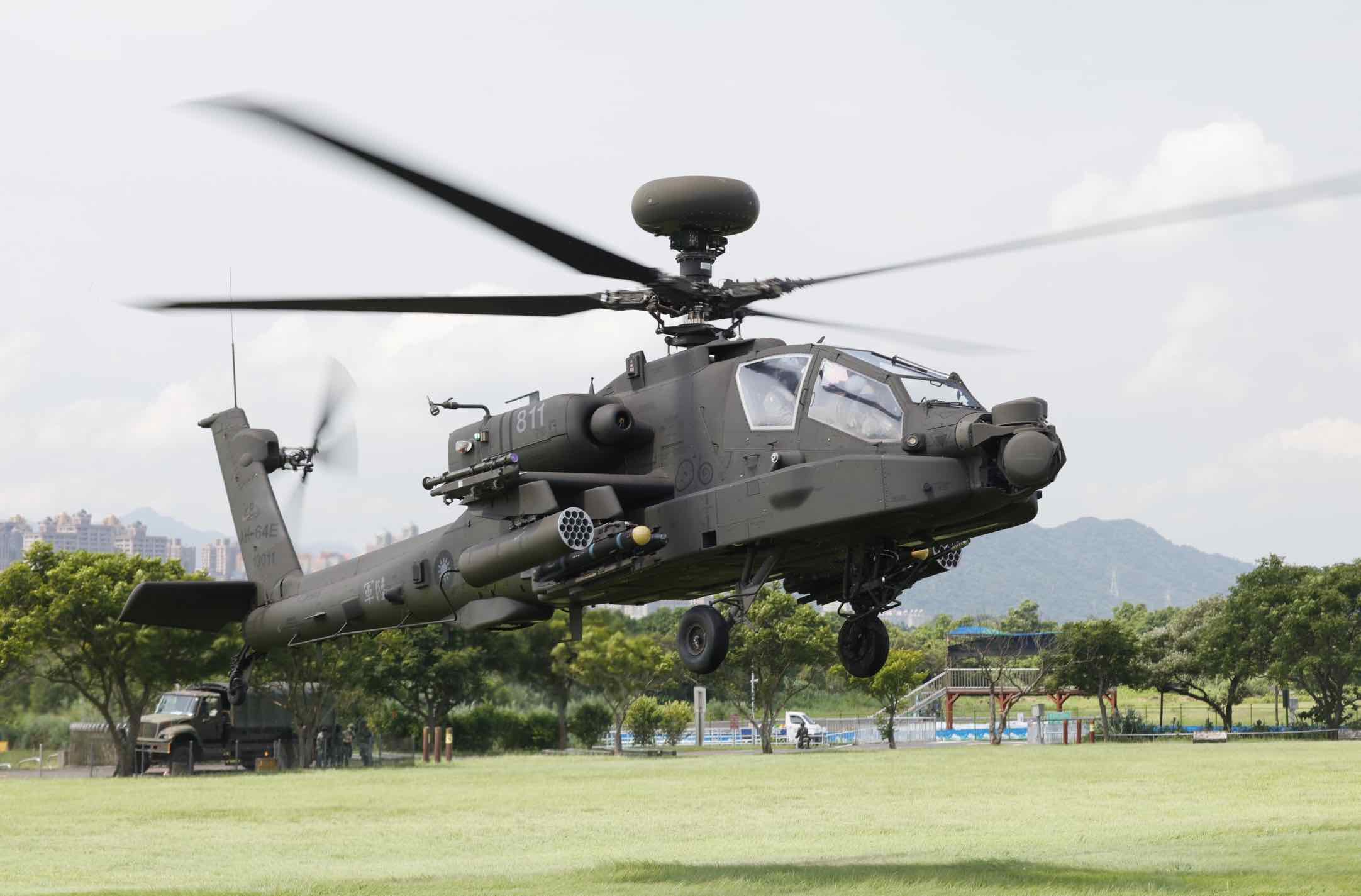
【軍傳媒/軍事專欄】自俄烏戰爭爆發以來,地面作戰的樣態產生劇烈變動:無人機、精準火力、大規模感測網路與數位 C4ISR(指管系統)重塑了陸戰形態,也讓過往厚重、線性、防禦式的地面建制被迫進化。台灣的軍事改革核心之一「聯兵旅(Combined Arms Brigade, CAB)」即是在此背景下推動,試圖以更具彈性與自給能力的旅級編制,取代舊式師級結構。
台灣的聯兵旅改革,核心精神在於將步兵、裝甲、砲兵、工兵、防空與後勤整合成一個能獨立運作的旅級作戰單位。理論上,這種組織能使部隊在戰時反應更快、協同更緊密,也讓指揮鏈更加精簡。這樣的改革雖然符合全球軍事潮流,卻仍然停留在傳統的聯合作戰框架內,如今戰場的變化速度已經遠超過傳統編制的調整幅度。俄烏戰爭的激烈交鋒讓外界清楚看見,沒有強大資訊化能力的部隊,很難真正形成有效戰力。
以國軍現行聯兵旅而言,其最大挑戰在於感測能力、火力連結以及即時資訊整合的廣度與深度仍不足。雖然部隊內已有部分無人機與火力修正能力,但量能與系統整合程度仍落後於現代戰場需求。烏軍之所以能在戰爭前期與俄軍抗衡,很大程度不是因為裝備優勢,而是因為其旅級甚至營級部隊已能熟練運用無人機、衛星影像、民間科技與開源情資,快速形成察打一體的擊殺鏈,從發現敵情到火力打擊往往只需要幾分鐘。而在台灣現行體制中,同樣的流程仍包含多個指揮節點,資訊分段處理造成時間延遲,難以匹配高科技戰場所需的速度。
烏克蘭部隊因應作戰的演化,是高度的任務導向彈性。許多旅級單位在戰鬥中自然演化出適應性很強的編組方式,例如依任務重組無人機攻擊小組、夜戰滲透隊、重裝突擊隊,甚至臨時成立專精反無人機作戰的分遣隊,以及使用無人載具的救援後勤隊伍。這種編組方式極少見於傳統軍隊,卻完全符合現代戰場的節奏,在前線戰場上,任何固定化的任務分配都會因為敵軍火力與偵察密度而迅速失效,部隊的自主調整能力反而成為最關鍵的戰力發揮來源。
反觀台灣聯兵旅,目前仍以既定表格式編制為主。這種組織對於平時訓練與整備固然有效,但若戰場要求部隊臨時重組,例如將某些排級單位併入無人機中隊、或將裝甲分隊與砲兵組合成臨時突擊群,則目前制度與指揮流程是否支援如此高度彈性,仍然是未知數。

俄烏戰爭另一個重要改變,是火力不再依靠單一種載台或一條指揮鏈運作,而是依靠大規模感測與分散式協調所形成的彈性打擊網。烏軍在火力運用上極為分散,從榴彈砲、自走砲、車載火箭、迫砲到自殺無人機,構成多層次、可互相替補的火力體系。這種火力密度雖然不比俄軍龐大,但因協調程度極高,使其具備相當的戰術優勢,能快速將火力投射到需要的位置,往往能打斷俄軍的進攻節奏,或給予其突然的大量殺傷。
台灣目前的聯兵旅雖然具備旅級砲兵與迫砲火力,但其整合方式仍偏向傳統砲兵模式。若要面對來自解放軍的高度精準火力與持續無人機偵蒐,國軍需要的不僅是增強火力,而是讓火力能夠即時呼應感測資料,並在敵方反打擊前迅速轉移,這需要資訊鏈接能力、訓練方式、後勤補給都有所調整。台灣使用無人機目前只是皮毛,能將偵蒐的資訊轉化成實際的火力才有真效。
俄烏戰場對台灣的一個直接警訊,是無人機已成為現代戰場最普遍的攻擊載台。從廉價 FPV 到中程偵察機,各種無人機組成密集偵察網甚至直接執行攻擊。在這樣的環境下,防空不再只是攔截飛機或巡弋飛彈,而是必須在營、連,甚至排級就具備反無人機能力。台灣聯兵旅的防空概念目前仍存在以陸射劍二作為中程野戰防空,短程刺針飛彈作為近程野戰防空等傳統觀念,然面對海量的無人機,國軍應轉向更多元的反無人機技術,包括電子干擾、雷達偵測、微型武器攔截與誘餌技術,現行思維根本不足以應付無人機密度急遽上升的戰場;日前總統參訪後備單位訓練時其反無人機仍以無瞄具步槍進行攻擊,顯見觀念與現實仍有極大差距。
而俄羅斯在戰場上的改變,則是利用2-5人的小單位進行滲透,利用隔熱布等方式防止無人機偵測,逐漸在防線附近集結,待天候不利烏克蘭偵查單位發揮時(濃霧、大雨)俄羅斯會派遣部隊乘坐越野車、摩托車,有時甚至是裝甲車,沿著烏克蘭部隊的防線縫隙快速推進,一但威脅到烏克蘭補給線路,就有機會逼退烏克蘭部隊。

由於政治情勢不斷改變,在美援斷絕情況下,烏克蘭選擇大力投資到無人載具上,除了進入門檻低、自身能控制,加上軍與民之間的技術流動極快,各種新工具、新軟體、新偵查平台能在極短時間內被旅級部隊採納,同時又能快速反饋改良,烏克蘭在空中地面及海上的無人載具都取得一定的成功,也大幅減輕兵源不足的壓力。
反觀台灣,無論在採購流程或指揮體系上,導入新科技的速度相對緩慢,但面對的中國人口巨大優勢仍存在;國軍必須建立更具彈性的採購與測評制度,使科技能夠在旅級層級快速實驗與運用。
未來中國解放軍的攻擊必然包含大量彈道飛彈、巡弋飛彈、遠程火箭彈、無人機、直升機與登陸部隊,而國軍旅級防禦部隊任務將從反登陸、反突穿、縱深打擊到解決小股滲透部隊皆一應俱全,這些任務對資訊流通速度、部隊反應時間、後勤補給方式都提出巨大挑戰,若仍以機械化作戰觀念來規劃,將演變成代差的不對稱碾壓。
俄烏戰場的經驗顯示,戰場不再像過去那樣,根據部署部隊的縱深劃分前線、縱深區和後方區域,而是使用「爭奪區」或「灰色地帶」的概念。爭奪區域通常部隊暴露於敵方火力之下,雙方在該區域內交戰;為了使部隊能夠繼續在該區域作戰,必須對交戰部隊進行補給。而在爭奪區之外,再向外延伸約30公里,敵方無人機在該區域盤旋,砲兵系統也在此區域進行打擊,這些就成為灰色地帶。而在往後方的預備隊集結處、後勤彈藥油料庫存樞紐、工業目標所在的區域,未來可能對交戰區產生影響的區域則稱為縱深區域,對縱深區域的打擊很可能會影響交戰區域的勝負。
綜合以上觀察,未來的勝利不在於兵力規模,而在於哪一方更能有效整合資訊、火力與機動,並且在極短時間內調整作戰方式。國軍必須朝更資訊化、更分散化、更具彈性的方向調整,這不只是增加採購無人載具的數量就可以達成,而是建立旅級資料融合中心、強化火力與感測的即時連結、推動任務導向編組、提升短程防空密度以及讓後備力量真正融入旅級作戰架構,才能在高科技、多域打擊的戰場中具有生存與作戰能力。

Since the outbreak of the Russo-Ukrainian war, the nature of ground combat has undergone dramatic changes. Drones, precision fires, large-scale sensor networks and digital C4ISR systems have reshaped land warfare and forced traditional, heavy, linear and defense-oriented ground organizations to evolve. One of the core elements of Taiwan’s military reform, the Combined Arms Brigade (CAB), was promoted against this backdrop. It aims to replace the old division-based structure with a more flexible, self-sustaining brigade-level organization.
The central idea of Taiwan’s CAB reform is to integrate infantry, armor, artillery, engineers, air defense and logistics into a brigade-level combat unit capable of independent operations. In theory, such an organization should allow faster wartime response, tighter coordination and a streamlined chain of command. Although this reform is in line with global military trends, it still largely remains within the traditional framework of combined-arms operations, while the pace of battlefield change has already far exceeded the speed at which traditional force structures can adapt. The intense fighting in Ukraine has made it clear that units without strong digitization and information capabilities will have great difficulty generating effective combat power.
For Taiwan’s current CABs, the greatest challenges lie in the insufficient breadth and depth of sensing capability, fire-support connectivity and real-time information integration. Although some drones and fire-correction capabilities already exist within units, the overall capacity and degree of systems integration still lag behind modern battlefield requirements. The reason Ukrainian forces were able to confront the Russian military in the early stages of the war was not primarily superior equipment, but the fact that brigade-level and even battalion-level units had already learned to skillfully employ drones, satellite imagery, civilian technology and open-source intelligence. Together, these formed an integrated “sensor-to-shooter” kill chain, in which only a few minutes might elapse between detecting the enemy and delivering firepower. Under Taiwan’s current system, the same process still involves multiple command nodes; information is processed in segments, causing time delays that are incompatible with the speed demanded by a high-technology battlefield.
In response to the evolution of combat, Ukrainian units have developed a high degree of mission-oriented flexibility. Many brigade-level formations have naturally evolved, under fire, into highly adaptive organizational structures. They reorganize drone strike teams, night-raid infiltration groups, heavy assault units, and even ad hoc detachments specializing in counter-drone operations, as well as unmanned vehicle–based rescue and logistics teams, according to the mission at hand. Such organizational methods are rarely seen in traditional armed forces, yet they fit perfectly with the tempo of modern warfare. At the front, any fixed division of tasks is quickly rendered obsolete by the density of enemy fire and reconnaissance. The unit’s ability to autonomously adjust itself instead becomes the key source of combat effectiveness.
In contrast, Taiwan’s CABs are still largely built around predetermined table-of-organization structures. This type of organization is indeed effective for peacetime training and force generation, but if the battlefield requires rapid reconfiguration—such as integrating certain platoon-level elements into a drone squadron, or combining an armor detachment with artillery units to form an ad hoc assault group—it remains uncertain whether the current system and command processes can support such a high level of flexibility.
Another major change revealed by the Russo-Ukrainian war is that firepower no longer relies on a single platform or a single chain of command, but instead on an elastic strike network created by large-scale sensing and distributed coordination. Ukrainian forces employ firepower in an extremely dispersed fashion, from howitzers and self-propelled guns to vehicle-mounted rockets, mortars and loitering munition drones, forming a multi-layered fire-support system in which various means can substitute for one another. Although the sheer volume of Ukrainian firepower cannot match Russia’s, the high degree of coordination gives Ukraine significant tactical advantages. It allows Ukrainian forces to rapidly project fire to where it is needed, often disrupting Russian offensive tempo or delivering sudden, large-scale attrition.
While Taiwan’s CABs possess artillery and mortar firepower at the brigade level, integration is still largely conducted according to traditional artillery concepts. To confront the People’s Liberation Army’s highly precise fires and persistent drone reconnaissance, Taiwan’s armed forces must do more than simply increase the amount of firepower. They must ensure that fires can respond immediately to sensor data and relocate quickly before the enemy’s counter-strikes arrive. This requires adjustments in information links, training methods and logistical support. Taiwan’s current use of drones is only superficial; only when reconnaissance data is converted into actual firepower effects can it deliver real combat value.
The Russo-Ukrainian battlefield sends Taiwan a direct warning: drones have become the most ubiquitous attack platform in modern war. From cheap FPV drones to medium-range reconnaissance UAVs, different types of drones form dense reconnaissance networks and even directly conduct strikes. In such an environment, air defense is no longer merely about intercepting aircraft or cruise missiles; brigade, battalion and even company-level units must possess counter-drone capabilities. At present, Taiwan’s CAB air defense concept still follows the traditional pattern of using land-based Sky Bow II for medium-range field air defense and Stinger missiles for short-range defense. Faced with massive numbers of drones, however, the military must pivot toward more diverse counter-UAS technologies, including electronic jamming, radar detection, micro-weapon interception and decoy systems. Existing thinking is fundamentally insufficient to cope with the rapidly increasing density of drones on the battlefield. During a recent presidential visit to a reserve unit’s training, troops were still using iron-sighted rifles without optics to shoot at drones, underscoring the enormous gap between current concepts and battlefield reality.
Russian forces have also made adjustments on the battlefield, increasingly employing small infiltration teams of two to five soldiers. Using insulating blankets and other means to avoid detection by drones, they gradually assemble near defensive lines. When weather conditions are unfavorable to Ukrainian reconnaissance units—such as in heavy fog or rain—Russia dispatches troops in off-road vehicles, motorcycles and sometimes even armored vehicles, pushing rapidly along gaps in Ukrainian defensive lines. Once they threaten Ukrainian supply routes, they gain opportunities to force Ukrainian units to withdraw.
Because of shifting political circumstances and the risk of U.S. military aid being cut off, Ukraine has chosen to invest heavily in unmanned systems. These platforms have low entry barriers, can be controlled domestically, and benefit from rapid technology flow between the military and civilian sectors. New tools, software and reconnaissance platforms can be adopted by brigade-level units in a very short time, and feedback can be quickly incorporated for improvement. Ukrainian unmanned systems in the air, on land and at sea have all achieved notable success, significantly alleviating pressure caused by manpower shortages.
By contrast, Taiwan’s procurement processes and command system introduce relatively slow adoption of new technologies, even as it faces China’s overwhelming demographic advantage. The armed forces must establish more flexible procurement and testing mechanisms so that technologies can be experimented with and applied quickly at the brigade level.
In any future conflict, the People’s Liberation Army’s attacks will almost certainly involve large numbers of ballistic missiles, cruise missiles, long-range rockets, drones, helicopters and amphibious landing forces. Brigade-level defensive units in Taiwan will have to handle a full spectrum of missions, from anti-landing and anti-penetration operations to deep strikes and the elimination of small infiltration teams. These missions impose enormous demands on information flow speed, unit reaction time and logistical support. If operations continue to be planned solely according to a traditional mechanized-warfare mindset, the result will be a generational gap and asymmetric overmatch in China’s favor.
Experience from the Russo-Ukrainian battlefield shows that modern war no longer divides the ground fight into clearly separated front lines, depth areas and rear areas based solely on the deployment of forces. Instead, it is more accurate to speak of “contested zones” or “gray zones.” In contested areas, units are exposed to enemy fire and both sides actively fight. To keep forces operating there, they must be resupplied under fire. Extending roughly 30 kilometers beyond the contested zone lies a region where enemy drones loiter overhead and artillery systems conduct strikes; this becomes the gray zone. Behind that, further to the rear, lie areas for reserve assembly, ammunition and fuel depots and industrial targets. These are the depth areas whose destruction can critically affect the outcome in the contested zone. Strikes against the depth may therefore decide the battle at the front.
Taken together, these observations suggest that future victory will not belong to the side with the largest number of troops, but to the side that can more effectively integrate information, firepower and mobility, and adjust its way of fighting in extremely short timeframes. Taiwan’s armed forces must move toward a force that is more information-driven, more dispersed and more flexible. This cannot be achieved simply by purchasing more unmanned platforms. Rather, Taiwan must establish brigade-level data-fusion centers, strengthen real-time links between sensors and fires, promote mission-oriented task organization, increase the density of short-range air defense, and ensure that reserve forces are truly integrated into brigade-level operational structures. Only in this way can Taiwan’s combined arms brigades possess the survivability and combat capability needed on a high-technology, multi-domain battlefield.