

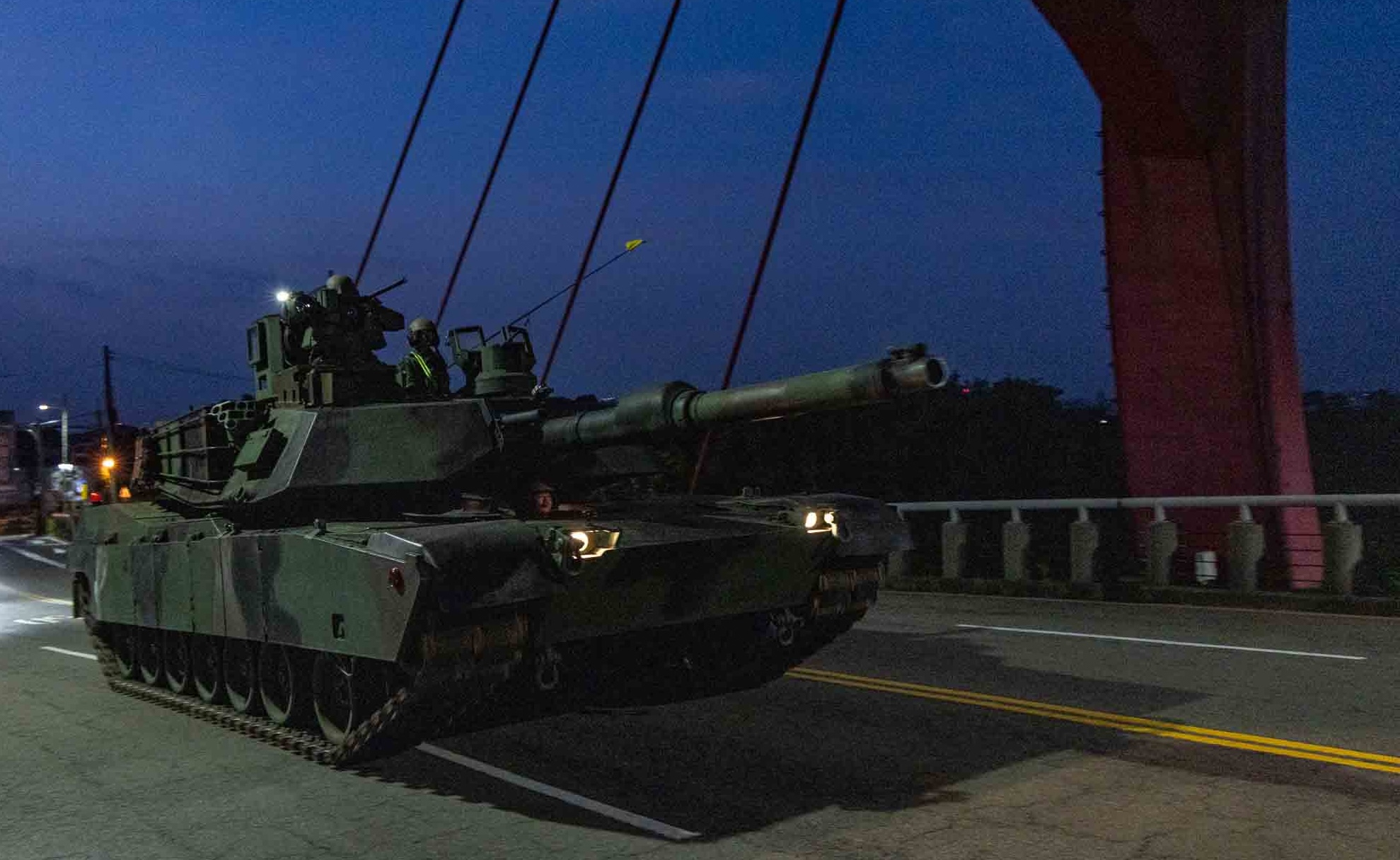
陸軍聯兵584旅聯兵3營昨日凌晨執行M1A2T戰車戰備偵巡任務,並邀請媒體採訪,部隊自營區完成戰備整備後,沿新竹地區道路機動,前往重要目標與關鍵基礎設施周邊遂行防護演練。此次任務除納編M1A2T戰車,也結合CM32、CM33八輪甲車及拖式飛彈車等兵力,演練反滲透、反空降、重要目標防護與快速應變等課目,透過實兵、實地、實車方式驗證裝甲部隊在接獲命令後,能否於夜間迅速完成整備並投入防衛作戰。陸軍新聞參考資料指出,官兵於天色未明前完成戰車、武器裝備、動力系統及通信裝備檢查,並完成任務提示、通信構聯與命令下達,顯示此次偵巡不只是形象展示,而是將機械妥善、車隊管制、通聯能力與路線通行一併納入檢驗。
凌晨3時左右開始戰備偵巡前整備、武器與車輛檢查、命令下達,隨後車隊出營區大門轉入台一線,並由監偵排掩護車隊通行、戰車依序通過舊港大橋。此次任務受到外界高度關注,主要原因在於M1A2T接裝後,外界近期出現兩項疑問:一是社群媒體上該單位兵員投訴旅長治軍無方,過於諂媚長官導致基層工作過量,且影響到這型主戰車的妥善率低於應有水準,一大堆戰車在掩體內待料;二是60噸級以上主戰車在台灣橋梁與道路上機動,是否會產生結構安全疑慮,這從採購M1A2T戰車開始就頗多爭議。立法院質詢中曾出現M1A2T是否缺料、妥善率低落與維修未達標準等質疑,國防部長顧立雄則回應,目前仍在接裝過程中,沒有缺裝或後勤維修上的問題。


戰車妥善率的迷思
從軍事專業角度來看,沒有一項裝備可以100%妥善。主戰車妥善率不是單一數字可以完全解釋。所謂妥善,通常代表車輛能否依任務需求啟動、行駛、通信、射擊、導航與持續作戰。對M1A2T這類高度數位化的主戰車而言,影響妥善率的零件與系統可大致分為六大類。
- 第一是動力與傳動系統。M1系列使用燃氣渦輪動力,戰車能否出動,首先取決於引擎、燃油供應、進排氣、濾清系統、冷卻與傳動部件是否正常。台灣高溫、高濕、多塵與沿海鹽分環境,會使濾清器、密封件、管路、感測器與電接點承受更高維保壓力。若動力包狀況不佳,戰車即使武器系統完整,也無法完成道路機動與戰術部署。不過在戰車成軍沒多久,的確就有引擎後送至維修廠修理,對於時程來說的確太快了些。
- 第二是履帶、承載輪與懸吊系統。主戰車重量龐大,但重量是透過履帶、承載輪與懸吊裝置分散至地面,因此履帶片、履帶銷、膠塊、承載輪、惰輪、主動輪、扭力桿與避震相關組件,都是影響出勤的高消耗項目。戰備偵巡看似只是道路行駛,實際上卻能快速檢驗履帶張力、轉向、煞車、路面震動吸收與長距離機動穩定性。若履帶或懸吊零件出現異常,輕則影響車隊速度,重則造成單車停駛,進而拖累整個編隊的任務節奏。根據584旅副旅長 張嘉顯上校表示,硬柏油路對戰車的履帶等耗材消耗反而快,不過在採購時就已經將此考量納入。
- 第三是電力與輔助電力系統。現代主戰車已不只是機械平台,而是大量依賴電力的作戰載具。M1A2T配備獵殲能力與輔助電力系統,可支援車長與射手同步搜索、接戰與目標交接,採訪手冊中也特別提到該車可由車長賦予射手次一目標,提高接戰效率、命中率與持續作戰能力。 因此,電瓶、發電機、電源管理、線束、保險、接頭、顯示器與控制模組一旦出現問題,雖然可能不會讓戰車立刻刁車,卻會使夜戰、觀瞄、通聯與射控能力下降,進而影響實際戰力。
- 第四是火控、觀瞄與砲塔驅動系統。M1A2T真正的作戰價值不只在120公厘主砲,而在於能否快速發現、識別、追蹤並命中目標。熱影像、雷射測距、彈道計算、穩定系統、砲塔旋轉、主砲俯仰、砲口校正與遙控武器站等系統,只要其中任一關鍵部件故障,都可能讓戰車雖然可行駛,但實際狀況已降級為「不適合投入戰鬥」。這也是評估妥善率時容易被外界忽略的地方,能開上路不等於能有效接戰,能射擊也不等於能在夜間、移動與高壓環境下精準接戰,真實狀況如何,往往只有單位人員最清楚。
- 第五是通信與指管系統。此次戰備偵巡任務納入資訊化指管系統、即時通信構聯與戰場資訊共享,目的在強化部隊指揮效率與戰場掌握能力。對裝甲部隊而言,單車性能再強,如果無法穩定通聯、接收命令、回報位置、與監偵排及友軍協同,就無法形成有效戰力。因此,無線電、天線、車內通話器、數位終端、定位設備與資料鏈相關組件,都會直接影響任務妥善。
- 第六是耗材、密封件與環境防護。自由時報報導指出,584旅副旅長張嘉顯上校表示,目前M1A2T妥善率維持96%以上,所謂未妥善比例屬高強度運作下的正常訓練損耗,維修料件也已撥補至各聯保廠中心,並結合美軍技術代表與保修團隊依標準作業程序恢復妥善;針對台灣高溫潮濕環境,軍方也定時使用除濕劑進行裝備防護。 這段說法凸顯一個重點:新式戰車的後勤挑戰,不只是大型總成件供應,也包括濾芯、油封、墊片、電子接點、除濕、防鏽、潤滑油品與檢測工具等細項管理。若小料件供應不穩,大系統就可能因小故障而停擺。
因此,外界討論M1A2T妥善率時,「車子能不能開動」是最基本的評判,但是要看戰力妥善率,則應進一步看戰備妥善率能否長期維持,而非單日展示、故障產生時間是否在合理範圍內、最後是備份料件是否能支撐高強度訓練後的消耗以及新採購的時間。對台灣而言,M1A2T仍處於接裝、換訓與制度建立階段,目前的消耗都是用最初採購的備件遞補,真正考驗會出現在全數成軍後的常態訓練、年度演訓、跨區機動與高溫濕熱季節後的實際妥善率呈現。

M1A2T是否過重的爭議
橋梁通行則是此次偵巡另一個關鍵焦點。台灣民眾對M1A2T的直覺疑慮,多半來自「車重」二字。然而,橋梁能否承受戰車通過,不能只用總重量判斷。軍事工程上常用軍事載重等級,也就是Military Load Classification,簡稱MLC,評估車輛對橋梁造成的載重效應。美軍工程資料指出,MLC不是車輛實際重量,而是綜合總重、軸距或履帶受力分布、重量分配與速度等因素,用來表示車輛對橋梁的載重影響。 NATO相關資料也說明,STANAG 2021即是用於橋梁、渡材與車輛軍事載重分類的標準方法。
一般來說要評估M1A2T這種大份量戰車能否通過橋梁,至少要從四個項目來評估:
第一,看橋梁本身設計與現況。包括橋梁型式、跨度、梁體材料、橋面板、橋墩、支承、伸縮縫、老化程度、維修紀錄與是否有裂縫、鋼筋鏽蝕或沖刷問題。民用橋梁即使設計載重足夠,也可能因年久、地震、洪水、鹽害與維修狀況不同而出現承載能力差異。
第二,看戰車載重如何傳到橋面。履帶車與輪車不同,履帶會把重量分散在較長接地面上。媒體報導引述陸軍說明,M1A2T雖然車重高,但透過履帶與兩側承載輪分散重量,接地壓力約每平方公分1.1公斤,低於一般10輪重型砂石車或大卡車接近每平方公分9公斤的接地壓力。 這項數據有助於解釋戰車不一定比輪式重車更容易破壞路面,但橋梁安全仍須回到整體結構承載、跨度彎矩、剪力與動態效應評估,不能只用接地壓力作唯一依據。
第三,看通過方式。此次戰車連連長盧俊穎上尉在採訪手冊中提到,部隊通過橋梁時採取拉大車距、分批快速通過等方式,避免部隊過度集中,降低遭敵火力鎖定與一次性打擊風險,也維持機動彈性與戰場存活能力。 從工程角度看,分批通過也能避免多輛重車同時停留在同一橋跨上,降低瞬間集中載重;從戰術角度看,拉大車距則可減少單次攻擊造成多車損失的風險。這兩種考量在戰備偵巡中同時存在。
第四,看速度與交通管制。橋梁承受的不只是靜態重量,還包括車輛行進時造成的動態放大效應。加拿大皇家軍事學院相關研究指出,NATO的MLC系統用於比較軍車載重效應與橋梁承載能力,以判斷通行可行性,動態載重效應也是評估中的重要問題。 因此,戰車過橋不應被理解成單純「衝過去就好」,而是必須在偵察、管制、車距、速度與單向通行條件下執行。若橋梁狀況不明,工兵或道路管理單位應先完成資料比對與現地勘查,再決定是否開放重車通行。

陸軍以實際行動破除謠言
此次584旅讓M1A2T實際通過舊港大橋,陸軍希望以實車、實地、實際機動方式,回應外界對重量、橋梁與妥善率的疑慮。陸軍表示M1A2T能通過舊港大橋,並強調裝備耗損仍在正常範圍,目前妥善率維持96%以上。
但此次任務雖能證明M1A2T具備在特定路線、特定橋梁、特定管制條件下完成機動的能力,也能證明584旅接裝後已具備初步戰備運用與道路偵巡能力。但若要全面評估M1A2T在台灣的戰時可用性,仍須持續檢視全島路網、橋梁資料庫、戰車運輸車配置、聯保廠維修能量、料件周轉速度、濕熱環境下電子設備可靠度,以及不同季節與不同地區的長距離機動紀錄。這次過橋以單輛車慢速逐次通過,除了戰術上分散風險之外,也是怕多輛車重量及快速行駛的震動超過橋樑的承載能力,顯見在使用上仍有一定的限制,這也是為什麼需要高低搭配裝甲單位的原因。
真正的國土防衛,不是讓戰車在營區內保持漂亮數字,而是要讓戰車在需要時能開得出去、知道哪些路可走、知道哪些橋可過、熟悉戰場經營、避開對自己不利之處,並在對敵不利之處伏擊,並在耗損後能快速修復。584旅常態化戰備偵巡的價值,正在於把M1A2T從接裝展示推向道路機動驗證。接下來陸軍若能持續公開適度資訊,說明妥善率計算基準、常見維修項目、聯保廠支援模式與橋梁通行評估方法,將更有助於社會理解。國軍採購裝備需要全民的支持,開誠布公地溝通都是最好的方法,M1A2T在台灣道路的奔馳,代表陸軍戰力又向前邁進一步。

M1A2T Combat Readiness Patrol in Hsinchu Addresses Concerns Over Readiness and Bridge Capacity
The Republic of China Army’s Combined Arms Battalion 3, 584th Brigade, conducted an M1A2T Abrams combat readiness patrol in Hsinchu before dawn today, while also inviting media observers to document the operation. After completing pre-mission preparations inside the base, the unit maneuvered along roads in the Hsinchu area to conduct security and defense drills around critical infrastructure and key facilities. The mission combined M1A2T main battle tanks with CM32 and CM33 wheeled armored vehicles, as well as TOW missile carriers, practicing counter-infiltration, counter-air assault, rapid response, and infrastructure protection operations.
According to the Army’s official briefing, crews completed inspections of vehicles, weapons, power systems, and communications equipment before sunrise. Units also finalized mission briefings, communications links, and command procedures, demonstrating that the patrol was not merely a public relations event, but a practical test of vehicle readiness, convoy coordination, communications capability, and road mobility under realistic operational conditions.
Preparations reportedly began around 3 a.m., followed by weapons and vehicle inspections before the convoy departed the base and entered Provincial Highway No. 1. Reconnaissance and surveillance elements escorted the formation, while the tanks crossed the Old Port Bridge in sequence. The patrol attracted public attention because two major controversies had recently emerged regarding the M1A2T program.
The first involved social media allegations claiming poor leadership within the brigade, excessive workload pressure on lower-ranking personnel, and concerns that maintenance standards for the tanks had fallen below expectations, with multiple vehicles allegedly waiting for spare parts inside shelters. The second issue centered on whether a 60-ton-plus main battle tank could safely maneuver across Taiwan’s roads and bridges. Questions regarding the M1A2T’s weight and infrastructure compatibility have existed since Taiwan first announced the purchase.
Legislative questioning previously raised concerns regarding spare parts shortages, low readiness rates, and maintenance performance. Defense Minister Wellington Koo responded that the tanks are still in the integration phase and that there are currently no major logistical or maintenance problems.
From a military perspective, no combat platform maintains 100 percent operational readiness at all times. Tank readiness is not represented by a single number. Operational readiness means a vehicle can move, communicate, navigate, fire accurately, and sustain combat operations when required. For a highly digitalized platform like the M1A2T, six major categories influence readiness.
The first is the powertrain and transmission system. The Abrams uses a gas turbine engine, making engine performance, fuel systems, filtration, cooling, and transmission components critical. Taiwan’s hot, humid, dusty, and coastal environment places additional stress on filters, seals, sensors, pipelines, and electrical connections. If the powerpack experiences issues, even a fully armed tank cannot conduct tactical maneuver operations.
The second category includes tracks, road wheels, and suspension systems. Heavy tanks distribute their weight through tracks and suspension assemblies, meaning track pads, torsion bars, road wheels, drive sprockets, and related components are high-wear consumables. Long-distance road movement quickly exposes problems involving braking, steering, suspension stability, and track tension.
The third involves electrical and auxiliary power systems. Modern tanks are no longer purely mechanical vehicles; they are heavily dependent on electronics. The M1A2T’s hunter-killer targeting capability allows commanders and gunners to search for and engage targets simultaneously. Batteries, generators, power management systems, wiring, displays, and control modules are therefore essential. Failures may not immobilize the tank immediately, but can degrade communications, night fighting capability, targeting systems, and overall combat effectiveness.
The fourth category is the fire-control, optics, and turret drive system. The M1A2T’s true combat value lies not only in its 120mm main gun, but in its ability to rapidly detect, identify, track, and engage targets accurately under battlefield conditions. Thermal imaging, laser rangefinders, stabilization systems, turret rotation, and remote weapon stations all play critical roles. A tank may still drive even when one of these systems fails, but it may no longer be considered combat-ready.
The fifth category is communications and command-and-control systems. This patrol integrated digital command systems and battlefield information sharing to strengthen coordination between armored forces and reconnaissance units. Radios, antennas, intercom systems, digital terminals, and data-link components directly affect operational effectiveness.
The sixth category involves consumables, environmental protection, and maintenance logistics. Taiwan’s humid environment requires constant use of dehumidifiers, anti-corrosion procedures, lubricants, seals, and electronic protection measures. Even small component shortages can disable much larger systems.
The bridge crossing itself became another key focus of the patrol. Public concern largely stems from the tank’s weight. However, military engineers do not evaluate bridge safety solely by vehicle weight. Instead, they use Military Load Classification (MLC), which considers total weight, track distribution, axle load, speed, and load distribution effects.
Army officials emphasized that although the M1A2T weighs over 60 tons, its tracked design distributes pressure more effectively than many civilian heavy trucks. The Army also adopted tactical procedures such as increased spacing between vehicles and sequential crossing methods. From an engineering perspective, this reduces concentrated loading on the bridge structure. From a tactical perspective, it also reduces vulnerability to enemy attack.
By conducting an actual bridge crossing with real tanks under operational conditions, the Army aimed to directly counter public skepticism regarding both bridge safety and tank readiness. Officials stated that current readiness rates remain above 96 percent and that maintenance losses remain within normal training parameters.
Still, this operation primarily demonstrated that the M1A2T can maneuver successfully on selected routes and bridges under controlled conditions. Long-term wartime effectiveness will ultimately depend on broader issues such as Taiwan’s bridge database, road network planning, spare parts supply chains, repair infrastructure, maintenance capacity, and the long-term durability of electronics in Taiwan’s climate.
The true purpose of homeland defense is not simply maintaining impressive readiness numbers inside a base, but ensuring tanks can deploy rapidly when needed, move across viable routes, identify favorable defensive positions, and recover quickly from combat damage. The 584th Brigade’s readiness patrol represents an important step in transforming the M1A2T from a newly delivered platform into an operationally validated battlefield asset for Taiwan’s defense.