

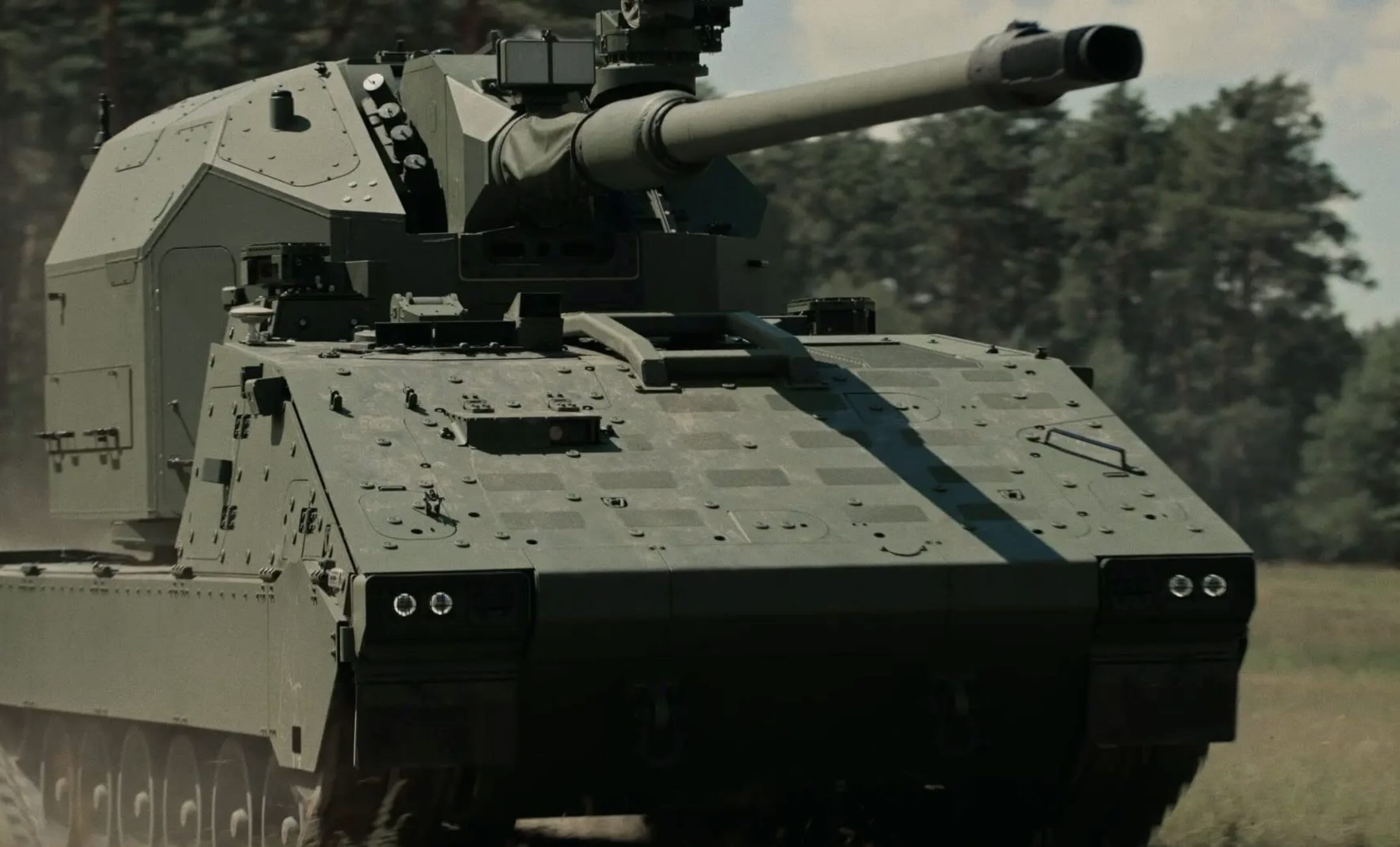
【軍傳媒/軍事科技】在未來高強度戰爭中,155公釐自走砲發展的核心方向逐漸集中於自動化、射擊節奏、機動性與高度聯網化,而由 KNDS 開發的 RCH155 履帶型自走砲車,該系統以 Artillery Gun Module(AGM)為核心,具備高速射擊、快速轉移與全方位射界的能力,結合先進自動化與高生存性設計,構成現代間接火力系統的高端樣貌。
火力性能與射擊特色
RCH155 採用北約 JBMoU 規格的 155 mm/L52倍徑主砲,支援所有標準化彈型,其最大射程視彈藥而定,包含一般 HE 彈約 30 至 40 公里,V-LAP 可至 54 公里,VULCANO 彈可達 70 公里以上,砲膛能容納長度一公尺的彈藥,因此可支援未來火箭增程與高超增程彈型。
在同級火砲系統中,能同時兼顧長射程與高射速者不多,而RCH155結合自動裝填與自動引信設定,每分鐘可發射超過8發砲彈,以及MRSI(Multiple Rounds Simultaneous Impact)能力,官方說明其可在同一目標上於兩秒內完成多發彈著的效果,使其能夠在短時間內完成大規模火力覆蓋,在壓制敵軍砲兵陣地與破壞防禦陣地能力上尤其顯著。


全自動化砲塔與 360 度射界
AGM 模組完全無人化,使用高度自動化火控、裝填與射擊系統。整輛車僅需兩名操作員即可完成目標確認、火控與行進射擊。相較傳統自走砲需固定車身或放下支撐架,RCH155 由於具有砲塔結構,內含彈藥模組,可對全360度射界進行射擊,甚至不需支撐架即可以六段模組化裝藥進行高強度發射,官方文件明確指出可於任何仰角與方位進行裝填與射擊,這在火砲家族中很少見。
此外,該砲具備一般自走砲沒有的「Shoot & Scoot 2.0」概念,可邊行進邊射擊並迅速脫離,一分鐘內完成火力任務並轉移位置,使其在反砲兵偵測普及的現代戰場中生存性大幅提升。
機動性與車體防護
RCH155 Tracked以BOXER Tracked 新型底盤為平台,戰鬥全重低於45噸,搭配大約800至900 kW的引擎輸出,在道路上最高速度可達70 km/h,續航約 500公里。相較許多傳統履帶自走砲重達55至60噸以上,此系統具備更佳的地形適應性與較低的地壓,且車體輕量使其行駛速度只略低於輪式自走砲車。
防護層面,該車具備 IFV 等級的裝甲、同時能防護地雷與急造爆裂物IED、核生化NBC防護系統;此外由於砲塔無人化,彈藥與主要機械均與乘員隔離,被攻擊時顯著提高乘員存活率。結合車體低輪廓、可選擇的 360 度光電監視與 RCWS,讓其在高威脅環境中依舊具備戰場存續能力。
與現代主流 155 公厘自走砲比較,如德國 PzH 2000、韓國 K9、法國 Caesar、瑞典Archer等,RCH155 的優勢主要體現在以下幾個層面:
- 完全無人化砲塔:相較 PzH 2000、K9 的有人砲塔,RCH155 將風險降至最低並增加自動化水平。
- 全射界射擊能力:許多履帶自走砲射界受限,而RCH155 能 360 度射擊且無需停車架設。
- 行進射擊:即便輪式自走砲如瑞典弓箭手Archer或法國凱薩自走砲Caesar強調能快速部署及轉移,仍需短暫架設;RCH155 能真正意義上的射擊後立即轉移。
- 兩人即可操作:大幅降低訓練與人員補充負擔。
- 射速與 MRSI 效能突出:使同等火力需求下使用更少砲車即可達到任務目標。
- 自動化補給:可於標準貨櫃中安裝多套AGM備彈,利用快速夾具達到快速裝填的能力,縮短補給時間降低人員風險。

總結
RCH155 的研發理念明確指向多域戰場(Multi-Domain Operations)以及分散式火力網絡的未來趨勢,其具備網路化架構,未來可擴展至無人駕駛或遠端操作模式,甚至能整合更智能的砲彈與引信技術,這部分與萊茵金屬曼恩的HX3卡車理念相近。在高度感測器主導的戰場中,砲兵部隊的核心任務已從單純火力輸出轉向「快速反應、低暴露、低人力、遠距高精準」。甚至能整合至反艦、反砲兵與反集群目標的多角色打擊架構下,利用精準導引砲彈,如 VULCANO 或未來的 ExR、RAMJET 彈,可對遠程火砲、雷達站與移動艦載目標實施突襲攻擊。
RCH155 Tracked 代表了下一代自走砲的技術方向:高度自動化、無人化模組、高射速、長射程、快速射後轉移與強化生存性。與傳統自走砲系統相比,它更像一套能夠融入資訊化火力網的智慧化打擊平台,成為地面火力的核心節點,能於未來高強度衝突中保持火力連續性並降低乘員暴露風險,為砲兵戰力提供全新的戰術彈性。
In future high-intensity warfare, the development of 155 mm self-propelled artillery is increasingly centered on automation, rate of fire, mobility, and advanced network integration. The RCH155 tracked self-propelled howitzer developed by KNDS is built around the Artillery Gun Module (AGM), offering high-speed firing, rapid displacement, and full-azimuth engagement. Combined with advanced automation and enhanced survivability, it represents a new tier of modern indirect-fire systems.
Firepower Performance and Firing Characteristics
The RCH155 uses a NATO JBMoU-standard 155 mm/L52 gun capable of employing all standardized ammunition types. Its maximum range depends on the projectile used: approximately 30–40 km with conventional HE rounds, up to 54 km with V-LAP, and beyond 70 km with VULCANO ammunition. Its chamber can accept one-meter-long projectiles, enabling future compatibility with rocket-assisted and next-generation extended-range munitions.
Among contemporary artillery systems, few can combine long-range performance with a high rate of fire. The RCH155, equipped with automated loading and automated fuze-setting, can deliver more than eight rounds per minute. Its MRSI (Multiple Rounds Simultaneous Impact) capability allows several shells to strike the same target within a two-second window, enabling dense firepower in a very short timeframe—particularly effective for counter-battery missions and destroying fortified positions.
Fully Automated Turret and 360-Degree Firing Envelope
The AGM turret is completely unmanned and relies on highly automated fire-control, loading, and firing systems. Only two operators are required inside the vehicle to conduct target identification, fire-control procedures, and firing on the move. Unlike traditional self-propelled howitzers that require hull stabilization or deployment of support legs, the RCH155’s turreted design and internal ammunition modules allow full 360-degree firing without stabilizers, even with six modules of charge. Official documentation confirms that loading and firing are possible at any azimuth and elevation, a capability rare among modern artillery platforms.
The system also features a “Shoot & Scoot 2.0” concept—firing while moving and rapidly relocating. It can complete a fire mission and reposition within one minute, greatly enhancing survivability against modern counter-battery sensors.
Mobility and Vehicle Protection
The RCH155 Tracked is built on the new BOXER Tracked platform, with a combat weight under 45 tons and an engine output of approximately 800–900 kW. It reaches road speeds of up to 70 km/h with a driving range of about 500 km. Compared to conventional tracked howitzers weighing 55–60 tons, the RCH155 offers better mobility, lower ground pressure, and a running speed only slightly below wheeled self-propelled systems.
For protection, the vehicle features IFV-level armor, mine and IED resistance, and an NBC protection system. Because the turret is unmanned, ammunition and mechanical components are isolated from the crew compartment, significantly increasing crew survivability in the event of a hit. Additional features such as optional 360-degree electro-optical surveillance and an RCWS strengthen its resilience in high-threat environments.
Comparison with Modern 155 mm Self-Propelled Howitzers
Against leading systems such as the German PzH 2000, South Korean K9, French Caesar, and Swedish Archer, the RCH155 distinguishes itself in several aspects:
- A fully unmanned turret, reducing crew exposure and maximizing automation compared to manned turrets like those on the PzH 2000 and K9.
- A true 360-degree firing envelope without stabilization requirements, which most tracked systems cannot achieve.
- Genuine firing-on-the-move capability, whereas wheeled systems such as Archer and Caesar—although capable of rapid deployment—still require brief setup time.
- Only two operators are required, significantly lowering manpower demands.
- Outstanding rate of fire and MRSI capability, allowing fewer howitzers to achieve equal mission effects.
- An automated resupply concept using standardized containers and specialized lifting equipment to accelerate ammunition replenishment and reduce risk to personnel.
Conclusion
The RCH155 is engineered for the future of Multi-Domain Operations and distributed firepower networks. Its network-ready architecture supports future expansion into unmanned driving, remote operation, and integration with next-generation smart projectiles and fuzes—conceptually aligned with the modernization philosophy seen in systems like the Rheinmetall MAN HX3.
In a sensor-dominated battlespace, artillery roles are shifting from mere firepower delivery to fast-reaction, low-signature, low-manpower, long-range precision engagement. The RCH155 is well suited for multi-role fire missions including counter-battery, anti-ship, and anti-mass formations. Paired with precision-guided shells such as VULCANO or future ExR and RAMJET munitions, it can strike long-range artillery, radar installations, and even moving naval targets.
The RCH155 Tracked represents the next technological step in self-propelled artillery: high automation, an unmanned turret, rapid rate of fire, long reach, fast post-firing displacement, and enhanced survivability. It acts less like a traditional gun system and more like an intelligent, networked strike platform—one that can serve as a pivotal node in future ground-fire architectures, sustaining firepower while minimizing crew risk in high-intensity conflict.