

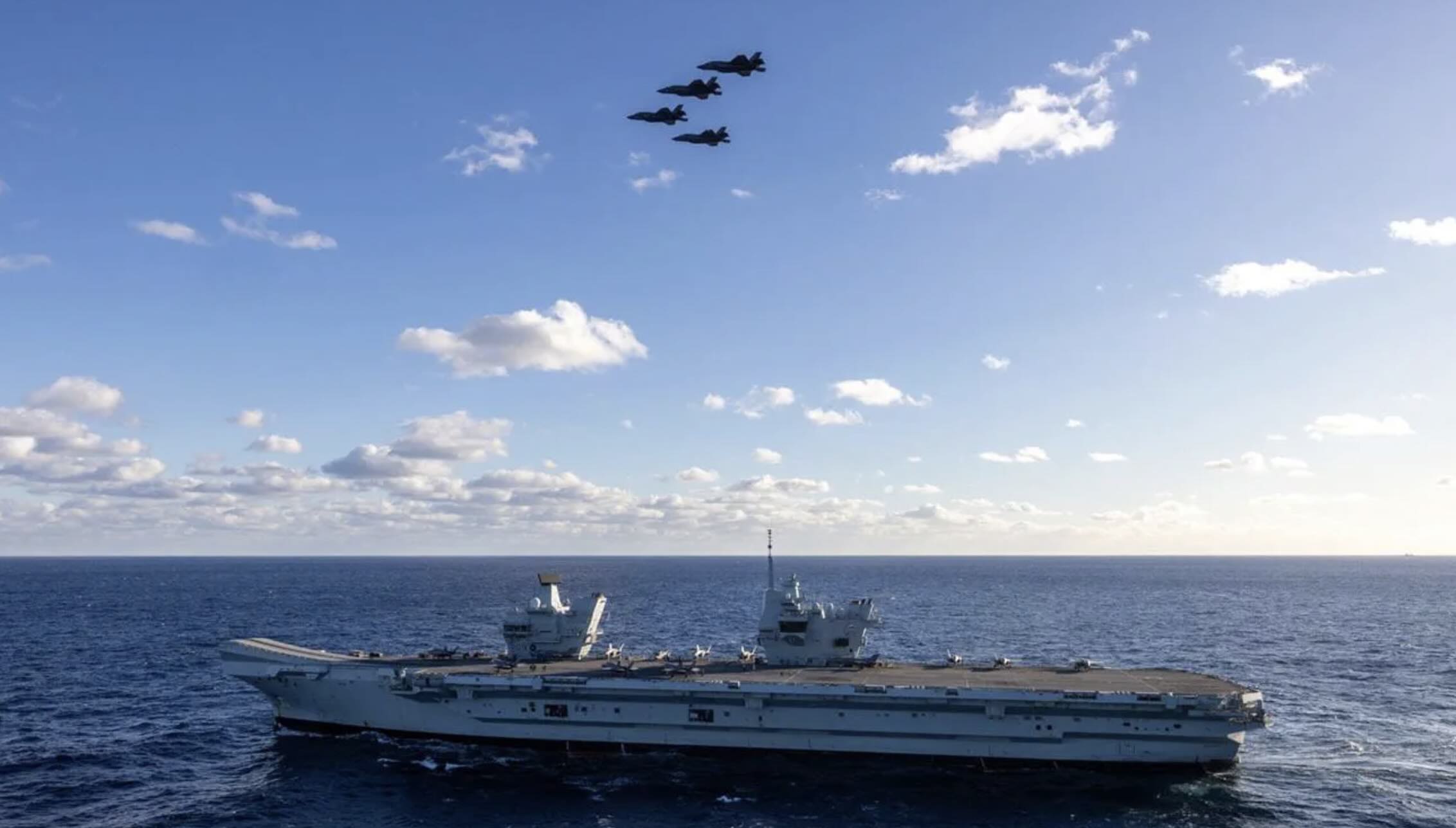
【軍傳媒/軍事專欄】今年(2025年),英國皇家海軍執行以HMS Prince of Wales為核心的Carrier Strike Group 25(CSG25),代號Operation Highmast的演習中,快速油料補給艦垂整個演習行動的核心艦艇之一。
根據海軍觀察網站Navy Lookout於2025年10月底的報導,春潮號(Tidespring )自4月從英國出發後,作為CSG25的艦隊油輪,在數月部署中完成了79次海上補給任務,向航空母艦與其他友艦提供超過800萬加侖的柴油(2021年是1500萬加侖)與110萬加侖(2021年是370萬加侖)的航空燃油,2021年的演習中春潮號(Tidespring)完成了 111 次海上補給(平均兩天一次),為英國與多國艦艇提供燃油、物資與彈藥,對象包括加拿大、丹麥、法國、印度、義大利、日本、荷蘭、紐西蘭、南韓與美國等多國海軍。
由於胡塞武裝在紅海與亞丁灣持續攻擊商船,CSG25在穿越該區時採取「分離航線」作法,航母與護衛艦由紅海與巴布.曼德海峽北上時,ㄒ則繞道非洲南端,經好望角再橫越印度洋,隨後在印度洋與航母會合,出於對胡塞飛彈與無人機攻擊風險的考量,英方選擇不讓春潮號(Tidespring)與主戰鬥群一同穿越紅海,顯示即便對上是胡賽武裝,英國海軍也沒把握能完全保護重要的後勤補給艦。
在今年的Operation Highmast演習中,ㄒ累計航程超過36,000海浬,預計在2026年返國前還將再航行至少13,000海浬,且其中參與了多項關鍵演訓與戰略行動,例如她隨同打擊群參與「Med Strike」演習,之後航母戰鬥群穿越蘇伊士運河進入紅海時,春潮號(Tidespring)南下繞行非洲。
在印太地區,CSG25前往新加坡、澳洲北方水域參加護身軍刀(Talisman Sabre 2025)多國演習,期間春潮號(Tidespring)也與美國「喬治華盛頓」號航艦、兩棲攻擊艦「America」號以及日本海上自衛隊「加賀」號等艦隊共同演訓;Tidespring 作為唯一英方油輪,必須同時支撐英國航空母艦戰鬥群與多國艦艇補給需求。
在印度洋與南海,春潮號(Tidespring)完成了一次南海航行自由行動(Freedom of Navigation passage),並三度越過赤道,每次都依照傳統舉行「越線儀式」,同時在開普敦、杜庫姆、新加坡、達爾文、釜山、果阿與蒙巴薩等港口進行軍事外交與儀典活動。

U.S. Navy photo by Mass Communication Specialist Seaman Maddix Almeyda
根據英國官方發佈的聯合演訓報導,CSG25在2025年10月初與印度海軍在阿拉伯海南方舉行「Konkan 2025」雙航母演習:英國以Prince of Wales 航空母艦戰鬥群對上印度的維克蘭特(INS Vikrant,IAC-I)號航空母艦戰鬥群,印度空軍並出動 Su-30MKI與Jaguar戰機與英軍 F-35B 進行對抗演練;春潮號(Tidespring)於此演習期間持續為兩國艦隊提供燃料,確保雙航空母艦戰鬥群維持一定的後勤補給。
在結束與印度的演習後,Prince of Wales 與護衛艦前往孟買與果阿訪問,春潮號於杜庫姆港口與打擊群分離,獨自前往蒙巴薩與開普敦,預計將繼續在海外部署至 2026 年,並可能在返航途中支援護衛艦 HMS Lancaster 的返英任務。
另外可以注意的一點,CSG25 並未像 CSG21 那樣配備大型固體補給艦 RFA Fort Victoria。CSG25 的後勤艦只有兩艘油輪:英國皇家海軍春潮號與挪威海軍的 Maud號;兩艦雖然在油料補給上能力充足,但在彈藥與乾貨運輸能力上有限,這使得英國在固體補給上必須倚賴盟友支援。
HMS Prince of Wales 在菲律賓海曾與美國補給艦 USNS Wally Schirra 進行「雙艦同時補給」(double RAS),由美艦提供固體補給與部分彈藥、英方油輪負責燃油,以彌補英國目前尚未交付的 Future Solid Support Ship(FSS)缺口。在這樣的架構下,春潮號某種程度上被迫超額任務;一方面,她必須維持對航母與護衛艦的高頻燃油補給,另一方面,又需要透過前甲板搭載多個貨櫃,配合直升機垂直補給(VERTREP),補上部分乾貨與備品缺口。根據Navy Lookout 在10月的報導圖片說明中,春潮號在為 Prince of Wales 補油時,艦艏還載滿 16個20呎貨櫃,用以在缺乏專門固體補給艦的情況下為整個打擊群補給物資。
從專業角度來看,這種做法顯示出潮級油輪的「設計餘裕」與臨時調整能力,但也暴露英國後勤體系在固體補給艦不足下的脆弱性:油輪可以暫時代打,但在高強度作戰環境中,彈藥與備品的運輸不能長期倚賴貨櫃堆滿油輪前甲板,再由直升機一架一架吊送,除了效率不彰之外,一旦該補給船有什麼意外或損失,將影響整個航空母艦戰鬥群的戰力,這也是英國海軍與國防政策界近年不斷強調要加速建造FSS的背景。

U.S. Navy photo by Mass Communication Specialist Seaman Apprentice Tyler Harstad
近年RFA 整體艦隊的老化與人力不足,已成為限制英國「真正維持藍水海軍」能力的重要瓶頸,潮級油輪存在某種程度上拯救了英國航母戰鬥群的實際可用度。補給艦本身並不直接投射火力,但其能力卻決定了伊麗莎白級航母戰鬥群能否長時間在關鍵戰略水道與印太關鍵海域出現。無論是2021年CSG21的全球巡弋,還是2025年Operation Highmast中與印度、日本與澳洲共同演訓、穿越紅海與南海的各種行動,若沒有潮級快速補給油輪這種等級與配置的船艦,英國航母戰鬥群的實際存在時間與行動半徑都會大幅縮水。
同樣原理也可以檢視解放軍海軍,近年其下餃子般的造船速度考驗著其人力以及後勤補給的能量,海軍訓練雖然不易,但解放軍海軍在有足夠的船隻經費以及人力資源下,這點會慢慢提升跟上國際。補給艦隊的擴充則顯示其再補給的能力,且將成為台海防衛作戰中其運用航母戰鬥群的弱點;若其航母戰鬥群前出到台灣東部水域後,補給船隻被針對攻擊而損失,則航母戰鬥群戰力將大為打折。了解敵人而不是自滿掩蓋所有的不利消息,承認錯誤而不是所有都好棒棒扣帽子,從國造潛艦過程一路有太多相似的場景,能檢視自身的錯誤,才是邁向下一階段進步的開始,可惜的是,台灣還沒有辦法做到。
In 2025, the Royal Navy conducted Carrier Strike Group 25 (CSG25), centered on HMS Prince of Wales, under the exercise codename Operation Highmast. Within this operation, the fast fleet tanker served as one of the core vessels sustaining the entire deployment.
According to a late-October 2025 report by the naval analysis website Navy Lookout, the RFA Tidespring departed the United Kingdom in April and, as the primary fleet oiler of CSG25, completed 79 replenishment-at-sea (RAS) missions over several months. During this deployment, she delivered over 8 million gallons of diesel fuel (compared to 15 million gallons in 2021) and 1.1 million gallons of aviation fuel (down from 3.7 million gallons in 2021) to the carrier and accompanying ships. In the 2021 deployment, Tidespring conducted 111 replenishments—essentially one every two days—providing fuel, stores, and ammunition to vessels from the UK and multiple allied navies, including Canada, Denmark, France, India, Italy, Japan, the Netherlands, New Zealand, South Korea, and the United States.
Due to sustained Houthi attacks on commercial shipping in the Red Sea and the Gulf of Aden, CSG25 adopted a “split-transit” approach when passing through the region. While the carrier and escort ships sailed northbound through the Red Sea and the Bab el-Mandeb Strait, Tidespring instead detoured around the southern tip of Africa, transiting via the Cape of Good Hope before crossing the Indian Ocean to rejoin the strike group. Given the threat posed by Houthi missiles and drones, the Royal Navy deemed it too risky to have Tidespring accompany the main strike group through the Red Sea—an indication that even against a non-state actor like the Houthis, the UK could not guarantee the full protection of its critical logistics vessels.
During Operation Highmast, Tidespring accumulated more than 36,000 nautical miles and is expected to sail at least another 13,000 nautical miles before returning home in 2026. She participated in several major exercises and strategic activities, including the “Med Strike” exercise with the carrier group. When HMS Prince of Wales transited the Suez Canal into the Red Sea, Tidespring once again sailed south to round Africa.
In the Indo-Pacific, CSG25 visited Singapore and the waters off northern Australia to participate in the multinational Talisman Sabre 2025 exercise. During this period, Tidespring conducted joint replenishment and training with the USS George Washington, the amphibious assault ship USS America, and Japan’s JS Kaga. As the only British oiler assigned to the group, she was responsible for sustaining both the Royal Navy’s carrier strike group and multiple allied vessels.
Across the Indian Ocean and the South China Sea, Tidespring completed a Freedom of Navigation (FON) passage and crossed the equator three times, marking each occasion with traditional line-crossing ceremonies. She also conducted naval diplomacy and ceremonial port visits in Cape Town, Duqm, Singapore, Darwin, Busan, Goa, and Mombasa.
According to the UK’s official reporting on joint exercises, CSG25 carried out “Konkan 2025,” a dual-carrier exercise with the Indian Navy in early October 2025 in the Arabian Sea. HMS Prince of Wales and its strike group operated alongside India’s INS Vikrant (IAC-I), while the Indian Air Force deployed Su-30MKI and Jaguar aircraft to conduct mock engagements with British F-35Bs. Throughout the exercise, Tidespring continued delivering fuel to both carrier strike groups, ensuring sustained operational tempo.
After completing the exercise with India, HMS Prince of Wales and its escorts visited Mumbai and Goa, while Tidespring separated from the strike group at Duqm and continued independently to Mombasa and Cape Town. She is expected to remain deployed abroad through 2026 and may provide logistical support to the frigate HMS Lancaster on its return voyage to the UK.
One notable difference between CSG25 and CSG21 is the absence of the large solid-stores ship RFA Fort Victoria. CSG25 relied on only two oilers for replenishment: the Royal Navy’s Tidespring and Norway’s Maud. While both ships are fully capable in fuel replenishment, their capacity to transport ammunition and dry stores is limited. As a result, the UK was compelled to depend on allied support for solid stores.
In the Philippine Sea, HMS Prince of Wales conducted a dual-ship simultaneous RAS with the USNS Wally Schirra—the American vessel supplying solid stores and some munitions while the British oiler delivered fuel. This arrangement compensated for the UK’s still-undelivered Future Solid Support Ships (FSS). Under these circumstances, Tidespring was effectively forced to take on an expanded role: not only maintaining high-frequency fuel replenishment for the carrier and escorts, but also carrying numerous containers on her foredeck to conduct helicopter vertical replenishment (VERTREP). Photos published by Navy Lookout in October show Tidespring conducting fuel replenishment for Prince of Wales while carrying sixteen 20-foot containers packed on her forecastle to provide additional dry stores for the strike group in the absence of a dedicated solid-stores vessel.
From a professional standpoint, this demonstrates both the design flexibility and the adaptive capability of the Tide-class tankers. However, it also exposes a structural vulnerability in the UK’s logistics system: oilers can temporarily compensate, but in high-intensity operations, ammunition and critical stores cannot be sustainably delivered by stacking containers on a tanker’s bow and hoisting them one at a time via helicopter. Beyond being inefficient, the loss or incapacitation of such a key replenishment vessel would seriously degrade the combat effectiveness of the entire carrier strike group. This is precisely why the Royal Navy and British defense policymakers have repeatedly emphasized the urgent need to accelerate construction of the FSS program.
The aging of the RFA fleet and persistent manpower shortages have become major constraints on the UK’s ability to operate as a genuine blue-water navy. The Tide-class oilers have, to some extent, preserved the operational viability of the British carrier strike group. Replenishment ships do not project firepower directly, but their capabilities determine whether the Queen Elizabeth-class carriers can maintain a sustained presence in key maritime chokepoints and Indo-Pacific waters. Whether during the global deployment of CSG21 in 2021 or the multinational exercises with India, Japan, and Australia—and transits through the Red Sea and South China Sea—in Operation Highmast 2025, the strike group’s freedom of action would have been drastically reduced without a vessel of Tidespring’s range and configuration.
The same principle applies when assessing the PLA Navy. The rapid pace of Chinese naval shipbuilding in recent years tests its personnel capacity and logistical endurance. Although naval training is difficult, the PLA Navy will gradually improve as long as it continues receiving sufficient funding and manpower. The expansion of its replenishment fleet reflects its growing capability for sustained operations—and also highlights a key vulnerability. In a Taiwan contingency, if a PLA carrier strike group pushes east of Taiwan and its replenishment vessels are then targeted and destroyed, the combat effectiveness of the entire carrier force would be severely degraded. Understanding the adversary—rather than covering up shortcomings with unrealistic optimism—is essential. The domestic submarine program has revealed many similar issues: acknowledging and correcting mistakes is the only path to genuine improvement. Unfortunately, Taiwan has not yet reached that stage.