

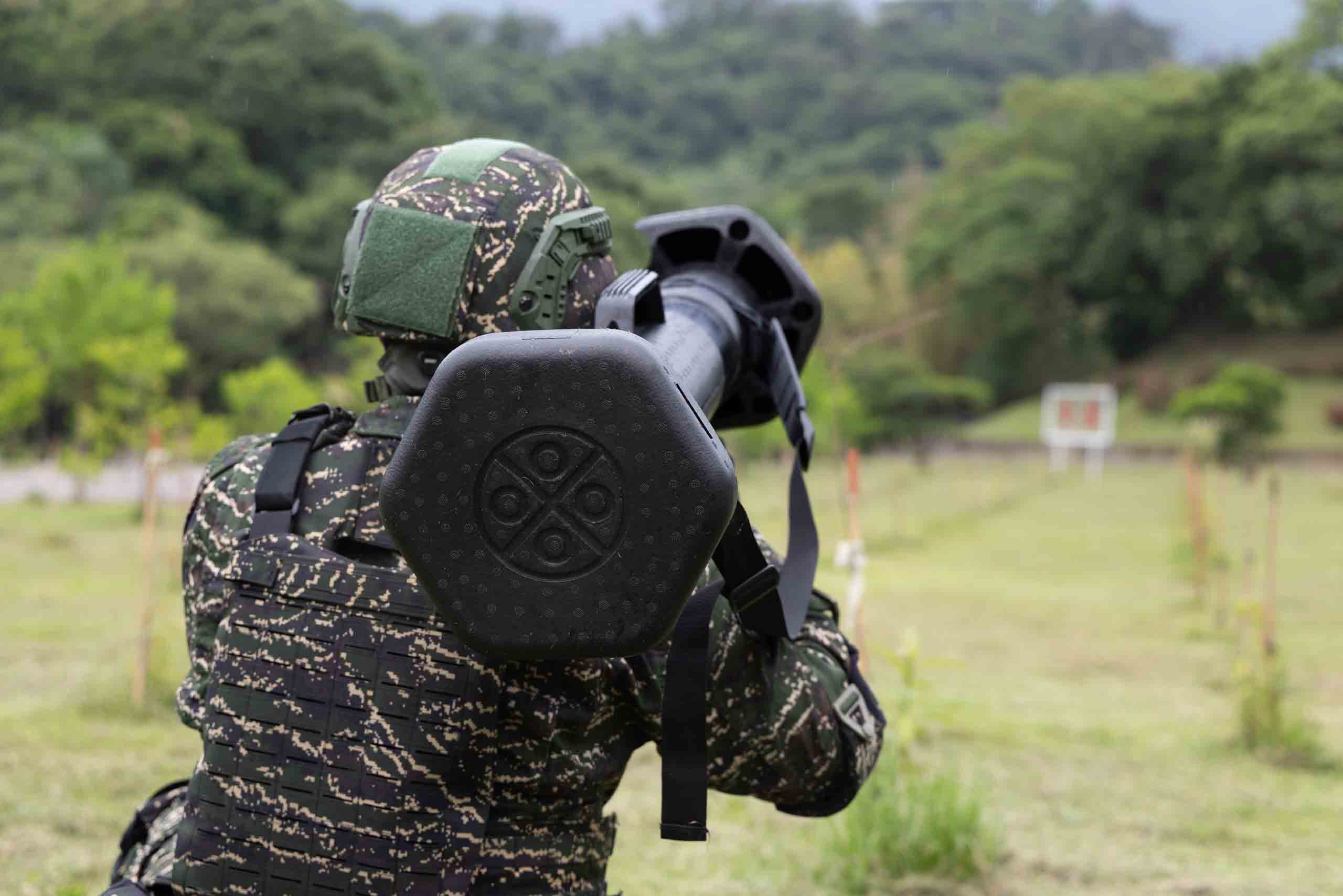
【軍傳媒/國內軍事新聞】上週紅隼二型反裝甲的火箭曝光,標示著中科院在國造軍武上又有了突破,現任中科院院長李世強的追求效率不畫大餅性格,將過往中科院十數年無成果的風格改成快速整合自研技術及國際合作,讓國造武器的研發速度跳躍式成長。雖然現在中科院飛彈製造及維修的產能都接近滿載,表示相關的技術實力也獲國外認可,包括法國不再延壽的魔法飛彈及AIM-9P空對空飛彈等,中科院都有能力更換發射藥使期保存期限延長,同時與原廠的射擊推力曲線等都相符合。
現代反裝甲武器的發展,已經不再只是單純比較射程與穿甲深度。真正影響戰場效果的,還包括射手能否快速發現目標、能否在夜間或低能見度環境中完成瞄準、能否透過低成本訓練累積足夠射擊經驗,以及能否在戰時以分散、隱蔽甚至遙控方式提高射手生存性。
根據俄烏戰場經驗,有效瞄具能大幅提高反裝甲武器命中率,紅隼二型標準瞄具設有射擊刻度,協助射手快速完成100-500公尺距離的瞄準。而新增的預測瞄準線刻度,也可讓射手針對移動目標進行前置量瞄準,不過由於目標速度仍需由射手自行判斷,因此前置量的判斷及實際命中率仍高度仰賴射手經驗。
對基層部隊而言,使用反裝甲火箭最大的挑戰之一,是平時射手真正能夠實彈射擊的機會有限,若只靠課堂講解或操作模擬訓練,射手很難建立距離判斷、目標速度估算與前置量修正的直覺。尤其面對移動中的裝甲車輛,雖然瞄具有前置量刻度的輔助,但小要擊中目標,射手不只是把準星對準目標,而是必須判斷目標速度、距離與射擊時機,甚至要掌握武器的發射與彈道飛行特性才能提高命中率。這也是中科院研發紅隼二型VR模擬訓練系統與操練彈系統的重要原因。


VR訓練系統可不受天候與場地限制,讓射手先熟悉基本操作、瞄準流程、姿勢穩定與射擊安全規定。完成基本訓練後,再透過操練彈進行實際射擊練習,最後才進入實彈射擊階段。這種訓練流程可降低訓練成本,也能減少新手直接使用實彈時的風險。
操練彈本身類似小型火箭,尾端仍有少量推進藥,使其飛行距離可達約200公尺。彈體前端撞擊目標後會產生閃光與聲響,方便教官與射手判斷命中位置。為了配合操練彈口徑,中科院也設計可重複使用的專用發射筒,並將其置於紅隼二型火箭彈空筒內,使整體外型與重量接近實彈。這樣一來,射手能以較低成本進行更接近實戰的操作訓練,也有助於提升部隊實際使用紅隼二型時的熟練度與信心。
對台灣而言,VR訓練系統與操練彈的價值,甚至不亞於火箭彈本身。因為反裝甲火箭若要形成真正戰力,不能只採購後放進庫房,而必須讓基層部隊反覆練習,讓射手熟悉肩射姿勢、後方安全區、瞄準流程、目標判斷與射擊後轉移。若每一次訓練都依賴實彈,不但成本高,也受限於靶場、天候與安全管制。透過VR與操練彈,部隊可以用較低成本建立更高訓練量,這是國產裝備能碾壓進口裝備的領域。


紅隼二型也可搭配可拆卸式夜間紅外線熱成像瞄準鏡。這套瞄具的內部晶片為國產,整體具備MIT供應能力。雖然其性能未必能與高階星光夜視或進口熱像裝備相比,但最大優勢在於不受部分關鍵光放管與高階夜視元件取得限制。其刻度標示也與標準瞄具相同,可降低射手轉換使用時的學習成本,讓部隊更容易在白天與夜間作戰間切換。
夜間作戰能力對台灣防衛作戰尤其重要。敵方若試圖在夜間、清晨、惡劣天候或煙霧掩護下推進,傳統光學瞄具的使用效果會大幅下降。港區、灘岸、道路節點與城鎮街道,也常存在光線不均、遮蔽物多與目標出現時間短等問題。若紅隼二型能搭配國產熱像瞄具,就能讓射手在低光源環境下更早發現車輛熱源,提高夜間伏擊與防禦作戰的成功率。台灣在單兵瞄具的更新進度處於完全落後的階段,大部分單位直至目前為止是沒有光學瞄具,更不要說是夜視瞄具,單兵裝備不進步,花費著重在高大尚武器,如何吸引年輕人加入國軍。
目前中科院也已朝遙控化方向發展,類似外島已部署的20公厘遙控砲塔概念。未來若紅隼二型能與遙控發射座、光電感測器、熱像瞄具與指揮管制系統結合,就有機會形成固定式或半固定式反裝甲火力點。這種設計尤其適合部署在港區、灘岸後方、道路瓶頸、橋梁入口、機場周邊與城鎮防禦陣地。操作手可在掩蔽位置透過光電系統確認目標,再遙控發射反裝甲火箭,藉此提高生存性,也讓有限兵力可以控制更多火力點。
紅隼二型的價值不只在於射程與穿甲能力提升,更在於它逐漸從單一火箭彈,發展成包含室內發射、夜間瞄準、模擬訓練、操練彈與未來遙控化可能性的完整系統。長久來看,也能帶動國產熱像瞄具、模擬訓練系統、操練彈與遙控發射座發展,其價值將不只是一款火箭彈,而是一整套可持續升級的基層反裝甲生態系,形成比單純外購武器更長期的技術累積,也能帶動國內產業。對陸軍而言,這類可大量訓練、可分散部署、可降低人員暴露風險,並能由國內持續生產與改良的武器,正是防衛作戰中最需要建立的基層戰力。

Taiwan’s anti-armor defense strategy cannot rely solely on purchasing ammunition from abroad. The recent unveiling of the Kestrel II anti-armor rocket system marks another significant milestone for Taiwan’s indigenous defense industry and highlights how the National Chung-Shan Institute of Science and Technology (NCSIST) has accelerated domestic weapons development under the leadership of its current president, Lee Shih-Chiang. Known for emphasizing efficiency and practical results rather than ambitious but delayed projects, Lee has transformed NCSIST from an organization once criticized for slow progress into one capable of rapidly integrating indigenous technologies with international cooperation.
Today, NCSIST’s missile production and maintenance lines are reportedly operating near full capacity, reflecting growing international recognition of Taiwan’s technical capabilities. The institute has even demonstrated the ability to refurbish aging foreign missile systems, including France’s retired Magic air-to-air missiles and AIM-9P Sidewinders, by replacing propellant systems while maintaining original thrust performance curves and operational safety standards.
Modern anti-armor warfare is no longer defined simply by penetration depth or firing range. The true battlefield advantage now depends on whether operators can rapidly detect targets, engage in low-visibility or night conditions, accumulate realistic training experience at sustainable cost, and survive after firing through concealed, dispersed, or even remotely operated firing positions.
Lessons from the Russia-Ukraine War have demonstrated that effective optics dramatically improve hit probability for infantry anti-armor weapons. The Kestrel II standard sight includes range markings that assist operators in engaging targets between 100 and 500 meters, while additional lead compensation markings help users engage moving targets. However, actual hit probability still depends heavily on operator experience, as shooters must independently estimate target speed and movement.
One of the greatest challenges for frontline infantry units is that soldiers rarely have sufficient opportunities for live-fire anti-armor training. Classroom instruction and simulation alone cannot fully develop intuitive skills such as range estimation, target tracking, movement prediction, and lead correction. Hitting moving armored vehicles requires more than simply placing a reticle on target; operators must understand target speed, engagement timing, and weapon flight characteristics under realistic conditions.
This is why NCSIST developed a dedicated VR simulation system and training rocket program for the Kestrel II. The VR system allows soldiers to practice weapon handling, aiming procedures, firing posture, and safety protocols regardless of weather or range availability. After completing virtual training, operators transition to training rockets before progressing to full live-fire exercises. This layered training approach reduces cost while minimizing the risks associated with inexperienced soldiers immediately handling live ammunition.
The training rocket itself functions like a miniature rocket projectile, using a small propulsion charge to reach distances of approximately 200 meters. Upon impact, the round generates both flash and sound effects, enabling instructors and shooters to identify hit locations more effectively. To support realistic training, NCSIST also designed a reusable launcher insert that fits inside the actual Kestrel II launch tube, replicating the appearance and weight balance of the live system. As a result, operators can train under conditions much closer to actual combat at far lower cost.
For Taiwan, the value of the VR system and training rockets may ultimately prove as important as the launcher itself. Anti-armor weapons only become meaningful battlefield assets if frontline soldiers repeatedly train with them. Operators must become familiar with shoulder-firing posture, rear-blast safety zones, aiming procedures, target identification, and post-shot repositioning. Conducting all such training exclusively with live ammunition would be prohibitively expensive and heavily constrained by range access, weather, and safety restrictions. Through VR and reusable training systems, Taiwan can dramatically increase training volume at manageable cost — an area where domestically developed systems may outperform imported alternatives.
The Kestrel II can also integrate with detachable infrared thermal imaging sights. Importantly, the sighting system uses domestically produced chips, giving Taiwan a fully indigenous supply chain capability. While performance may not match the most advanced imported night-vision systems, the greatest advantage lies in avoiding restrictions on high-end image intensifier tubes and sensitive night optics components. The thermal sight uses the same reticle markings as the standard optical sight, reducing retraining requirements and allowing operators to transition more easily between day and night operations.
Night combat capability is especially critical for Taiwan’s defense scenario. Any potential adversary would likely attempt operations under darkness, poor weather, smoke cover, or low-visibility conditions. Ports, beaches, transportation chokepoints, and dense urban environments often contain uneven lighting, heavy concealment, and extremely short engagement windows. By integrating thermal sights, Kestrel II operators could identify vehicle heat signatures far earlier in low-light environments, significantly improving nighttime ambush and defensive operations.
Taiwan currently lags far behind in infantry optics modernization. Many frontline units still lack even basic optical sights, let alone night-vision systems. Without modernizing individual soldier equipment, focusing spending solely on large prestige weapon systems may do little to attract younger generations into military service.
NCSIST is also reportedly exploring remote-controlled launch concepts similar to the remotely operated 20mm turret systems already deployed on Taiwan’s offshore islands. In the future, Kestrel II systems could potentially integrate with remote launch mounts, thermal sensors, electro-optical systems, and command-and-control networks to form fixed or semi-fixed anti-armor firing points. Such systems would be particularly useful in ports, beaches, road chokepoints, bridges, airport perimeters, and urban defensive positions. Operators could identify targets from concealed positions using optical systems before remotely launching anti-armor rockets, greatly improving survivability while enabling limited manpower to control larger defensive sectors.
Ultimately, the true value of Kestrel II lies not only in improved range and penetration, but in its evolution into a complete anti-armor ecosystem that includes indoor-launch capability, night optics, simulation training, reusable training munitions, and future remote-control potential. Over time, the program could also stimulate Taiwan’s domestic development of thermal imaging systems, simulation technologies, reusable launch systems, and remote firing platforms.
Rather than being merely another rocket launcher, Kestrel II represents a sustainable indigenous defense ecosystem capable of continuous upgrades and long-term technological accumulation. For Taiwan’s Army, systems that can be mass-produced, widely deployed, extensively trained with, and continuously improved domestically may ultimately become some of the most important foundations of future defense operations.