

【軍傳媒/軍事專欄】中小型無人機在近年戰場上的大量出現,徹底改變了步兵單位的生存條件。從商規四軸無人機執行即時偵察,到 FPV 無人機以極低成本實施自殺式攻擊,戰場透明度已被推升至前所未有的程度。烏克蘭戰爭反覆證明,只要部隊位置被空中無人機感測器發現鎖定後,後續的砲擊、無人機攻擊或巡飛彈打擊便會迅速接踵而至。在這樣的環境下,反無人機能力不再只是防空單位或基地防護部隊的專業任務,而是逐步下放,成為下車步兵與基層單位必須具備的生存能力。
北約在多次反無人機技術互通演練(Counter-UAS Interoperability Exercises)中,已明確將徒步步兵納入反無人機能力建構的核心對象,並指出若缺乏單兵層級的即時偵測與初步反制能力,再完整的上層防空體系也無法彌補部隊在第一時間遭無人機鎖定的風險。這項觀點已成為北約與多數西方國家反無人機發展的共識。


從軍事專業角度來看,單兵反無人機的任務定位必須被清楚界定。它的目標並不是擊落所有來襲無人機,更不是取代傳統防空體系,而是在無人機已進入低空活動範圍時,讓士兵能夠提早察覺威脅、立即破壞無人機的任務成功率,並爭取時間完成分散、掩蔽與轉移。換言之,單兵反無人機的本質是一種「延命能力」,而非「殲滅能力」。
在目前各國的實際作法中,最成熟且最符合單兵需求的手段,並非硬殺攔截,而是以無線電頻譜為核心的感知與干擾。原因在於,多數中小型無人機仍高度依賴無線電控制鏈路與影像回傳頻道,即便是具備部分自主能力的機型,在任務執行過程中也往往會留下可被感測的無線電信號。透過被動式無線電頻率偵測,士兵可以在不主動發射任何電磁訊號的情況下,察覺周圍是否存在無人機活動,這正是單兵反無人機能力的第一道門檻。
美軍在其反小型無人機戰文件中,已將這類能力定義為「dismounted early warning」,並強調其重要性不在於精準識別機型,而在於讓士兵知道自己已經暴露於空中監視之下,必須立即調整戰術動作或躲避。

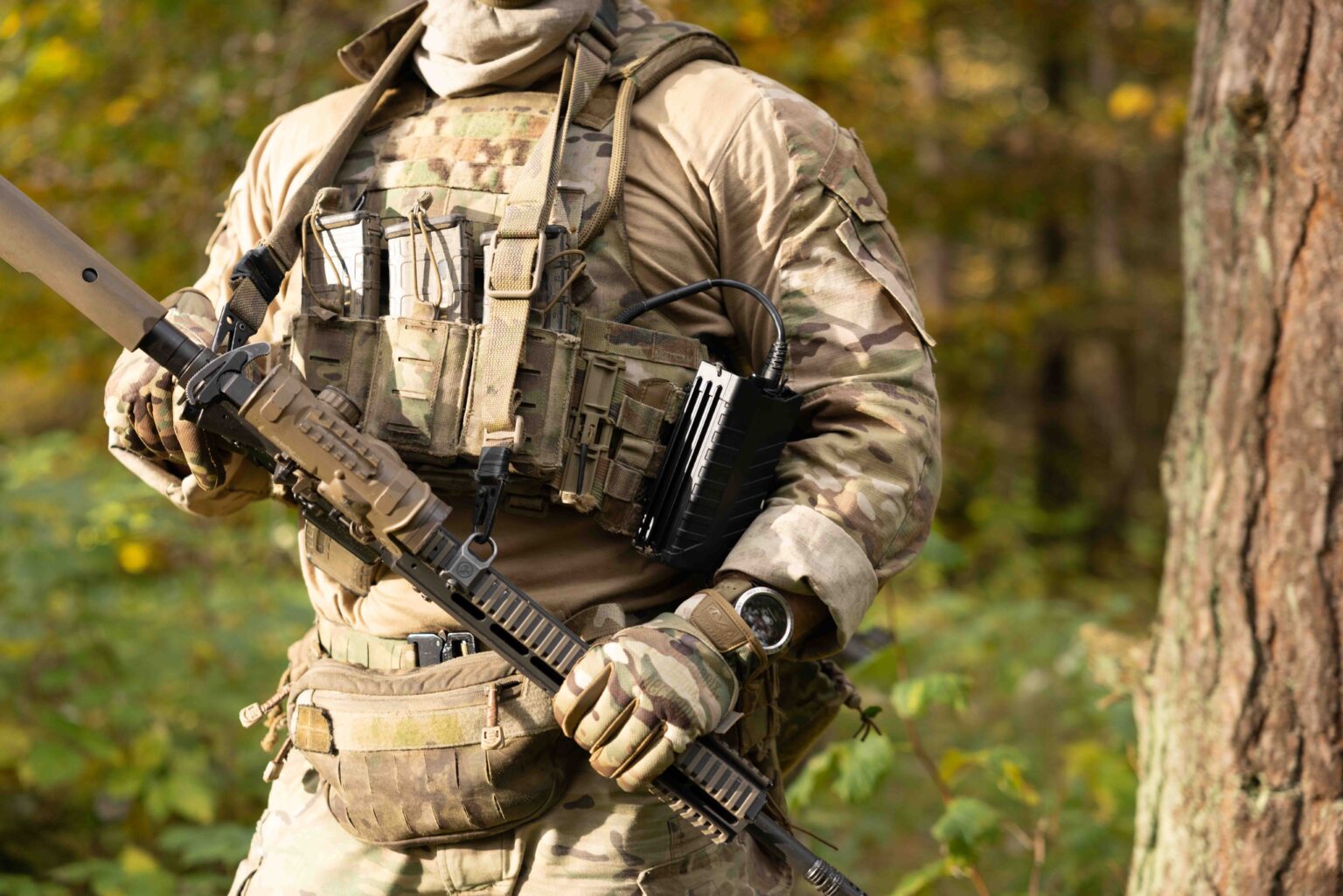
在這樣的需求背景下,例如起源於丹麥的MyDefence公司,由於成立之初就專注於單兵防護能力的領域,因此在俄烏戰爭發生後,MyDefence公司就成為少數專注於「單兵層級反無人機」的廠商之一。其可穿戴式無人機無線電頻率偵測裝置,在不增加單兵操作負擔、不提高電磁暴露風險的情況下,獲得即時告警能力,甚至可以整合到TAK系統上,分析偵測到的頻率,提供更準確的對應干擾。這類裝備並不嘗試提供複雜的目標分類,而是以「有無威脅」為核心,符合北約對單兵反無人機「簡化操作、快速反應」的要求,俄烏戰場上有某些戰場影片中也可辨識出雙方士兵也開始使用類似的裝備,提供給單兵最即時的無人機襲擊警告。
但僅有偵測能力並不足以中斷無人機的任務執行,因此單兵反無人機的第二個關鍵能力,是短距離、低功率的無線電頻率干擾。無線電頻率干擾的目的並非摧毀無人機,而是干擾其控制鏈路或GNSS訊號,使其返航、迫降或失去穩定操控,從而破壞其偵察或攻擊效果。美國國防部轄下的 Joint Counter-Small UAS Office 已明確指出,在單兵與小單位層級,這類干擾手段是目前最可行、也最具成本效益的解法之一。


現行台灣除了機場的固定/機動式干擾器外,多數單位仍使用干擾槍,針對單一無人機進行干擾或接管,這對於執法警方來說足夠,但對於戰場博性命的軍人來說根本不符合現實狀況,5公斤重的干擾槍無法長時間舉著,啟動也需要數十秒,電池續航有限,先不要說干擾是否有效,要在短時間找出衝來的自殺無人機並舉槍針對其干擾根本不可能來得,因此穿戴式或背負式的干擾器因應而生,可在偵測到無人機後立即啟動,針對常見的控制頻段與衛星導航訊號進行全頻干擾、,這類裝備強調長時間攜行方便與即時反應,而非短時間高功率輸出,因此符合步兵在長時間行軍與接戰環境中的實際需求,且不會增加太多負擔。
不過無線電干擾並非萬靈丹,根據俄烏戰場顯示,無人機技術正快速演進,包括末段慣性導航、視覺導引、光纖導引與抗干擾天線配置,使其在遭受干擾後仍具備一定命中能力或甚至免疫干擾,這正是為何各國軍方將單兵干擾視為「爭取時間的工具」,而非獨立解決威脅的最終手段。

從各國實際採用方式來看,美軍並未期待單兵直接擊落無人機,而是將反無人機納入整體戰術動作之中,包括立即分散、降低可視與電磁特徵,並呼叫上層單位提供中功率干擾或採用霰彈槍等硬殺方式來支援反無人機。以色列的Smart Shooter公司則推出SMASH 3000瞄準器,藉由AI輔助瞄準讓士兵能在遠距離使用自身的步槍擊落具敵意的小型無人機,據傳國內某特勤隊已經有引進少量補足反無人機能力。
整體而言,單兵反無人機能力的價值,不在於擊落數量,而在於是否能改變敵方使用無人機的成本與成功率。當每一支步兵小隊都具備即時偵測與初步干擾能力時,敵方無人機操作員將必須承擔更高的失效風險,進而降低其在戰場上的實際效益。

The widespread use of small and medium-sized unmanned aerial systems (UAS) on recent battlefields has fundamentally altered the survivability conditions of infantry units. From commercially available quadcopters conducting real-time reconnaissance to low-cost FPV drones employed in suicide attacks, battlefield transparency has reached unprecedented levels. The war in Ukraine has repeatedly demonstrated that once a unit’s position is detected and fixed by aerial sensors, follow-on artillery fire, drone strikes, or loitering munition attacks often arrive within minutes. In such an environment, counter-drone capability is no longer an exclusive task for air defense units or base protection forces. It is increasingly being pushed down to dismounted infantry and small-unit levels as an essential survival skill.
Through multiple Counter-UAS Interoperability Exercises, NATO has explicitly identified dismounted infantry as a core focus of counter-drone capability development. NATO assessments have emphasized that without soldier-level real-time detection and initial mitigation capabilities, even the most comprehensive layered air defense architecture cannot compensate for the risk of units being detected by drones at the earliest stage. This view has become a shared consensus across NATO and most Western militaries.
From a military professional perspective, the mission of dismounted counter-drone operations must be clearly defined. The objective is not to shoot down every incoming drone, nor to replace traditional air defense systems. Instead, the purpose is to enable soldiers to detect threats early once drones enter the low-altitude operating space, immediately degrade the drone’s mission success, and gain time to disperse, conceal, and reposition. In essence, soldier-level counter-drone capability is a means of extending survivability rather than achieving outright destruction.
In current international practice, the most mature and soldier-suitable approach is not hard-kill interception but sensing and disruption centered on the radio-frequency spectrum. Most small and medium-sized drones still rely heavily on radio control links and video downlinks. Even platforms with partial autonomy often emit detectable radio-frequency signatures during mission execution. Passive RF detection allows soldiers to sense nearby drone activity without emitting electromagnetic signals of their own, forming the first threshold of dismounted counter-drone capability.
The U.S. military has defined this function in its counter-small UAS doctrine as “dismounted early warning,” emphasizing that its value lies not in precise drone identification but in alerting soldiers that they are under aerial surveillance and must immediately adjust their tactical posture or seek cover.
Against this backdrop, companies such as Denmark-based MyDefence, which focused on individual protection from their inception, have emerged as key players in soldier-level counter-drone solutions since the outbreak of the Ukraine war. Wearable RF detection devices developed by MyDefence provide immediate alerts without increasing soldier workload or electromagnetic exposure and can be integrated with Tactical Assault Kit (TAK) systems to analyze detected frequencies and enable more precise, responsive jamming. These systems deliberately avoid complex target classification, instead prioritizing a simple “threat or no threat” logic that aligns with NATO’s emphasis on simplified operation and rapid response. Battlefield footage from Ukraine suggests that soldiers on both sides have begun using similar equipment to gain early warning of incoming drone threats.
Detection alone, however, is insufficient to disrupt drone missions. The second critical element of soldier-level counter-drone capability is short-range, low-power radio-frequency jamming. The intent of RF jamming is not to destroy the drone, but to disrupt its control link or GNSS signals, forcing it to return, land, or lose stable control, thereby degrading its reconnaissance or attack effectiveness. The U.S. Department of Defense’s Joint Counter–Small UAS Office has clearly identified such measures as among the most feasible and cost-effective solutions at the soldier and small-unit level.
In Taiwan, aside from fixed and mobile jammers deployed at airports, most units still rely on handheld jamming rifles designed to disrupt or take over individual drones. While sufficient for law enforcement, such systems are ill-suited to battlefield conditions. Weighing around five kilograms, jamming rifles cannot be held for extended periods, often require lengthy activation times, and suffer from limited battery endurance. Expecting a soldier to visually acquire a fast-approaching FPV suicide drone and then raise and aim a jammer within seconds is unrealistic. This reality has driven the development of wearable or backpack-mounted jammers that can activate immediately upon detection, providing broad-spectrum interference against common control frequencies and satellite navigation signals. These systems emphasize endurance, ease of carriage, and rapid response rather than short-duration high-power output, aligning more closely with the realities of prolonged infantry movement and combat.
Radio-frequency jamming, however, is not a universal solution. Experience from the Ukraine battlefield shows that drone technology is evolving rapidly, incorporating terminal inertial navigation, visual guidance, fiber-optic control, and anti-jam antenna configurations. These advancements allow drones to retain a degree of effectiveness or even immunity under jamming conditions. This is why militaries increasingly regard soldier-level jamming as a tool for buying time rather than a standalone solution for eliminating the threat.
In practical employment, the U.S. military does not expect individual soldiers to defeat drones independently. Instead, counter-drone actions are integrated into broader tactical responses, including immediate dispersion, reduction of visual and electromagnetic signatures, and calls for higher-echelon support using medium-power jamming or hard-kill measures such as shotguns. Israel’s Smart Shooter has taken a different approach with the SMASH 3000 fire control system, using AI-assisted aiming to enable soldiers to engage hostile small drones with standard rifles at extended ranges. It has been reported that limited quantities of such systems have already been introduced by certain domestic special operations units to supplement counter-drone capabilities.
Overall, the value of dismounted counter-drone capability does not lie in the number of drones destroyed, but in its ability to alter the enemy’s cost-benefit calculus and mission success rate. When every infantry squad possesses real-time detection and initial disruption capabilities, enemy drone operators face significantly higher risks of failure, reducing the operational effectiveness of unmanned systems on the battlefield.