

【軍傳媒/軍事科技】隨著全球供應鏈重組的進程加速,大國間競爭正把各種關鍵原材料逐步「武器化」,近期中東局勢升溫之際伊朗透過影響荷姆茲海峽航運秩序,便是能源議題上的一例。也因此我國如何在各產業建立穩定的自主能力、降低對中依賴並推動非紅供應鏈,已逐漸成為政策與產業端必須正面回應的課題。
其中,軍民兩用的材料一旦涉及出口管制或面臨戰備需求,原本的商業供貨邏輯便可能被改寫,交期、配額與可得性都將在短時間內翻轉。超高分子量聚乙烯纖維(UHMWPE, Ultra High Molecular Weight Polyethylene)正屬此類,它作為關鍵防護材料且具有輕量化特性而被廣泛應用,其供應的穩定性逐漸被各國視為一種戰略資產;一旦受限,衝擊不僅止於產業運轉,更可能直接牽動國防安全本身。
輕量化防護的底層材料:UHMWPE為何成為主流
超高分子量聚乙烯(UHMWPE)顧名思義,是透過觸媒(Catalyst)催化乙烯單體聚合而成的一種高分子合成材料,依加工型態與用途,大致可分為纖維∕紗線材、膜材及塊材等三大類。以纖維為例,其在相同重量條件下的強度可達鋼材的約15倍,彈能吸收力亦在特定測試條件下優於部分傳統芳綸纖維;同時它還兼具輕量、防水、耐衝擊、耐紫外線及抗切割等多種優勢,使其在追求「同等防護、減輕負擔」的現代防護裝備思路中格外吃重。


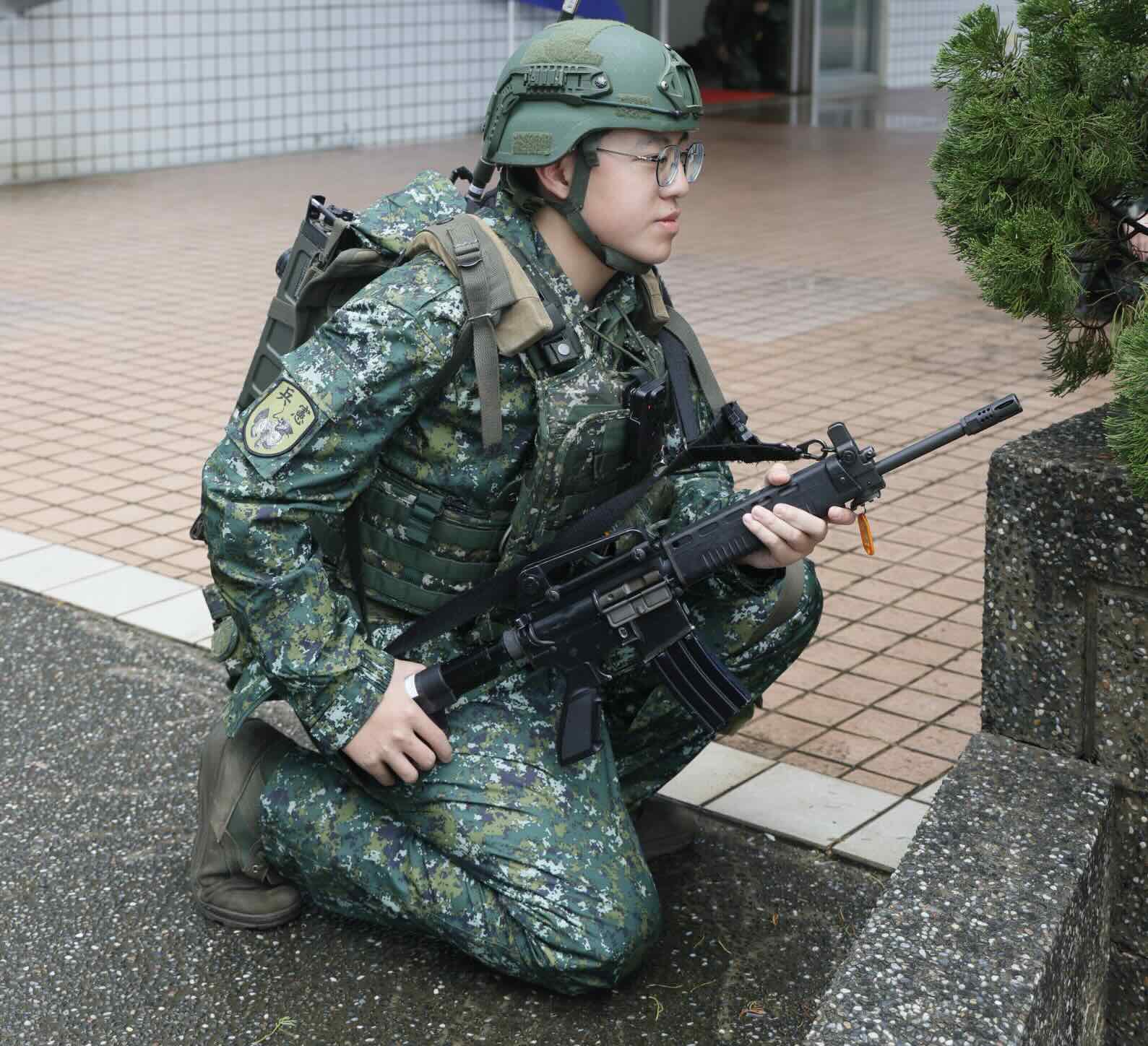
從材料物理性來看,傳統上多數的高強力芳綸紗線在27g/D(Grams per Denier,公克∕丹尼數)時已接近材料強度的極限;相較之下UHMWPE纖維強度則可達到35~40 g/D以上,且仍具持續提升空間。因此在軍事與安全領域,UHMWPE常以疊層方式製成布料作為防彈內蕊或防破片內襯,或者可透過後段加工與熱壓成型,轉化為防彈板、頭盔、盾牌乃至裝甲板等多種防護裝備,成為輕量化防護體系中的關鍵材料之一。
供應端的地緣壓力:產能集中牽動戰備節奏
放眼全球供應端,目前UHMWPE主要的生產商與品牌多集中於歐美、日本與中國。市場上常見的品牌如荷蘭埃萬特(Avient Corporation)旗下的Dyneema、美國漢威聯合(Honeywell)的Spectra、以及日本東洋紡的Izanas等;相對的,中國企業則憑藉價格與產量優勢,在中低階產品市場占有相當份額。隨著烏俄戰爭持續、近年地域衝突頻仍,歐美供應國也逐漸將本就高度稀缺的產能優先轉向滿足自身需求,對外供貨能力日益受限。對台灣而言,在過往缺乏自主研發與製造UHMWPE防彈纖維及疊層布產業基礎的前提下,長期仰賴進口所累積的結構性風險逐漸浮現;一旦外部供應吃緊,存量不足與補充延宕將會直接反映在裝備的取得與汰換節奏上。
管制與門檻:高階UHMWPE的產業自主挑戰
然而,高階UHMWPE作為關鍵戰略物資,在部分國際市場中可能涉及出口管理與技術審查的機制,目前全球也僅有少數國家能同時掌握UHMWPE紗線的「自主抽紗」與「疊層布製程」技術,其製造工藝本身即是一道極高門檻。UHMWPE與一般工業纖維不同,單是前端材料配方與製程條件,便是化學與紡織的交叉系統工程,僅抽紗設備的產線建置,就需要投入龐大的資本與長時間進行調校。從精密化工、凝膠原絲形成、到紡絲牽伸與取向控制,每一步都必須精密計算且嚴格控管;而將高強力紗線加工成疊層布,則又是另一道獨立的技術挑戰,這是一門結合紡織纖維、化學工程、高分子材料與工業工程知識的整體工程,每個環節缺一不可。


我國目前也僅大合新科技(DHS Innotech)掌握相關技術,並於2025年航太暨國防工業展(TADTE 2025)首度對外展示,後續亦逐步推進國內量產能量的建置與擴充。其核心團隊在觀察全球材料供應鏈的結構性缺口後,選擇從最困難的前端切入,投入全自主的UHMWPE紗線抽紗、纖維製程到疊層布製作的系統性研發與產線建置,目標是建立屬於台灣關鍵防護材料的「非紅供應鏈」。
軍民兩用:常態運轉與平戰轉換的重要性
而大合新掌握的UHMWPE抽紗纖維製程與布料疊層技術,可依需求調整布料幅寬、長度、厚度與疊層數等設計參數,滿足軟式NIJ 0101.06 IIIA防彈衣、硬式NIJ 0101.06 III(ICW)抗彈板及軍用裝甲板等不同型態需求;若搭配陶瓷面層與背板組合,可延伸至更高威脅等級的裝甲應用,進一步提升對穿甲彈等高威脅彈種的防護餘度。另一方面,UHMWPE的軍民兩用特性也提供了「平時托底」的產業條件:從防摔衣、防災包救難包、戶外安全用品、海事纜索乃至航太複材等領域,都能形成穩定的市場需求,使產線在常態市場中維持稼動率與品質的一致性,並在需要時具備更快的擴產與轉用空間。

在個人防護裝備領域,美方官員曾以「火藥之於彈藥」作比喻:外型設計可以調整、結構可以改良,但核心材料一旦供應不穩、出現品質波動或規格難以一致,整個防護系統就可能在關鍵時刻失去可用性。因此,維持本土技術與知識的長期積累,也是種對國防安全體系的「可用性治理」。當材料端能在地掌握製程的know-how、建立一致且可稽核的品質與測試基準時,後端的裝備整合、汰換補充和戰備儲備才能得到更強的保障;同時也讓產業得以因應在地資源條件、法規框架與人才結構,逐步形塑更完整且可持續的產業生態。
Protective Materials in a Reshaping Defense Supply Chain: UHMWPE Fiber Laminates
As global supply chain restructuring accelerates, competition among major powers is increasingly “weaponizing” critical raw materials. A recent example can be seen in rising tensions in the Middle East, where Iran has leveraged its influence over shipping through the Strait of Hormuz to affect energy flows. Against this backdrop, Taiwan’s efforts to build stable domestic capabilities, reduce reliance on China, and promote a “non-red” supply chain have become pressing priorities for both policymakers and industry.
In particular, once dual-use materials become subject to export controls or wartime demand, traditional commercial supply logic can be rapidly overturned. Delivery schedules, quotas, and availability may shift dramatically in a short period. Ultra-high molecular weight polyethylene (UHMWPE) is one such material. As a critical lightweight protective material with broad applications, its supply stability is increasingly regarded as a strategic asset. Any disruption would not only impact industrial operations but could also directly affect national defense readiness.
The Foundation of Lightweight Protection: Why UHMWPE Has Become Mainstream
UHMWPE, as its name suggests, is a high-performance polymer synthesized by catalytically polymerizing ethylene monomers. Depending on processing methods and applications, it can generally be categorized into three main forms: fibers/yarns, films, and bulk materials. In fiber form, UHMWPE offers exceptional performance—under equal weight conditions, its strength can reach approximately 15 times that of steel, while its energy absorption capacity can surpass that of certain traditional aramid fibers under specific test conditions. Combined with properties such as low weight, water resistance, impact resistance, UV resistance, and cut resistance, UHMWPE has become a key material in modern protective equipment design, where the goal is to achieve “equal protection with reduced burden.”
From a materials science perspective, most high-strength aramid fibers approach their performance limits at around 27 g/D (grams per denier). In contrast, UHMWPE fibers can reach strengths exceeding 35–40 g/D, with further room for improvement. As a result, in military and security applications, UHMWPE is often fabricated into laminated fabrics used as ballistic cores or fragmentation liners. Through downstream processing and hot-press molding, it can also be transformed into ballistic plates, helmets, shields, and armor panels, making it a cornerstone of lightweight protection systems.
Geopolitical Pressure on Supply: Concentrated Production and Operational Impact
Globally, UHMWPE production is concentrated among manufacturers in Europe, the United States, Japan, and China. Well-known brands include Dyneema (Avient Corporation, Netherlands), Spectra (Honeywell, United States), and Izanas (Toyobo, Japan). Meanwhile, Chinese manufacturers dominate portions of the mid- to lower-tier market through advantages in cost and scale.
With the ongoing Russia–Ukraine war and increasing regional conflicts in recent years, Western suppliers have begun prioritizing their already limited production capacity for domestic needs, further constraining exports. For Taiwan, the long-standing lack of domestic UHMWPE fiber and laminate manufacturing has led to structural dependence on imports. As external supply tightens, shortages and delays in replenishment are likely to directly affect equipment acquisition and replacement cycles.
Barriers and Controls: Challenges in Achieving Industrial Autonomy
High-end UHMWPE is often treated as a strategic material, and in some markets, it is subject to export controls and technical reviews. Only a handful of countries worldwide currently possess both independent fiber spinning and laminate manufacturing capabilities. The production process itself presents a formidable barrier.
Unlike conventional industrial fibers, UHMWPE manufacturing involves complex system engineering that integrates chemistry and textile processes. Even the upstream stages—such as material formulation and process conditions—require highly specialized expertise. Establishing a fiber-spinning production line alone demands significant capital investment and prolonged calibration. From precision chemical processing and gel precursor formation to spinning, drawing, and molecular orientation control, every step must be precisely engineered and strictly controlled.
Transforming high-strength yarn into laminated fabric introduces an additional layer of technical complexity. This process integrates textile engineering, chemical engineering, polymer science, and industrial engineering, forming a comprehensive system in which each stage is indispensable.
Currently, DHS Innotech is the only company in Taiwan to have mastered these technologies. It first unveiled its capabilities at the 2025 Taipei Aerospace & Defense Technology Exhibition (TADTE 2025) and is now advancing domestic production capacity. After identifying structural gaps in the global supply chain, the company’s core team chose to focus on the most challenging upstream segments, investing in fully indigenous development—from UHMWPE fiber spinning and processing to laminated fabric production—with the aim of establishing a Taiwan-based “non-red” supply chain for critical protective materials.
Dual-Use Applications: Balancing Peacetime Stability and Wartime Surge Capacity
DHS Innotech’s UHMWPE fiber and lamination technologies allow for flexible adjustment of design parameters such as fabric width, length, thickness, and number of layers. This enables applications ranging from soft NIJ 0101.06 Level IIIA body armor to hard NIJ 0101.06 Level III (ICW) ballistic plates and military armor panels. When combined with ceramic strike faces and backing structures, the material can be extended to higher threat levels, enhancing protection against armor-piercing munitions.
At the same time, the dual-use nature of UHMWPE provides a critical industrial foundation for peacetime operations. Applications in protective clothing, disaster response kits, outdoor safety equipment, maritime ropes, and aerospace composites create stable market demand, ensuring consistent production utilization and quality. This stability enables rapid scaling or conversion of production capacity when required for defense purposes.
In the field of personal protective equipment, U.S. officials have likened core materials to “gunpowder in ammunition.” While external design and structure can be modified, instability in material supply, quality fluctuations, or inconsistent specifications can render the entire protection system ineffective at critical moments. Therefore, maintaining domestic technical expertise and long-term knowledge accumulation is essential for ensuring the reliability of defense systems.
When manufacturing know-how is locally controlled and consistent, verifiable quality and testing standards are established, downstream processes—such as equipment integration, replacement, and stockpiling—can be more effectively secured. At the same time, this allows the industry to adapt to local resource conditions, regulatory frameworks, and workforce structures, gradually building a more complete and sustainable industrial ecosystem.