

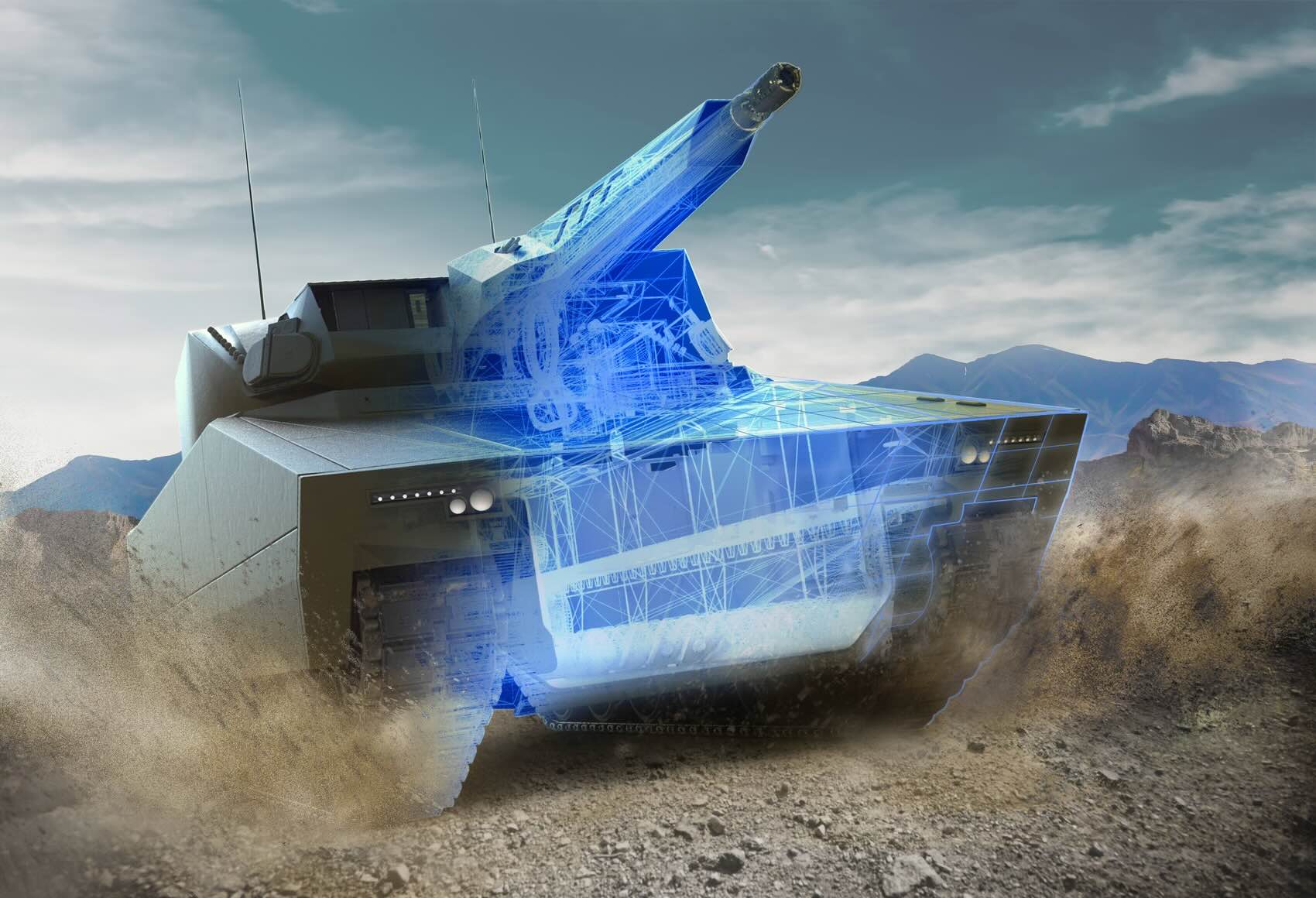
【軍傳媒/國際軍事新聞】德國萊茵金屬公司對外公布,第一批山貓(Lynx , KF-41)步兵戰鬥車將於近日抵達烏克蘭,第一輛KF-41於2024年底交付夫克蘭作為測試,剩下的預計於2026年初交付。首批五輛KF-41仍在德國生產,2023年烏克蘭戰略工業部長奧列克桑德.卡梅申宣布與萊茵金屬聯合生產的計劃,預計在烏克蘭建立新的生產線,若該計劃真的執行,也代表烏克蘭會採購更多的KF-41。
包含首批KF-41的生產費用,截至2025年10月,德國已經援助烏克蘭233億美元,與過往提供的二手車輛不同,首批KF-41是全新車輛且經過符合烏克蘭需求的改裝,而烏克蘭也成為繼匈牙利後,全球第二個使用山貓(Lynx , KF-41)步兵戰鬥車的國家。

冷戰結束後,許多國家在步兵戰鬥車的設計上長期維持 25 至 35 噸級的思路,強調戰略機動性與成本效益。然而,近十多年來的實戰經驗,無論是伊拉克、阿富汗,或是俄烏戰爭所呈現的戰場樣貌,都清楚顯示傳統步兵戰鬥車(IFV)在反裝甲火力、無人機偵搜、密集砲火與城鎮近距離作戰環境中,生存性明顯不足。
萊茵金屬於2015年開始研發山貓步兵戰鬥車,當時的競爭對手是美洲獅(Puma)步兵戰鬥車,最後德國陸軍選擇美洲獅取代冷戰時期的黃鼠狼(Mrder)步兵戰鬥車。不過萊茵金屬並沒有放棄,由於設計之初就考慮模組化設計,因此在科技進步後能迅速加入不同的任務模組進行升級,同時為了提升可能的出口市場降低成本,採用部分商規汽車零件以及現有組件,由於戰場環境改變,KF-41 Lynx設計朝向能在高威脅環境中伴隨主戰車作戰為基本前提。使得KF-41並非延續冷戰時期步兵戰鬥車(IFV)輕量化、大量部署的思維,而是直接回應當代高強度戰場環境下,機械化步兵在火力、防護與生存性全面不足的現實困境,完全體的KF-41更像是一種「步兵戰鬥平台化」的產物,而非單純的裝甲載具。

重裝甲下的機動平衡
KF-41 的戰鬥重量依防護配置不同,約落在 44 至 50 噸之間,已接近部分主戰車的下限重量。這樣的重量水準,直接反映其對防護的高度重視。然而,為避免重裝甲帶來機動力下降,KF-41 配備輸出約 1,140 匹馬力的柴油引擎,使其馬力重量比仍可維持在 22 至 25 hp/噸的水準,足以與現代主戰車協同行動。
在人員配置上,KF-41 採三人乘員編制,並可搭載 8 名全副武裝步兵。相較多數只能搭載 6 至 7 人的 IFV,KF-41 更接近完整步兵班的需求,這在實際作戰運用上具有重要意義,能減少分乘不同車輛所帶來的協同問題,也有助於提升下車步兵的戰鬥完整性。
從裝甲到生存系統的整體設計
KF-41 的防護設計並非單純追求厚重裝甲,而是以分層生存性概念為核心。其車體採模組化複合裝甲結構,可依任務需求調整防護等級,正面防護水準被認為可達 STANAG 4569 Level 6 等級,具備抵禦大口徑機砲與部分反戰車彈藥的能力。
在被動防護之外,KF-41 亦可整合 Rheinmetall 自家的 ADS 主動防護系統,用以攔截來襲的反戰車火箭與飛彈。此一設計顯示 KF-41 並未假設裝甲本身能解決所有威脅,而是承認現代反裝甲武器的致命性,並以主動防護作為必要配套。
對地雷與 IED 的防護同樣是設計重點。強化底盤結構、能量吸收座椅與防碎片內襯,使乘員與步兵在遭遇爆炸時的生存機率顯著提升。這些設計細節,正是多年實戰經驗累積下的成果,也讓 KF-41 在生存性層面明顯優於傳統 IFV。

從壓制到獵殺的全方位能力
KF-41 採用 Lance系列遙控砲塔,主武裝可選擇 30 公厘或 35 公厘機砲。相較 30 公厘彈藥,35 公厘在有效射程、動能與可程式化空爆彈的效果上更具優勢,特別適合對付掩體後步兵、輕裝甲車輛與低空無人機。
火控系統方面,KF-41 具備完整的獵殲者能力,車長與砲手皆配備獨立熱影像與光電感測器,可在高節奏戰場中迅速發現、指派與接戰目標。這使 KF-41 不只是步兵的火力支援平台,也能在戰術層級中主動搜尋威脅。
在反戰車能力上,KF-41 可整合 Spike LR 或 LR2 反戰車飛彈系統,使步兵戰鬥車具備 4 至 5.5 公里以上的精準反裝甲打擊能力。這意味著即使在缺乏戰車支援的情況下,機步單位仍能對敵方裝甲部隊構成實質威脅,顯著提升部隊的戰術彈性。 除了上述火力,萊茵金屬也推出一系列衍伸車型,包括重型迫擊砲火力支援車、彈藥運載車、搭載著名天行者(Skyranger)砲塔的防空砲車、指揮車、搶修車、救護車等,標誌著山貓系列完全成熟,以規模經濟減少後勤成本,而未來KF-41能否在烏克蘭成功,將可能大幅影響KF-41的出口機會。
Rheinmetall of Germany has announced that the first batch of Lynx (KF-41) infantry fighting vehicles will arrive in Ukraine in the near future. The first KF-41 was delivered to Ukraine at the end of 2024 for testing purposes, while the remaining vehicles are expected to be delivered in early 2026.
The initial batch of five KF-41 vehicles is still being manufactured in Germany. In 2023, Ukraine’s Minister of Strategic Industries, Oleksandr Kamyshin, announced a joint production plan with Rheinmetall, aiming to establish a new production line inside Ukraine. If this plan is implemented, it would also indicate that Ukraine intends to procure additional KF-41 vehicles.
Including the production costs of the first batch of KF-41s, Germany’s total military assistance to Ukraine had reached USD 23.3 billion by October 2025. Unlike previous aid packages that mainly consisted of second-hand vehicles, the initial KF-41s are brand-new platforms, modified to meet Ukrainian operational requirements. With this delivery, Ukraine becomes the second country in the world, after Hungary, to operate the Lynx (KF-41) infantry fighting vehicle.
The Evolution of Infantry Fighting Vehicles After the Cold War
Following the end of the Cold War, many countries continued to design infantry fighting vehicles within the 25- to 35-ton weight class, emphasizing strategic mobility and cost efficiency. However, combat experience over the past decade—whether in Iraq, Afghanistan, or the ongoing Russia–Ukraine war—has clearly demonstrated that traditional IFVs suffer from significant survivability shortcomings when faced with modern anti-armor weapons, persistent UAV reconnaissance, dense artillery fire, and close-range urban combat.
Rheinmetall began development of the Lynx IFV in 2015. At the time, its primary competitor was the Puma infantry fighting vehicle. Ultimately, the German Army selected the Puma to replace the Cold War-era Marder IFV. Rheinmetall, however, did not abandon the program. Because the Lynx was designed from the outset with modularity in mind, technological advances could be rapidly incorporated through new mission modules.
In order to reduce costs and enhance export competitiveness, the design also incorporates selected commercial automotive components and existing subsystems. As battlefield conditions evolved, the KF-41 Lynx was increasingly oriented toward operating alongside main battle tanks in high-threat environments as its core design premise. As a result, the KF-41 does not follow the Cold War IFV philosophy of light weight and mass deployment. Instead, it directly addresses the reality that mechanized infantry forces in modern high-intensity warfare face comprehensive shortfalls in firepower, protection, and survivability. In its fully realized form, the KF-41 more closely resembles a “platformized infantry combat system” than a conventional armored vehicle.
Mobility Balance Under Heavy Armor
Depending on its protection configuration, the KF-41 has a combat weight ranging from approximately 44 to 50 tons, approaching the lower end of main battle tank weight classes. This mass clearly reflects the emphasis placed on protection. To prevent mobility degradation caused by heavy armor, the KF-41 is powered by a diesel engine producing approximately 1,140 horsepower, allowing it to maintain a power-to-weight ratio of around 22 to 25 horsepower per ton—sufficient for coordinated operations alongside modern main battle tanks.
In terms of crew configuration, the KF-41 employs a three-person crew and can carry up to eight fully equipped infantry soldiers. Compared to most IFVs, which typically accommodate only six to seven dismounts, the KF-41 more closely matches the requirements of a full infantry squad. This has significant operational implications, reducing the need to split squads across multiple vehicles and improving the cohesion and combat effectiveness of dismounted infantry.
From Armor to an Integrated Survivability System
The KF-41’s protection philosophy does not rely solely on thick armor, but instead centers on a layered survivability concept. The vehicle employs modular composite armor that can be adjusted according to mission requirements. Its frontal protection level is generally assessed as reaching STANAG 4569 Level 6, offering resistance against large-caliber automatic cannon fire and certain anti-armor munitions.
Beyond passive protection, the KF-41 can also be equipped with Rheinmetall’s Active Defence System (ADS), designed to intercept incoming anti-tank rockets and missiles. This design choice reflects an understanding that armor alone cannot counter all modern threats, and that active protection is a necessary complement in contemporary warfare.
Mine and IED protection is also a major design focus. A reinforced hull structure, energy-absorbing seats, and spall liners significantly improve the survivability of both crew and embarked infantry during explosions. These design features are the result of accumulated combat experience over many years and contribute to the KF-41’s clear survivability advantage over traditional IFVs.
Comprehensive Firepower: From Suppression to Precision Kill
The KF-41 is equipped with the Lance series remotely operated turret, with main armament options including either a 30 mm or 35 mm automatic cannon. Compared to 30 mm ammunition, the 35 mm caliber offers superior effective range, kinetic energy, and programmable airburst performance, making it particularly effective against infantry behind cover, lightly armored vehicles, and low-flying unmanned aerial systems.
In terms of fire control, the KF-41 features a full hunter-killer capability. Both the commander and gunner are equipped with independent thermal imaging and electro-optical sensors, enabling rapid target detection, designation, and engagement in high-tempo combat environments. This allows the KF-41 to function not only as a fire support platform for infantry, but also as an active threat-search and engagement asset at the tactical level.
For anti-armor operations, the KF-41 can integrate Spike LR or LR2 anti-tank guided missiles, providing precision engagement ranges of 4 to 5.5 kilometers or more. This capability allows mechanized infantry units to pose a credible threat to enemy armored forces even in the absence of direct tank support, significantly enhancing tactical flexibility.
A Mature Vehicle Family and Export Implications
Beyond its primary combat configuration, Rheinmetall has developed a comprehensive family of KF-41 variants, including heavy mortar fire support vehicles, ammunition carriers, air defense vehicles equipped with the well-known Skyranger turret, command vehicles, recovery vehicles, and armored ambulances. This breadth of variants indicates that the Lynx family has reached a high level of maturity, enabling economies of scale that can reduce long-term logistical costs. Whether the KF-41 proves successful in Ukrainian service will likely have a substantial impact on its future export prospects, particularly as many countries reassess the survivability requirements of infantry fighting vehicles in the context of modern, high-intensity warfare.