

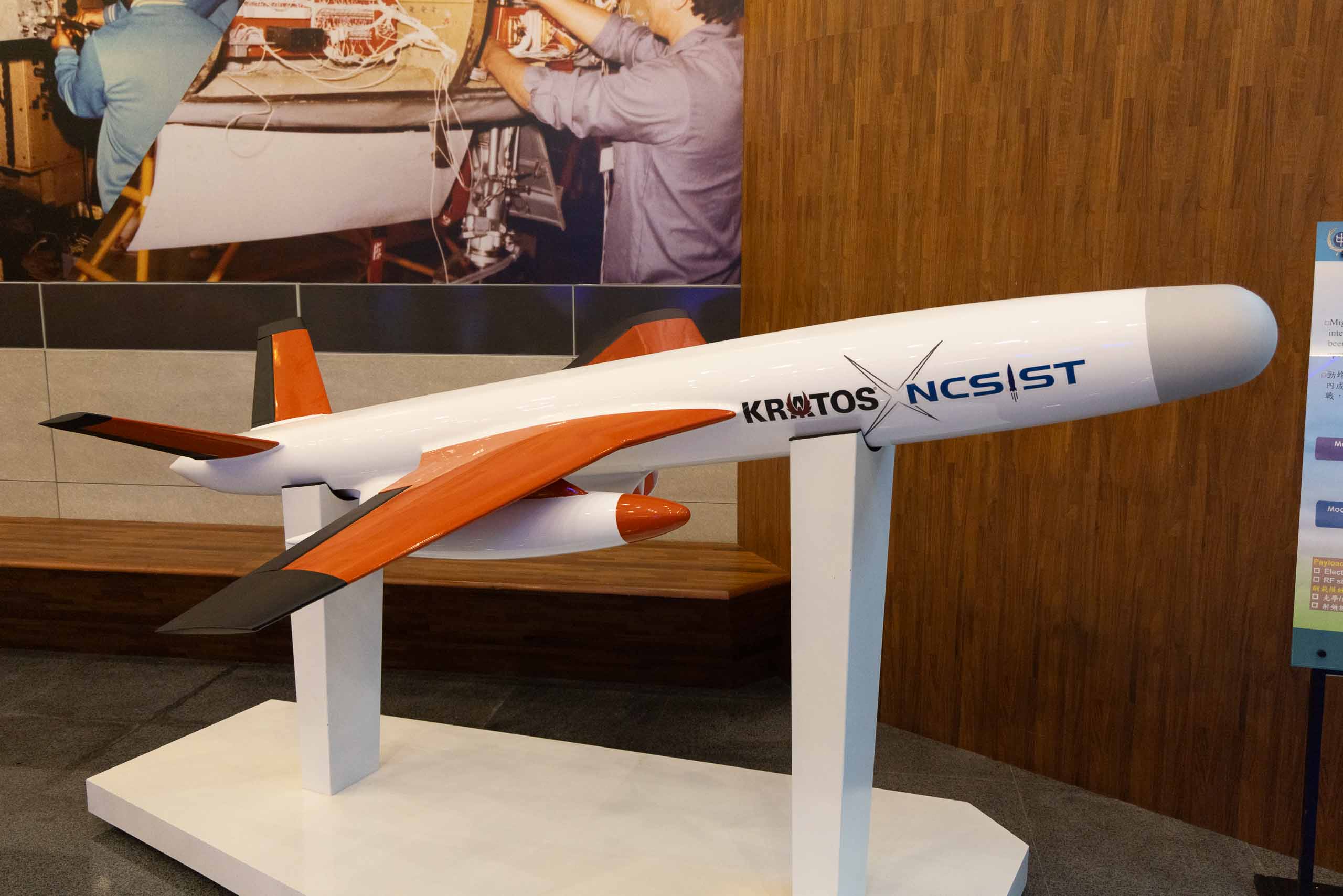
【軍傳媒/軍事科技】在現代高強度與不對稱作戰環境下,飛彈與精準彈藥、甚至包含無人機的效能競爭,已從射程與導引的比較逐步轉向彈頭會傷效率的追求,戰場上無人機從最初的丟躑手榴彈到打開的艙口,到攜帶火箭推進榴彈彈頭直接撞擊,為的就是大幅提升對裝甲裝備的殺傷力,中科院日前在美國參議員訪台時展示的「反應式破片彈頭(Reactive Fragmentation Warhead)」,即是在此背景下快速發展的關鍵技術之一。
中科院近年推動的「彈威專案」相關研發計畫(,正是此一趨勢的重要代表,其核心即在於結合高能炸藥與反應式破片,同時能符合標準化在不同無人機隨時更換的需求,實現彈頭體積不變、威力倍增的戰鬥部革新,現場也展示遭彈頭實際貫穿的5公分均值鋼板,顯示其穿甲能力。

反應式破片彈頭的技術原理
傳統破片彈頭的運作邏輯相當直觀。當高爆炸藥引爆後,彈體內部預製的鋼製或鎢製破片會以極高速度向外擴散,透過動能對目標造成穿透與撕裂,並輔以爆震波形成殺傷。然而,這種設計的效能本質上仍依賴破片的初速與質量,一旦速度衰減,其毀傷能力便迅速下降,即使增加破片數量或改善散布角度,整體效能仍存在物理極限,因此通常需要多枚來造成足夠的毀傷效果。
另外由於破片的穿透力不足,因此主要用於人員殺傷及無裝甲裝備(例如雷達)的損毀,但對於有裝甲保護的車輛載具損毀效果甚微。另外一般聚能反裝甲彈頭則著重於裝甲貫穿能力,而是利用成形裝藥原理,讓金屬碗型罩在爆炸後形成熱噴流融穿裝甲達到貫穿損毀或殺傷內部人員,不過由於噴流集中於一點,因此有時需數發才能擊中要害部位。
反應式破片彈頭則是在這一基礎上進行本質性的突破,其核心概念在於整合兩種但種的優勢與特性,前端球碗狀保持熱噴流的裝甲貫穿效果,後方四周包覆的彈片則達到破片毀傷效果,同時除了熱噴流之外,增加高溫氣體的產生,使得彈頭貫穿裝甲後在車輛內部造成更大的引燃及殺傷效果,因此單一彈頭不僅具備動能貫穿效果,同時也帶有類似燃燒或微型爆燃的化學熱能毀傷能力,以及傳統破片對人員等軟目標的殺傷能力。
這種「雙重能量釋放」的機制,使反應式破片彈頭在命中目標時能產生遠高於傳統破片的破壞效果。除了具備穿甲能力外,即使未直接命中關鍵部位,反應所產生的熱與能量也可能導致次生損壞。對於人員與輕裝備而言,除了穿透傷害之外,還會伴隨高溫灼傷與燃燒效應。


戰場運用與戰術意義
從俄烏戰爭及美伊戰爭的經驗,長程自殺無人機成為戰場遠距攻擊的要角,但由於引擎推力限制,在體積與重量受到嚴格限制的情況下,單純增加炸藥或破片數量並不可行,而透過改變破片材料,使其在同樣質量下具備更高毀傷能力,便成為最具效率的改良方式。每架無人機都有一定的毀傷威力,將迫使敵軍投入更多的攔截成本,同時對己方在戰術運用上將更具彈性,隨時可更改攻擊目標,若擊中都能有效毀傷。而對於生產成本來說,不需要生產不同的彈頭庫存,也不需要麻煩更換,一個彈頭就具備震波、破片、穿甲、燃燒等威力。
從作戰設計角度來看,長程自殺式無人機搭載反應式破片彈頭,將能改善單機單發的命中毀傷效益。長程無人機飛了數百公里,如果只靠普通高爆破片卻只把目標外部打壞,戰果有限;但若能先穿進裝甲薄弱處、車頂、雷達罩或設備艙內,再把能量釋放在內部,效果就完全不同。再來反應式破片彈頭它能擴大目標選擇,過去一架無人機也許比較適合打油槽、倉庫或停機坪上飛機等軟性目標,如今若彈頭更強,它就能對付輕裝甲、發射車、通信車、地面雷達乃至野戰防空系統。最後在經濟效益上,更符合「量產型精準打擊武器」需求。因為攻擊型無人機的本質,不是每一架都要攜帶重型戰鬥部,而是透過大量、分散、反覆進入戰場,逼迫對手處處設防,在這種條件下,每一個小型彈頭都必須盡量做得更致命,這也是不對稱作戰的核心。
中科院正同時推進高速無人載具、攻擊型無人艇與各式低成本打擊/反制載具,而近期「勁蜂四型」實際彈頭展示所凸顯的,也不是單純平台,而是平台與彈頭的組合效應。換句話說,同一種彈頭能運用在不同的無人載具上,簡化生產與庫存成本,不對稱作戰是從細微地方調整改良,而不是空有口號。

NCSIST Unveils New Breakthrough: Reactive Fragmentation Warhead for Mighty Hornet IV UAV
In modern high-intensity and asymmetric warfare, competition in missiles, precision munitions, and even unmanned systems has gradually shifted from range and guidance toward warhead lethality. On today’s battlefield, drones have evolved from dropping grenades to directly striking targets with rocket-propelled warheads to enhance effectiveness against armored assets. Against this backdrop, Taiwan’s National Chung-Shan Institute of Science and Technology (NCSIST) recently showcased its “reactive fragmentation warhead,” highlighting a key technological advancement.
Developed under the institute’s “Danwei Project,” this warhead integrates high-energy explosives with reactive fragments while maintaining standardized dimensions for compatibility across different unmanned platforms. The concept focuses on significantly increasing destructive power without enlarging warhead size. Demonstrations included penetration of a 5 cm steel plate, indicating credible anti-armor capability.
Traditional fragmentation warheads rely on explosive force to disperse pre-formed fragments at high velocity, causing damage through kinetic energy and blast effects. However, their effectiveness declines rapidly as fragment velocity decreases, limiting overall lethality despite adjustments in fragment density or dispersion. As a result, multiple hits are often required to achieve meaningful damage, especially against protected targets.
Fragmentation warheads are therefore primarily effective against personnel and unarmored systems such as radar installations. In contrast, shaped-charge anti-armor warheads focus on penetration, using explosive energy to form a high-temperature metal jet capable of piercing armor. However, their highly concentrated effect means multiple strikes may still be required to achieve decisive results.
The reactive fragmentation warhead represents a hybrid solution. It combines a shaped-charge front section for armor penetration with surrounding fragmentation elements for broader damage. In addition, it generates high-temperature gases that enhance internal damage after penetration, increasing the likelihood of ignition and secondary effects within the target. This creates a “dual-energy” mechanism that delivers kinetic penetration, thermal damage, and fragmentation effects in a single system.
This integrated design significantly enhances lethality. Even if a target is not struck at its most vulnerable point, the combination of heat, pressure, and fragmentation can still cause substantial secondary damage. Against personnel and light equipment, the warhead produces both penetration and thermal effects, increasing overall effectiveness.
Operationally, lessons from the Russia–Ukraine war and recent Middle East conflicts highlight the growing importance of long-range loitering munitions. Due to payload and propulsion constraints, simply increasing explosive mass is not always feasible. Improving lethality through advanced materials and warhead design becomes a more efficient solution.
A more effective warhead increases the impact of each drone strike, forcing adversaries to expend greater resources on interception. It also provides greater tactical flexibility, allowing operators to engage a wider range of targets. From a logistics perspective, a standardized multi-effect warhead reduces the need for multiple specialized munitions, simplifying production and inventory.
For long-range strike drones, the benefits are particularly significant. Instead of merely damaging external structures, a penetrating warhead can breach vulnerable points—such as vehicle roofs, radar domes, or equipment compartments—and release destructive energy internally, greatly improving mission effectiveness. It also expands target sets, enabling engagement of light armored vehicles, missile launchers, communication units, and air defense systems.
From an economic standpoint, this approach aligns with the concept of mass-produced precision strike systems. Rather than relying on a few high-cost platforms, modern warfare increasingly emphasizes large numbers of low-cost, distributed systems that can repeatedly pressure adversaries. In such an environment, maximizing the lethality of each unit becomes essential.
NCSIST is simultaneously advancing high-speed unmanned platforms, attack unmanned surface vessels, and other low-cost strike and countermeasure systems. The recent unveiling of the Chien Hsiang IV warhead highlights not just a platform upgrade, but the importance of integrating platform and payload. A single standardized warhead adaptable across multiple unmanned systems represents a practical step toward more efficient and scalable asymmetric capabilities.
Ultimately, such developments reflect a broader shift in modern warfare—where incremental improvements in lethality, integration, and cost efficiency can produce significant strategic advantages.