

【軍傳媒/軍事科技】隨著立院新會期的到來,國防預算的爭議又將白熱化,當我們在試圖提高國產能量時,是否想過現階段存在或即將設立的固定產線,其位置與運作特徵早已可能被對手鎖定?一旦衝突爆發、固定產線在第一時間一定會遭到精準打擊或破壞,而備援方案能否立即接手?這就將成為重要備戰完成度的指標。另外台海衝突一但發生,大機率我方會遭遇不同程度情況的封鎖、外援與補給將無法如期正常抵達時,台灣是否仍具備在島內持續生產戰力、把武器與零件不間斷送上前線的能力?在這樣的戰略疑題之下,「到處皆可當工廠」的理念逐漸成為新的思考方向,而美國新創公司 Firestorm Labs 推出的 XCell 貨櫃工廠,正試圖改寫國防韌性的定義。
在這思維邏輯上,美國新創公司Firestorm Labs正是在這種產能競賽背景下誕生的公司,其核心理念不是單純設計更好的無人機,而是重新定義「製造能力本身即為戰力」,因為隨著科技的進步,無人機的疊代異常快速,可能幾個月就有完全的新概念,與其追逐科技,不如把製造能力本身變成可隨處部署、可迅速調整、可隨時更新運作的作戰資產,其核心概念可用一句話概括:把供應鏈壓縮成一組可空運/可機動的貨櫃式產線,讓前線用超小規模的人力在數十小時內完成機體與零件的製造、組裝與維修,並用模組化設計縮短改裝與換裝週期。

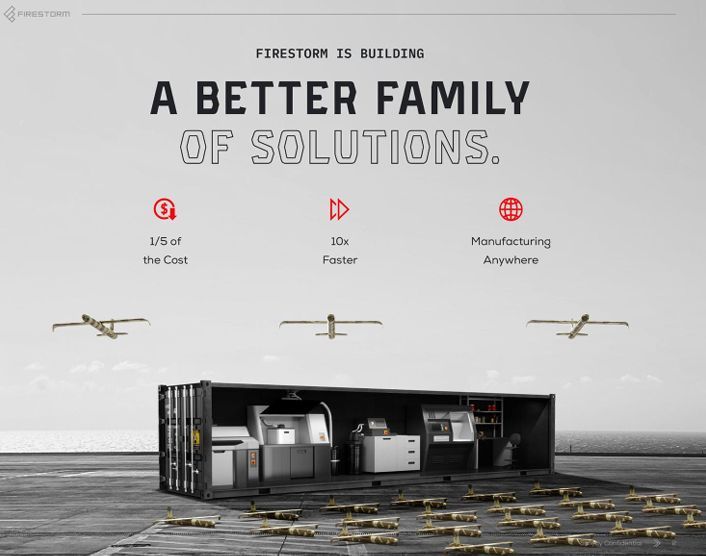
XCell貨櫃工廠是Firestorm Labs的遠征(expeditionary)半自動製造系統,屬於貨櫃式工廠的概念,以兩個可擴展的標準20呎貨櫃為主體,結合3D列印與自動化流程,把「任務需求」直接轉換為前線可用的無人機、零件與關鍵組件。換言之,XCell貨櫃工廠最重要的價值,不在於它能印出什麼,而在於它把「何時、何地、以多快速度」能得到東西這件事,變成可被規劃與部署的能力。
Firestorm Labse共同創辦人 CHAD MCCOY 指出,未來戰爭中前沿部署製造不是加分選項,而是任務關鍵能力。其XCell貨櫃工廠系統以貨櫃化形式建構分散式製造單元,能在需求點附近完成無人機與關鍵零件製造。Tempest 系列機體可在9小時內完成列印,36小時內完成整體整合。

從「印機體」到「印產能」
XCell貨櫃工廠主打以最少人力、快速節奏完成無人機與零件的即時生產,並強調其使用HP 3D列印技術,把過去必須依賴後方工廠、遠程運輸、庫存管理的流程,縮短為前線就可自主的製造工廠。
單一XCell貨櫃工廠單元可在一週內產出十餘架小到中型無人機(以報導中的數字為例),並以極少人力維持運作,強調在極端氣候與前沿環境部署。 這種產能不必然意味「高端平台」,但對可耗損無人系統而言,它直接對應到持續作戰能力。
XCell貨櫃工廠的快速製造週期,把無人機交期從以月計算縮短到以日甚至是小時計算。根據Firestorm Labs人員說法,Group 2等級的無人機機體可在約九小時列印完成,整體整合約36小時完成。這是典型諞平話流程的戰場思維,不用把每架飛機做到最完美,而是讓你能在損耗後快速補上缺口、在需求變更後快速換型。
而為了因應戰場需求, Tempest系列模組化無人機就是可更換裝任務載荷的無人機平台,其核心方向是「模組化+快速整合」,讓同一套平台框架可依任務切換偵蒐、通信中繼、電子支援/干擾、甚至一次性攻擊等用途,並與xCell的快速製造相輔相成。在這個模式下,使用者不必仰賴Firestorm Labs提供的零部件,可以是使用自己的引擎、感測器等相關部件,Firestorm Labs提供其飛控與邊緣運算模組的「底座」,宣稱可支援多種平台,並提供擴展I/O與第三方整合,真正做到在地化生產。
上面的內容換成白話文,其實就是Firestorm Labs把「可換裝的載荷/軟體」建立在較一致的控制與運算框架上,讓採購從一次性對特定廠商的整套買斷,轉向「底座長期使用、任務模組快速更新」的路線。

新型態戰爭模式,製造能力成為持續戰力
烏克蘭三年無人機產能曲線,從小批量到快速提升到以百萬常態化計算。烏克蘭在2022年僅具備每年數千架FPV無人機產能,2023年成長120倍,2024年實際生產突破兩百萬架,並宣稱年產能上看400萬架。這不是單純的科技突破,而是一場產能體系革命。
俄烏戰爭最具代表性的變化之一,是無人機從「少量高價、特種用途」快速轉成「大量消耗、日常火力與偵蒐」的常態裝備。烏克蘭在三年內把產能翻到數百倍,背後牽涉的不只是技術,而是法規鬆綁、商規供應鏈導入、快速迭代與大規模採購機制的同步成形。這條產能曲線,正是理解Firestorm Labs這類「把製造能力當作作戰資產」的關鍵背景。
波蘭OSW(東方研究中心)評估烏克蘭2024年生產各型無人載具約220萬架,並指出2025年應該將超過450萬架,其中逾200萬架可能是FPV類型,這代表FPV已經從補充性裝備,變成可被按月、按旅級需求計算的「主力消耗品」。2024年烏軍在3月時已能以「每月採購至少5萬架FPV」的節奏進行補充,換算年化達60萬架等級,顯示其採購與消耗已是工業化節奏,而非零星補給。
產能即戰力,分散化提高存活性
當一個戰區一年要消耗到百萬級無人機,作戰邏輯就會改成維持作戰密度與節奏。用大量低成本平台支撐偵蒐覆蓋、目標指示、誘餌消耗、飽和突防與火力修正;而這些任務能否持續,不取決於單架性能,而取決於供應鏈是否能在干擾、封鎖與戰損下仍維持交付。這正是「把工廠搬到前線」概念的戰場土壤:當產線變成可被打擊的目標,分散式製造與可部署產能,就會從加分項變成必要條件。表單的頂端表單的底部
俄烏戰場的無人機已經是消耗性火力與偵蒐的常規載具,當干擾更強、損耗更大、運補更危險時,要如何維持無人載具的持續補給往往就是能否成功進攻與防守的關鍵因素。
傳統集中式工廠與倉儲,面對遠程打擊與封鎖有天然脆弱性。把產能做成分散可移動式,降低單點癱瘓風險,Firestorm Labs用機動製造填補美軍快速擴充無人機的缺口。
現代戰場對抗不是線性升級,常見情境是今天無人機被某種干擾打趴,明天就要換另一種導航/通信/任務裝備突破干擾。而模組化讓你不必整批報廢平台,平台沿用,快速製造能力讓你能更快推出修改版零件與構型以安裝新的模組,這種能力在對付高強度電磁壓制、GPS干擾與快速變化的防空/反無人機手段下尤其關鍵。
由於可耗損無人機的核心不是單架的昂貴性能,而是用足夠密度去換取偵蒐覆蓋、目標指示、誘餌消耗與飽和突防的戰術空間。當補充速度跟得上,指揮官才敢把無人機當成常態消耗品而非珍貴資產,這點也是國軍必須從基本改變的心態,無人機在未來戰場上就是如同槍砲彈藥一樣的消耗品,彈藥補給則是決定戰爭的持續與成敗。

台灣軍方可能的運用,把「韌性後勤」前推到前線與離島
對台灣而言,這類概念的吸引力不在於替代既有大型軍工體系,而是補上一個過去較薄弱的環節:在高強度封鎖/打擊下,如何維持「持續補充」與「戰損修復」的節奏,能彌補戰備儲備深度不足的風險。
另外以國軍情況而言,許多裝備的停擺不是主要零件損壞,而是關鍵小零件、連接件、外殼、支架、天線座等耗材缺料,去年陸勝演習中就因為缺乏履帶膠塊導致M88A1需以拖板車運送。根據美國官方報導都提到,XCell貨櫃工廠可以在軍事環境中用於製造零件、甚至支援維修情境(例如修復GPS相關設備的案例),而美軍也已經運用3D列印來補充例如槍托、汽車塑料零件等備品。。
對國軍部隊而言,這類能力能解決目前許多舊裝備的零附件商源消失的困境,Firestorm Labs甚至能模擬測試列印出的零件服不符合強度需求,尤其在現代科技提升的情況下,不需要工程師長時間設計,只要拿原本零件便可以快速複製。這對在戰區後勤、野戰維修、通資電備件與無人載具耗材上是很大的助力,需求變動大且庫存難預測的品項不再需要提前大量準備,有需要時再現地快速產出便可。
另外台灣還有一個特殊的需求,外離島由於腹地不大,固定的生產能力容易被摧毀,暫時的運補困難會導致戰力下降,這種機動韌性製造能力完美解決現在困境,,搭配分散式倉儲與標準化模組,就能降低後勤路線被切斷的風險。
從平台採購轉向「能力採購」
台灣若引進或合作此類概念,採購重點就從買某一款無人機,轉化成把不同的任務模組、軟體、製造能力、維修教育訓練等變成體系化,平時分散部署、戰時快速擴充,同時以通用底座(飛控/運算)降低多型後勤負擔,且可以快速更換的任務模組來因應敵方反制手段。簡單來說,我可以隨著需求採購不同的引擎,就變成可飛行不同距離的無人機。這種做法對採購制度、驗測認證、資安與供應鏈管理都會提出新要求,但也可能更貼近高強度衝突的實際需求。
下一場競爭不只比武器,也比產能持續性
Firestorm Labs的XCell貨櫃工廠概念把一件老問題用新方法回答:如果無人系統將成為常態消耗品,那麼「工廠」就不能只在後方,它必須跟著部隊走、能在干擾與斷補給下繼續運作。Firestorm 共同創辦人 CHAD MCCOY 在專訪中就指出,台灣所面臨的作戰挑戰,從根本上不同於我們近年所見的其他現代衝突。在烏克蘭,戰鬥通常沿著相對可預測的前線進行,後方有較為安全的補給鏈支援。台灣則呈現完全不同的爭奪式後勤環境,整個島嶼將同時成為戰場。不存在傳統意義上的安全後方——所有港口、機場與補給路線從第一天起都將面臨威脅。 對台灣而言,這類體系最值得討論的不是「要不要買某型無人機」,而是它提供一種把韌性後勤前推、把產能分散化、把交期壓縮到作戰節奏內的可能路線。在高強度衝突環境裡,能否維持無人機與關鍵零件的持續補充,往往比單架性能更決定你能打多久、打多密。當戰爭型態走向分散、快速、可耗損與高對抗電磁環境,「把製造變成武器系統的一部分」可能不再是口號,而是下一個必須被編進作戰計畫與後勤教範的現實。

When Factories Move to the Front: Firestorm Labs’ XCell and the New Logic of Defense Resilience
A famous phrase from the Second World War holds that “amateurs talk strategy; professionals talk logistics.” Three years into the war in Ukraine, that lesson has rarely felt more relevant.
The conflict has drawn global attention to the role of drones in modern warfare. What began as innovative strike tactics has evolved into the routine use of unmanned systems for reconnaissance, targeting, and attack. Yet behind this visible transformation lies a quieter but equally decisive factor: production capacity and the speed of resupply.
As low-cost, attritable drones increasingly resemble consumables—more akin to ammunition than traditional aircraft—the real bottleneck in military resilience is no longer the performance of individual platforms. Instead, it is whether a force can continuously deliver reliable systems, spare parts, and replacements to the battlefield despite disruption, electronic warfare, and supply chain interruptions.
In this new environment, production capacity itself becomes a form of combat power.
Manufacturing as a Deployable Capability
The U.S. startup Firestorm Labs emerged directly from this evolving strategic reality. Rather than focusing solely on designing better drones, the company’s core philosophy centers on redefining manufacturing as an operational capability.
Rapid technological change has already shortened the development cycle of unmanned systems. New concepts can emerge in a matter of months. Rather than attempting to keep pace with every technological shift, Firestorm’s approach is to make manufacturing itself flexible, deployable, and adaptable.
Its concept is straightforward: compress the traditional supply chain into a containerized production line that can be transported by air or ground and deployed close to operational units. With a small team of personnel, airframes and spare parts can be produced, assembled, and repaired within tens of hours rather than weeks or months.
At the center of this concept is Firestorm’s xCell system, an expeditionary semi-automated manufacturing platform built around two expandable 20-foot containers. Combining additive manufacturing technologies such as industrial 3D printing with automated workflows, xCell converts operational requirements directly into drones, components, and mission-critical parts produced near the point of need.
The key advantage of xCell is not merely what it can print. Its value lies in transforming the question of when, where, and how quickly equipment can be obtained into a capability that can be planned, deployed, and integrated into operational logistics.
Firestorm Co-Founder Chad McCoy has argued that forward-deployed manufacturing will not be optional in future conflicts—it will be mission critical. The containerized system allows distributed production nodes to be positioned near operational areas, reducing dependence on long and vulnerable supply chains.
Within Firestorm’s Tempest drone family, for example, airframes can reportedly be printed in roughly nine hours, with full system integration completed in approximately thirty-six hours.
From Printing Airframes to Printing Capacity
The goal of the xCell system is to enable real-time production of drones and spare parts using minimal manpower while maintaining a rapid production tempo. By leveraging HP industrial 3D printing technologies, processes that once depended on rear-area factories and complex logistics networks can now be carried out in forward environments.
A single xCell unit can reportedly produce more than a dozen small- to medium-sized drones per week while operating with a relatively small team. Designed to function in austere environments, the system does not necessarily aim to produce highly sophisticated platforms. Instead, it focuses on sustaining operational tempo for attritable unmanned systems.
This dramatically compresses production timelines. Rather than waiting months for delivery from centralized factories, drone airframes can be produced within hours and assembled within days.
Such an approach reflects a battlefield-oriented manufacturing philosophy. The objective is not to produce a perfect aircraft, but to rapidly replace losses and adapt to changing mission requirements.
Firestorm’s modular Tempest drone architecture supports this approach. A single platform can be equipped with interchangeable payloads for reconnaissance, communications relay, electronic warfare support, or one-way attack missions. This modularity complements xCell’s rapid manufacturing model.
Operators are not restricted to proprietary Firestorm components. Engines, sensors, and other subsystems can be locally sourced and integrated into the platform. Firestorm instead provides the underlying flight control and edge-computing architecture that acts as the system backbone.
In practical terms, this approach shifts procurement away from one-time purchases of complete systems from a single vendor. Instead, a common platform architecture remains in service while payloads and mission modules evolve.
The Industrialization of Drone Warfare
The war in Ukraine provides the clearest example of how this new model of warfare is emerging.
In 2022, Ukraine possessed the capacity to produce only a few thousand FPV drones annually. By 2023, production reportedly expanded by more than 120 times. In 2024, output exceeded two million drones, with Ukrainian officials claiming that national capacity could eventually reach four million per year.
This transformation reflects more than technological innovation. It represents the industrialization of drone warfare.
According to estimates by Poland’s Centre for Eastern Studies (OSW), Ukraine produced roughly 2.2 million unmanned systems in 2024, and production could surpass 4.5 million by 2025. More than two million of those may be FPV drones.
By early 2024, Ukrainian forces were already procuring at least 50,000 FPV drones per month—an industrial scale that demonstrates how drones have evolved from niche tools into standard consumable battlefield assets.
At this level of consumption, the logic of warfare changes fundamentally. Operational success depends less on the performance of individual systems and more on sustaining production and replacement rates.
Large numbers of low-cost platforms provide reconnaissance coverage, target designation, decoy deployment, and saturation attacks. Whether those missions can continue depends on the resilience of the supply chain.
This is precisely where the concept of forward-deployed manufacturing becomes relevant.
Production as Combat Power
Traditional centralized factories and warehouses are inherently vulnerable to long-range strikes and blockade. Distributed, mobile production nodes reduce the risk of catastrophic disruption and allow manufacturing capacity to survive within contested environments.
Modern battlefield competition is rarely linear. A drone platform that becomes ineffective due to electronic interference today may require a new navigation system, communications link, or payload tomorrow.
Modular architectures allow the base platform to remain in service while components and subsystems evolve. Rapid manufacturing enables those updates to be implemented quickly.
For attritable drones, the decisive factor is not individual performance but density. High numbers of inexpensive platforms enable reconnaissance coverage, target identification, and saturation tactics.
When replacement rates can keep pace with losses, commanders can treat drones as consumable assets rather than precious platforms.
Implications for Taiwan
For Taiwan, concepts such as xCell may offer value not by replacing existing defense industries but by strengthening logistical resilience.
Many equipment failures occur not because major systems break down, but because small components—connectors, housings, mounts, or structural parts—are unavailable. Additive manufacturing systems capable of producing such parts in forward environments could significantly reduce downtime.
Mobile manufacturing nodes may also address Taiwan’s unique geographic challenges. Offshore islands, for example, possess limited infrastructure and are vulnerable to disruption of supply routes. Distributed production combined with modular logistics could mitigate the risk of isolation.
More broadly, such concepts shift procurement from purchasing individual platforms toward acquiring operational capabilities. Instead of focusing solely on specific drone models, militaries may prioritize modular architectures, software systems, manufacturing infrastructure, and training.
The Next Competition: Weapons and Production
Firestorm’s xCell concept answers an old strategic problem in a new way.
If unmanned systems are becoming routine consumables, then factories can no longer remain safely in the rear. They must move closer to operational forces and continue functioning even under disruption.
As Firestorm Co-Founder Chad McCoy noted in an interview, Taiwan’s operational environment differs fundamentally from conflicts such as Ukraine. Rather than defined front lines with relatively secure rear areas, Taiwan would face a contested logistics environment across the entire island. Ports, airfields, and supply routes could all come under threat from the opening stages of a conflict.
In such conditions, the critical question may not be which drone platform is purchased, but whether production capacity itself can be distributed, protected, and sustained.
In high-intensity conflict, the ability to continuously replace drones and critical components may ultimately matter more than the performance of individual systems.
As warfare becomes increasingly distributed, fast-paced, and attritional, manufacturing may no longer be merely an industrial activity behind the lines.
It may become part of the weapon system itself.