

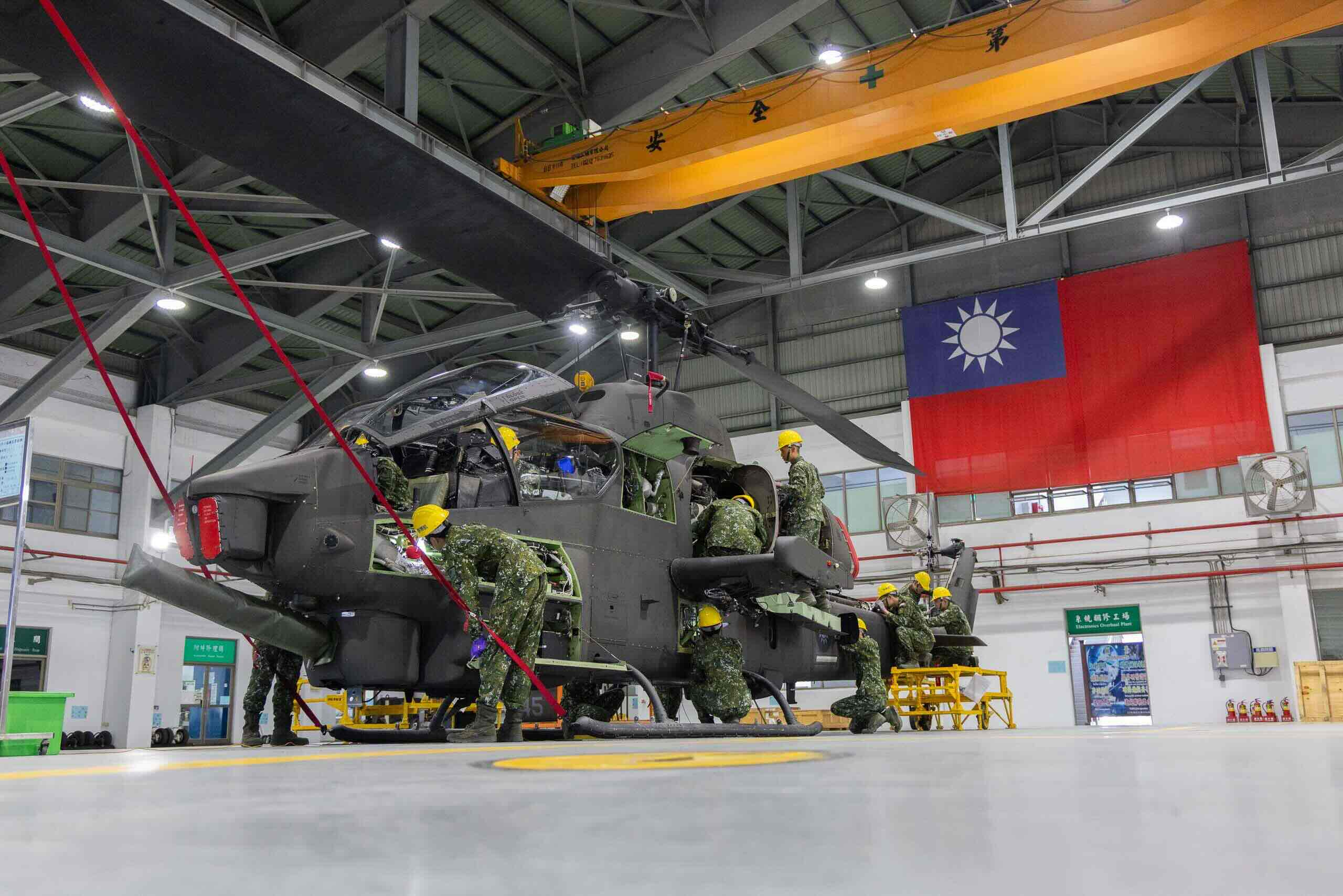
【軍傳媒/軍風大觀園】在現代戰場上,直升機被視為陸軍最具機動性的空中力量。無論是武裝攻擊、空中突擊、戰場偵搜或戰術運輸,都仰賴直升機在低空快速部署。然而,直升機的運作高度依賴精密維修體系支撐,其飛行安全與戰備妥善率並非僅由飛行員與戰術單位決定,而是建立在一套完整的航空維保制度之上。在台灣陸軍的航空後勤體系中,「航勤場」正是支撐直升機戰力的重要核心。
台灣陸軍航空兵力規模
台灣陸軍航空特戰指揮部的直升機機隊在亞洲屬於中型規模,但其任務密度與使用頻率卻相當高。依公開資料顯示,陸軍目前主要運用的直升機包含 AH-64E 阿帕契攻擊直升機約 29 架、AH-1W 眼鏡蛇攻擊直升機約 61 架、OH-58D 戰搜直升機約 37 架、UH-60M 黑鷹通用直升機約 30 架,以及 CH-47SD 契努克重型運輸直升機約 8 架,整體機隊規模接近 160 架。
這樣的機隊結構中阿帕契與眼鏡蛇合計超過 90 架,使台灣成為全球少數同時擁有大量 AH-64E 與 AH-1W 的軍隊之一。陸軍的這種配置反映出台灣過往在防衛作戰中的戰術需求,在可能發生的兩棲登陸作戰環境下,武裝直升機被視為重要的機動反裝甲火力平台。


然而,高比例的攻擊直升機同時也帶來顯著的維修壓力。攻擊直升機的飛行任務通常包括低空高速飛行、大角度機動以及頻繁武器系統射擊,這些操作會加速機體結構與傳動系統的磨耗。而像阿帕契這類配備複雜航電與火控系統的機型,其維修技術門檻遠高於傳統運輸直升機。
除此之外,台灣的直升機機隊呈現多型並存的狀態。從 1990 年代引進的 AH-1W 與 CH-47SD,到近年服役的 AH-64E 與 UH-60M,不同世代與不同製造商的機型同時存在,意味著後勤體系必須維持多套零件庫存、不同維修程序與專用測試設備,這種後勤複雜度也進一步提高了航勤場的工作負荷。
再加上台灣直升機除了作戰任務外,還需長期投入災害救援、運輸支援與聯合演訓等多樣化任務,使飛行時數持續大量累積,長期而言,維修與整備能量的充足與否,往往直接影響到機隊妥善率。
目前在整體航空後勤體系中,航勤廠不僅是維修單位,更是維持機隊戰備的重要單位,當前線產生三級維修單位無法處理的深度檢修需求,航勤場必須承擔機體翻修、發動機檢修與系統升級等任務,以確保整個直升機機隊能持續維持可用戰力。

航勤廠的沿革
航勤廠的前身是民國55年運輸署運材庫下轄的飛保中心,民國58年接收UH-1H通用直升機後,於民國59年成立陸軍飛機保養廠,建立UH-1H的四級修護能量。民國65年改隸屬航指部,更名為陸軍飛機修護保養大隊。自民國82年「飛鷹專案」陸軍開始接收AH-1W、OH-58D直升機,民國87年接收TH-67教練直升機,民國88年納編航補庫,成立航空基地勤務處,隸屬陸軍後勤司令部,由野戰保修正式升級成為基地修護。
到了民國94年,配合「精進案」更名成為「陸軍航空基地勤務廠」,民國95年移編至航空特戰指揮部,民國102年因應「精粹按」移編陸軍後勤指揮部,在民國102年陸軍接收AH-64E攻擊直升機、民國103年接收UH-60M通用直升機後,就負責陸軍所有直升機(AH-64E 阿帕契攻擊直升機、AH-1W 眼鏡蛇攻擊直升機、UH-60M 黑鷹通用直升機、CH-47SD 契努克重型運輸直升機、OH-58D 奇奧瓦偵察直升機)的三級以上後勤維修。

陸軍航空維修制度的層級架構
直升機的維修工作並非集中於單一單位,而是依照任務與技術複雜度分為多個層級。台灣陸軍航空保修體系大致可分為三個主要層次:單位保養、野戰修護與基地修護。
- 第一層為「單位保養」,由作戰單位負責,包括飛行前檢查、飛行後檢查與日常保養,例如清潔、潤滑與簡單調整。這些工作通常由機工長與保修人員在飛行部隊內完成。
- 第二層則屬於三級保修以下的「單位修護」,主要由各旅的飛保廠或直升機修護工場執行。此階段可進行定期檢查與部分組件更換,例如液壓件、電子模組或機械總成。當裝備在作戰或訓練中出現故障時,通常會在這一層完成維修,以縮短停機時間並維持戰備能力。
- 最高層級則是「基地級修護」,由航勤廠負責。此層級維修工作通常涉及完整檢修、結構翻修或重大系統修復,是直升機維保體系中需要大型機台的層級,也是技術含量最高的一環。內容包括機體結構檢查與修補、發動機與傳動系統檢修、航電系統校正、電戰裝備與通信設備翻修等。

航勤場與三級廠維修的區分
目前陸軍航空單位都具有戰術層級的中度維修能力,主要是現場更換大型組件、修復局部故障、進行定期檢查與調整,三級維修的目的在於快速恢復裝備戰備能力,因此維修時間與效率是首要考量,需要較長時間維修檢測的裝備通常是模組化整個拆下後送到航勤廠。例如直升機的心臟發動機、OH-58D以及AH-1W、AH-63E的觀測系統、無線電通訊系統、電戰系統等,都是現地拆下故障模組後送,單位先直接換上另一個更能正常模組維持幾對妥善率,與一般想像飛到工廠維修的景象不同。
航勤廠的廠徽是以盾牌為基底形狀,象徵精粹勁鍊、團結鞏固、堅毅不催的意象,翅膀圖案代表蓄勢待發、迅速即時,兵工符號代表日以繼夜掌握時效,H為直升機英文字幕開頭,A.A.D則為陸軍航空基地勤務廠英文縮寫。
對航空部隊而言,飛機數量並不等同於可用戰力。真正影響作戰能力的是「妥善率」,也就是可立即投入任務的機隊比例。陸軍航勤廠在此扮演關鍵角色。透過定期大修與系統翻修,可以延長直升機使用壽命,同時避免結構疲勞與重大故障風險。這種預防性維修制度,使機隊能在高強度訓練與作戰環境下保持穩定運作。此外,航勤廠同時具備支援野戰修護的能力,在戰備需求提升時,可提供技術支援與零組件維修,形成完整的航空後勤鏈。

The Invisible Backbone of Taiwan Army Aviation Helicopter Power: The Army Aviation Maintenance Depot
On the modern battlefield, helicopters are regarded as the most mobile air asset of the army. Whether for armed attack, air assault, battlefield reconnaissance, or tactical transport, all rely on helicopters for rapid low-altitude deployment. However, helicopter operations depend heavily on a sophisticated maintenance system. Flight safety and operational readiness are not determined solely by pilots or tactical units, but by a comprehensive aviation maintenance structure. Within Taiwan’s Army aviation logistics system, the Aviation Maintenance Depot serves as the core supporting helicopter combat capability.
Scale of Taiwan Army Aviation Forces
Taiwan’s Army Aviation and Special Forces Command maintains a medium-sized helicopter fleet by Asian standards, but with a high operational tempo and mission intensity. According to open-source data, the Army operates approximately 29 AH-64E Apache attack helicopters, 61 AH-1W Cobra attack helicopters, 37 OH-58D reconnaissance helicopters, 30 UH-60M Black Hawk utility helicopters, and 8 CH-47SD Chinook heavy-lift helicopters, totaling close to 160 aircraft.
With over 90 Apache and Cobra attack helicopters combined, Taiwan is among the few militaries worldwide operating large numbers of both types. This reflects Taiwan’s defensive strategy, where attack helicopters play a critical role as mobile anti-armor firepower platforms in a potential amphibious invasion scenario.
However, a high proportion of attack helicopters also creates significant maintenance pressure. These aircraft frequently conduct low-altitude, high-speed maneuvers and intensive weapons operations, accelerating wear on airframes and transmission systems. Advanced platforms like the Apache, equipped with complex avionics and fire-control systems, require far higher maintenance expertise than traditional transport helicopters.
Taiwan’s fleet also consists of multiple generations and manufacturers—from AH-1W and CH-47SD introduced in the 1990s to newer AH-64E and UH-60M—requiring diverse spare parts inventories, maintenance procedures, and specialized testing equipment. This complexity significantly increases the workload on the Aviation Maintenance Depot.
In addition to combat missions, Taiwan’s helicopters are heavily tasked with disaster relief, transport support, and joint exercises, leading to high flight hours. Over time, maintenance capacity directly affects fleet readiness rates.
Within the overall aviation logistics system, the depot is not just a maintenance unit but a key pillar of operational readiness. When frontline units cannot handle complex repairs, the depot conducts airframe overhauls, engine maintenance, and system upgrades to sustain fleet combat capability.
Evolution of the Aviation Maintenance Depot
The depot traces its origins to a flight maintenance center established in 1966. After receiving UH-1H helicopters in 1969, it evolved into the Army Aircraft Maintenance Facility, developing fourth-level maintenance capability. Over time, with the introduction of platforms such as the AH-1W, OH-58D, and TH-67, the unit expanded and transitioned into a base-level aviation maintenance organization.
Following organizational reforms, it was renamed the Army Aviation Maintenance Depot and reassigned under different commands. After the introduction of the AH-64E (2013) and UH-60M (2014), the depot became responsible for third-level and above maintenance for all Army helicopters, including Apache, Cobra, Black Hawk, Chinook, and Kiowa fleets.
Multi-Tier Maintenance Structure
Helicopter maintenance is divided into multiple levels based on complexity:
- Unit-level maintenance: Conducted by operational units, including pre- and post-flight inspections and routine servicing.
- Field-level maintenance: Performed by brigade maintenance units, handling component replacement and routine repairs to restore readiness quickly.
- Depot-level maintenance: The highest level, handled by the Aviation Maintenance Depot, involving major overhauls, structural repairs, engine servicing, avionics calibration, and electronic warfare systems refurbishment.
Distinction from Field Maintenance
Frontline units focus on rapid restoration by replacing modules, while the depot handles deep maintenance and long-duration repairs. Components such as engines, sensor systems, communication equipment, and electronic warfare systems are removed in the field and sent to the depot for detailed repair, allowing units to quickly swap in functional modules and maintain readiness.
Maintenance and Operational Readiness
For aviation forces, the number of aircraft does not equal combat power—the key metric is readiness rate, or the proportion of aircraft available for immediate deployment.
The Aviation Maintenance Depot plays a critical role by conducting scheduled overhauls and system refurbishments, extending service life and reducing the risk of structural fatigue and major failures. This preventive maintenance approach ensures stable operations under high-intensity conditions.
At the same time, the depot supports field maintenance units with technical assistance and component repair, forming a complete aviation logistics chain that sustains Taiwan’s Army aviation combat capability.