

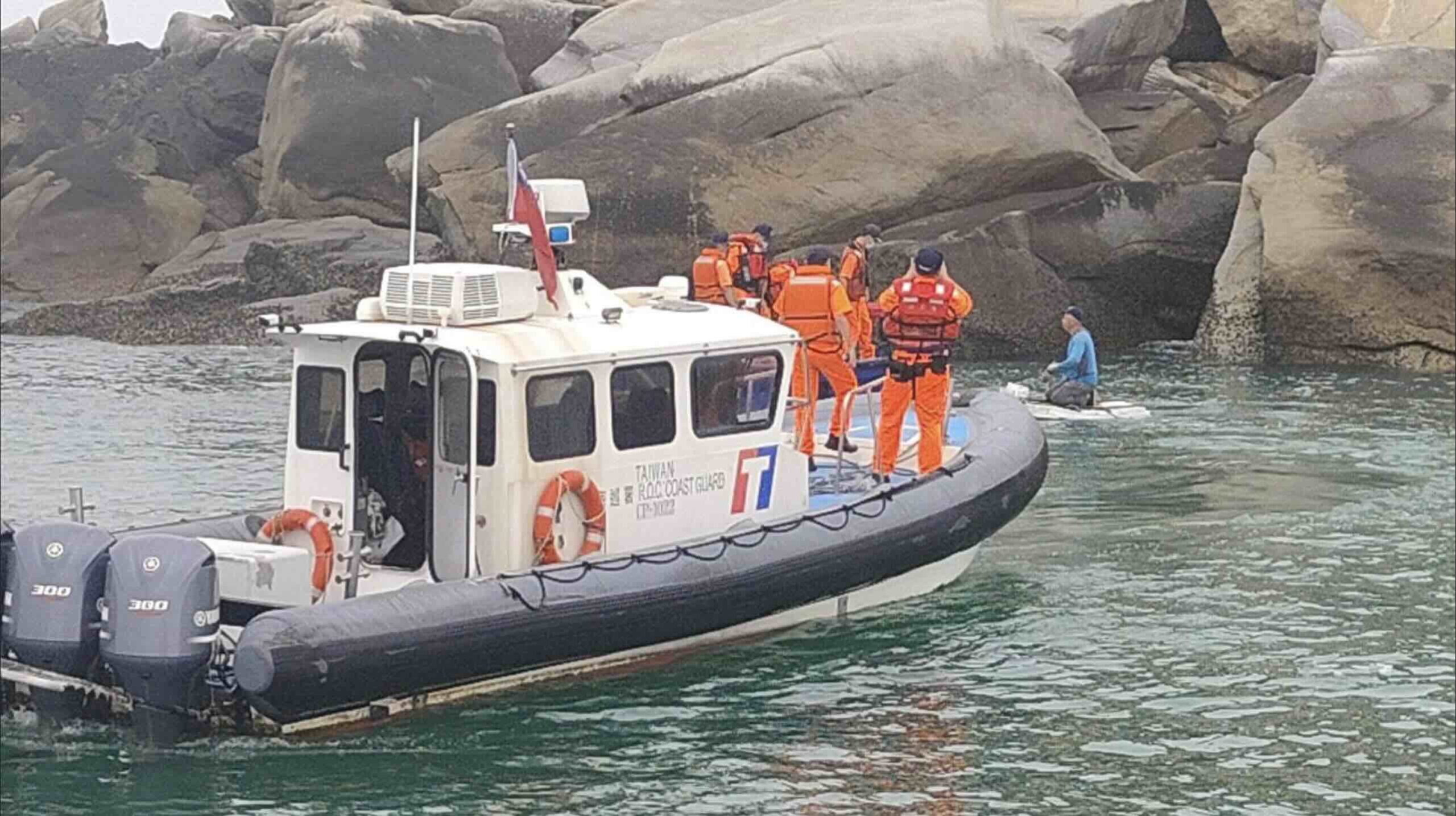
【軍傳媒/外交國防委員會】立法院外交及國防委員會本週召開「中國籍小型船隻非法侵入我國領海之偵搜漏洞檢討、科技監偵設備建置進度與精進作為」專案報告會議。會前,國家安全局局長 蔡明彥針對中國近期提出的對台措施,接受媒體訪問時指出,北京在對台政策上主要具備三項戰略目標:
- 在安全與戰略層面,中國試圖掌握台海局勢的主導權,並排除外部勢力介入,同時透過影響台灣內部政治結構,為未來高層會晤中的涉台議題累積談判籌碼。
- 在政治層面,持續強調「中華民族偉大復興」敘事,意圖將台灣納入「一中框架」之中。
- 在經濟層面,透過吸引台商投資,不僅促進中國本身經濟發展,同時也削弱台灣在全球非紅供應鏈中的角色,進一步擴大對台經濟影響力。
回到本次會議核心議題,近年中國籍小型船隻多次突破岸際防線,成功登岸甚至進行偷渡行為,暴露出我國岸海監偵體系仍存在漏洞。對此,海巡署署長 張忠龍於答詢立委 羅美玲時表示,過去已全面盤點全台168處監偵空隙,目前已完成109處補強,其餘缺口將透過次世代雷達系統、紅外線熱影像設備,以及環島智慧岸際監控系統進行補足,整體建置預計於民國116年底前完成。在過渡期間,則以機動雷達車與強化岸際巡邏方式進行彌補。

在預算與建置方面,海巡署已於2023至2027年間編列相關經費,首批建置33處智慧監控「海岸哨兵監視系統」,分布於北、中、南、東及金馬澎各分署,每處建置經費約1,160萬元,該系統整合多元感測器,包含影像設備、雷達與資料庫,並導入AI影像辨識技術,逐步建構跨系統整合的智慧監偵架構。 根據海洋委員會送交立法院的報告,未來將進一步擴大部署紅外線熱影像系統與環島智慧監控系統。紅外線熱影像系統方面,預計於115年度建置35處、116年度建置64處,合計99處,總經費約15億1,689萬元。環島智慧監控系統則規劃於115年度建置101套、116年度建置75套,合計176套,總經費約21億7,956萬6,000元。兩項系統將共同構成岸際全天候、多層次監偵網絡。
然而,僅依賴固定式岸際監控系統,仍難完全應對我國長達約1,821公里的海岸線與約18萬平方公里的海域範圍。在人力逐漸緊縮的趨勢下,海上勤務與搜救任務又須面對複雜洋流與氣象條件,使得提升無人機能力成為強化整體監偵與反應能力的重要方向。 過去配發的無人機系統,因續航力不足、操作複雜與準備時間長等問題,導致基層單位使用頻率偏低,難以發揮應有效益。相較之下,近期新採購的六架無人機,外界推測為具備垂直起降能力的長航時平台,滯空時間可達10小時,並可大幅提升巡查範圍與任務彈性。該批無人機預計於今年6月交機,將有助於彌補既有16架無人機在性能上的不足。
在會議質詢過程中,立委 陳永康就指出,海巡署所定義的「紅色海灘」應與國防部有所區隔。國防部所關注的是大規模兩棲登陸的高風險區域,而海巡署則應針對小型船隻滲透、偷渡及灰色地帶行動,建立不同的防護重點與應對策略。 此外,國防部副部長徐斯儉回應指出,情報監視偵察(ISR)與人工智慧相關建置多編列於特別預算之中,顯示相關能力仍在發展階段,且令人質疑為何在特別預算之前都為編列至正常預算中,難道是國防部認為不重要?亦或是為了湊數將許多項目都加入特別預算中?
另一方面,立委王定宇關注海軍在無人載具掃雷能力的發展,海軍司令部參謀長朱惠民 中將回覆表示仍在規劃中,俄烏戰爭已經打了三年,整體而言,海軍仍抓著過去的大艦思維,現階段仍以傳統有人艦艇為建軍主軸,對於無人系統在現代戰場中的應用思維,完全未跟上時代。 在俄烏戰爭與近期區域衝突經驗顯示,無人載具已成為改變戰場型態的重要關鍵之際,台灣在相關領域的建置速度與整合程度,甚至是接受程度,都仍處於不及格的狀態,仍有持續精進的空間。

Small-Boat Infiltrations Expose Gaps in Taiwan’s Coastal Surveillance System, as Legacy Thinking Hinders Progress
This week, Taiwan’s Legislative Yuan Foreign Affairs and National Defense Committee convened a special briefing on “Gaps in Detection and Interdiction of Chinese Small Vessel Intrusions into Taiwan’s Territorial Waters, the Status of Technology-Based Surveillance Systems, and Future Improvements.” Ahead of the session, National Security Bureau Director-General Tsai Ming-yen outlined three key strategic objectives behind China’s recent Taiwan-related measures.
First, on the security and strategic level, Beijing seeks to dominate the situation in the Taiwan Strait, limit external intervention, and influence Taiwan’s internal political dynamics to build leverage for future high-level negotiations. Second, politically, China continues to emphasize the narrative of the “great rejuvenation of the Chinese nation,” aiming to incorporate Taiwan within a “One China” framework. Third, economically, China seeks to attract Taiwanese investment to strengthen its own development while simultaneously weakening Taiwan’s role in non-China supply chains, thereby expanding its economic influence.
Returning to the core issue of the meeting, repeated incursions by Chinese small vessels in recent years—some successfully landing or conducting smuggling operations—have exposed persistent weaknesses in Taiwan’s coastal and maritime surveillance system. Coast Guard Administration (CGA) Director-General Chang Chung-lung stated that 168 surveillance gaps had been identified nationwide, with 109 already addressed. The remaining vulnerabilities will be mitigated through next-generation radar systems, infrared thermal imaging, and an island-wide smart coastal monitoring network, with full deployment expected by the end of 2027. During the transition period, mobile radar units and enhanced coastal patrols will serve as interim measures.
From a budgetary perspective, funding for these initiatives has been allocated for the 2023–2027 period. The first phase includes 33 smart monitoring sites distributed across northern, central, southern, eastern, and offshore regions, implemented under the “Coastal Sentinel Surveillance System.” Each site costs approximately NT$11.6 million and integrates multiple sensors—including cameras, radar, and databases—combined with AI-based image recognition, forming the foundation of an integrated surveillance architecture.
According to reports submitted to the legislature, further expansion is planned. A total of 99 infrared thermal imaging systems will be installed between 2026 and 2027, with a combined budget of approximately NT$15.17 billion. Additionally, 176 smart monitoring systems will be deployed island-wide over the same period, costing around NT$21.8 billion. Together, these systems aim to establish a layered, all-weather coastal surveillance network.
However, relying solely on fixed coastal monitoring systems remains insufficient given Taiwan’s approximately 1,500-kilometer coastline and 180,000 square kilometers of surrounding waters. With manpower constraints intensifying and maritime operations complicated by challenging ocean currents and weather conditions, enhancing unmanned aerial capabilities has become a critical priority.
Earlier UAV systems deployed by the CGA suffered from limited endurance, operational complexity, and long preparation times, resulting in low utilization rates at the frontline. In contrast, six newly acquired UAVs—reportedly long-endurance vertical takeoff platforms—offer up to 10 hours of flight time and significantly expanded coverage. Scheduled for delivery in June, these systems are expected to address the shortcomings of the existing fleet of 16 UAVs.
During legislative questioning, lawmaker Chen Yung-kang emphasized that the CGA’s definition of “red beaches” should differ from that of the Ministry of National Defense (MND). While the MND focuses on high-risk areas for large-scale amphibious assaults, the CGA must prioritize threats such as small-vessel infiltration, smuggling, and gray-zone operations, requiring distinct strategies and defensive measures.
Meanwhile, Deputy Minister of National Defense Hsu Szu-chien noted that intelligence, surveillance, reconnaissance (ISR), and AI-related capabilities are largely funded through special budgets, suggesting these capabilities are still under development. This has raised concerns about why such critical systems were not included in regular defense budgets earlier. Additionally, lawmaker Wang Ting-yu questioned the Navy’s progress on unmanned mine countermeasure systems. In response, Vice Admiral Chu Hui-min indicated that planning is still underway, highlighting that despite three years of the Russia–Ukraine war, Taiwan’s Navy continues to rely heavily on traditional manned platforms and has yet to fully embrace unmanned systems.
Experiences from Ukraine and recent regional conflicts have clearly demonstrated that unmanned systems are reshaping modern warfare. Yet Taiwan’s pace of development, level of integration, and institutional acceptance in this domain remain insufficient. Significant room for improvement remains if Taiwan is to effectively adapt to the evolving security environment.