

【軍傳媒/軍風大觀園】奧地利的航空軍事起源可追溯至奧匈帝國時期,其在第一次世界大戰中即已建立「帝國和王國航空兵團(Imperial and Royal Aviation Troops)」。一次大戰後根據《凡爾賽條約》及後續條約,奧地利被禁止擁有軍用飛機,但從 1927 年起,透過參與參謀、地方民防及非正式訓練,建立起近似空軍的「飛行營(Fliegerregiment)」組織。當時機隊包括義大利 Fiat CR.20、CR.32 雙翼戰機、Gotha Go-145等訓練/偵察機型。這一階段對於後來奧地利空軍的「飛行兵基本能力」及培訓體系奠定了基礎。但1938年Anschluss(奧地利併入納粹德國)後,奧地利的飛行部隊被納入 德國空軍Luftwaffe,作為附屬單位運作,其獨立的空軍發展被中止。

戰後重建與中立定位(1955–1970)
戰後奧地利在1955年簽訂Austrian State Treaty,並於該年10月26日通過《中立法》,正式宣告永久中立。同年,奧地利空軍重新組建,根據官方資料所述,1955 年末開始以蘇聯捐贈的 Yak-11「Moose」與 Yak-18「Max」作為基礎訓練機型起步。
由於中立條款與國防政策的限制,奧地利初期並未配備先進戰鬥機,而採取以輕型訓練/監視/支援機為主的飛行力量,這一時期,從零開始的飛行員訓練、中立條款限制、到機隊來源混合(蘇聯、瑞典、英國)等,一個地理位於歐洲心臟、但宣告永久中立的國家,開始透過有限資源構建空中防衛能力。
奧地利空軍最初有四架Yak-11和四架Yak-18教練機,之後奧地利根據軍事援助計劃購買了更多的輕型教練機,其中包括一些富加CM170學士,但沒有購買現代戰鬥機;僅在1960年代初期從瑞典空軍購買了30架二手的J29飛行圓筒戰鬥機。

中冷戰時期:機隊擴張與攔截能力的建立(1970–1990)
1970年代起,從瑞典購得Saab 105輕型噴射機,這款多功能飛機很快獲得奧地利空軍的青睞,用途包括飛行訓練、偵察、地面支援與攔截。著名的奧地利空軍表演小組Silver Bird也以此款飛機為主力機型。進入1980年代,鑑於對於其空域監控與快速反應能力的需求增高,奧地利於1988年採購Saab 35 Draken戰鬥/攔截機型,總數量共28架,作為其空軍主力攔截機。
在1991年南斯拉夫內戰期間,當南斯拉夫的MiG-21戰鬥機未經許可越過奧地利邊境時,J35首次進行了升空攔截和驅逐。其後南斯拉夫的Mig-21多次侵犯領空,引起奧地利人民的注意,開始要求空軍配備足夠的武力防衛,自1955年以來,奧地利武裝部隊一直被禁止使用任何導引飛彈系統,包括空對空飛彈和地對空飛彈(SAM)。 在冷戰後,奧地利議會投票決定修改其國家條約的這一部分,並於1993年1 月從瑞典訂購了AIM-9響尾蛇空對空飛彈來武裝其J35戰鬥機,首批彈藥於1995年開始交付。另外也購買了法國西北風地對空飛彈以加強地面防空能力。 第一批西北風於1993年抵達,交付工作於1996年全部完成。

冷戰後轉型:多角色任務與國際合作(1990–2005)
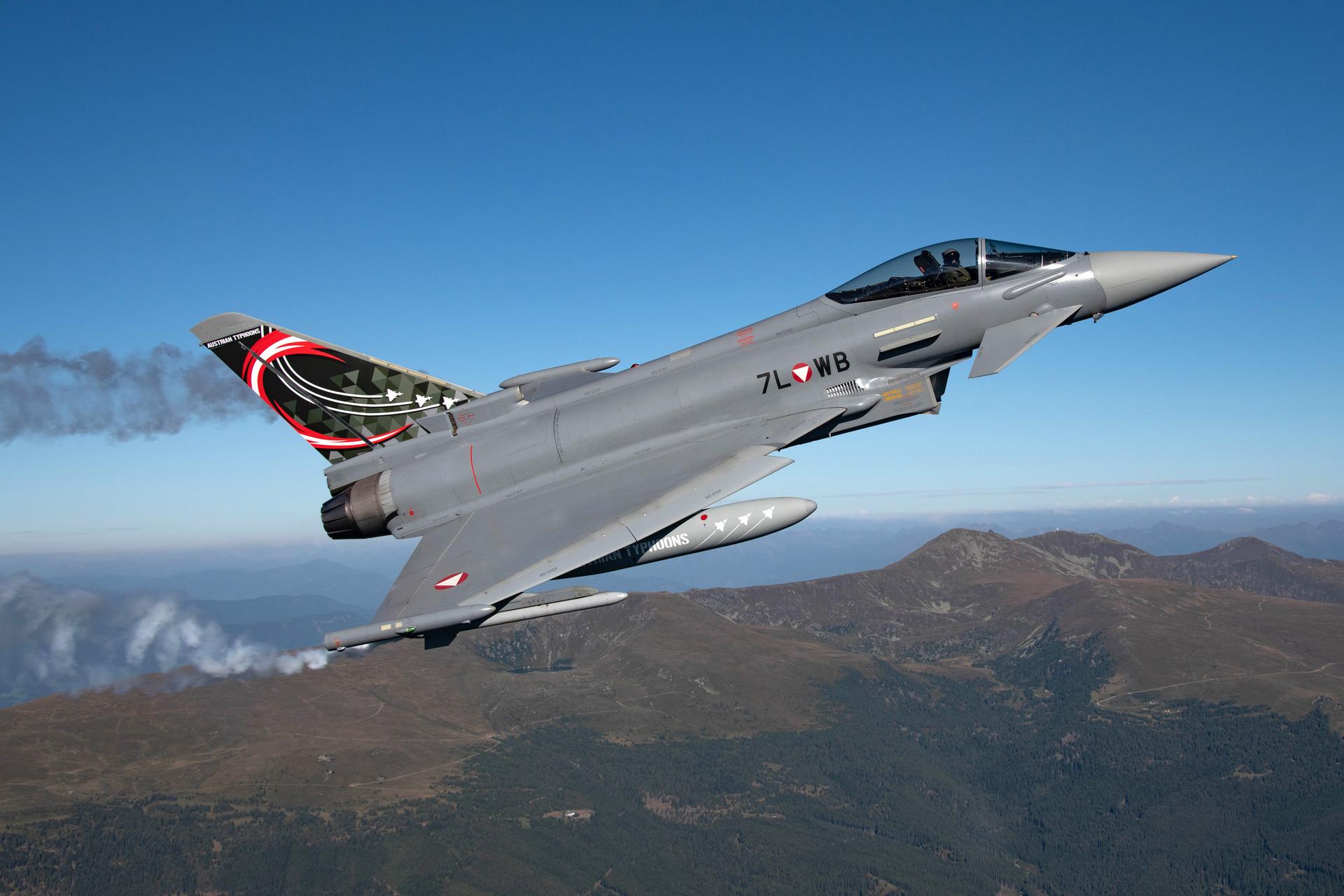
冷戰結束後,歐洲安全環境動盪、國際維和、人道救援任務增多,奧地利空軍也朝向多角色運用轉型。奧地利空軍在2003年採購三架C-130 Hercules運輸機,用於UN維和與人道任務)2005年J35 Draken戰機退役後,先是跟瑞士租用12架F-5戰機作為過渡,並於2007年起開始部署歐洲颱風戰機作為新一代戰機至今,標誌著其進入「第四代戰機」時代。不過這次的採購衍伸的貪腐案件目前仍在調查中

當代發展與未來方向(2005–至今)
近年來奧地利空軍以歐洲颱風戰機為主力攔截戰機,目前至少有15架Typhoon戰機持續運作中,2018年引入Diamond DA40 NG 教練機,持續將訓練與輕型機隊升級,在救援直升機上,Sikorsky UH-60 Black Hawk、Bell OH-58 Kiowa也維持一定的軍用運輸量能,另外持續對防空雷達與監控系統升級,例如安裝 RAT-31DL等3D雷達系統以強化低空偵測能力。而為了解決長期以來空防成本過高與機種老舊的問題,奧地利空軍也決定向義大利李奧納多採購 12 架 M-346F Block 20輕型戰鬥機,這筆合約總價值約17億美元,預計於 2028年開始交付
結語
總括來說,奧地利空軍從1920年代的秘密起步,到1955年重建、1970–80年代建立攔截能力、冷戰後轉型為多角色空軍、至今進入高科技與國際合作新階段,其演變清晰地反映一個中立國如何在動盪的國際安全環境中構築空中防衛力量。Zeltweg空軍基地旁的HGM的軍事航空博物館,看到飛機、雷達、訓練機與直升機時,就更能理解每一架機背後,不只是鋼鐵與螺栓,而是一段空軍建構、一條國家防衛的脈絡。

The origins of Austria’s military aviation can be traced back to the Austro-Hungarian Empire, which had already established the Imperial and Royal Aviation Troops during the First World War. After the war, Austria was prohibited from possessing military aircraft under the Treaty of Versailles and subsequent agreements. Nevertheless, from 1927 onward, Austria gradually rebuilt a quasi–air force structure through staff participation, local civil defense organizations, and informal training, forming what was known as the Fliegerregiment (Aviation Regiment).
During this period, the fleet included Italian-built Fiat CR.20 and CR.32 biplane fighters, as well as training and reconnaissance aircraft such as the Gotha Go 145. This phase laid the foundational flying skills and training framework that would later underpin the Austrian Air Force. However, following the Anschluss in 1938—Austria’s annexation by Nazi Germany—Austria’s aviation units were absorbed into the German Luftwaffe as auxiliary formations, effectively halting the independent development of an Austrian air force.
Postwar Reconstruction and Neutrality (1955–1970)
After World War II, Austria signed the Austrian State Treaty in 1955 and, on October 26 of the same year, passed the Constitutional Law on Neutrality, formally declaring permanent neutrality. That year also marked the reestablishment of the Austrian Air Force. According to official sources, by the end of 1955 Austria began rebuilding its aviation capability using Soviet-donated Yak-11 “Moose” and Yak-18 “Max” aircraft as basic trainers.
Due to neutrality constraints and defense policy limitations, Austria initially refrained from acquiring advanced combat aircraft, instead focusing on light training, surveillance, and support aircraft. This period was characterized by building a pilot training system from scratch, navigating neutrality restrictions, and operating a mixed-origin fleet sourced from the Soviet Union, Sweden, and the United Kingdom. As a permanently neutral state located at the heart of Europe, Austria sought to establish a minimal yet functional air defense capability using limited resources.
Initially, the Austrian Air Force operated four Yak-11 and four Yak-18 trainers. Additional light training aircraft were later procured under military assistance programs, including some Fouga CM.170 Magisters. However, Austria did not acquire modern fighters until the early 1960s, when it purchased 30 second-hand Saab J29 “Tunnan” fighters from Sweden.
Mid–Cold War: Fleet Expansion and Interception Capability (1970–1990)
From the 1970s onward, Austria acquired the Saab 105 light jet, a versatile aircraft that quickly became a mainstay of the Austrian Air Force. It was employed for flight training, reconnaissance, ground support, and interception duties. The well-known Austrian Air Force aerobatic team, Silver Birds, also operated the Saab 105.
In the 1980s, growing requirements for airspace surveillance and rapid reaction prompted Austria to procure the Saab 35 Draken interceptor. In 1988, a total of 28 Draken aircraft entered service, becoming the backbone of Austria’s air interception force.
During the 1991 Yugoslav Wars, Yugoslav MiG-21 fighters repeatedly violated Austrian airspace. Austrian J35 Drakens conducted their first operational scrambles to intercept and escort these aircraft out of national airspace. The repeated incursions drew public attention and led to growing domestic pressure for credible air defense capabilities. Since 1955, Austria had been prohibited from operating guided missile systems, including air-to-air missiles and surface-to-air missiles (SAMs). In the post–Cold War period, the Austrian Parliament voted to amend this restriction. In January 1993, Austria ordered AIM-9 Sidewinder air-to-air missiles from Sweden to arm its J35 fighters, with initial deliveries beginning in 1995. France’s Mistral SAM system was also acquired to strengthen ground-based air defense, with the first systems delivered in 1993 and full completion by 1996.
Post–Cold War Transformation: Multirole Operations and International Cooperation (1990–2005)
Following the end of the Cold War, Europe’s security environment became more complex, with increasing demands for international peacekeeping and humanitarian missions. The Austrian Air Force accordingly transitioned toward a multirole force structure. In 2003, Austria acquired three C-130 Hercules transport aircraft to support United Nations peacekeeping and humanitarian operations.
After the retirement of the J35 Draken in 2005, Austria temporarily leased 12 F-5 fighters from Switzerland as an interim solution. From 2007 onward, the Eurofighter Typhoon was introduced as Austria’s new-generation fighter, marking the country’s entry into the fourth-generation fighter era. However, the procurement was accompanied by corruption allegations, which remain under investigation.
Contemporary Development and Future Direction (2005–Present)
In recent years, the Austrian Air Force has relied primarily on the Eurofighter Typhoon as its main interceptor, with at least 15 aircraft remaining operational. In 2018, Diamond DA40 NG trainer aircraft were introduced to modernize pilot training and the light aircraft fleet. Rotary-wing capabilities are maintained through platforms such as the Sikorsky UH-60 Black Hawk and the Bell OH-58 Kiowa, supporting transport and utility missions.
Austria has also continued upgrading its air defense radar and surveillance infrastructure, including the installation of RAT-31DL three-dimensional radar systems to enhance low-altitude detection. To address long-standing issues of high air defense costs and aging platforms, Austria decided to procure 12 Leonardo M-346F Block 20 light combat aircraft from Italy. The contract, valued at approximately USD 1.7 billion, is scheduled for deliveries beginning in 2028.
Conclusion
In summary, the evolution of the Austrian Air Force—from its covert beginnings in the 1920s, through post-1955 reconstruction, the establishment of interception capabilities in the 1970s and 1980s, post–Cold War multirole transformation, and its current high-technology and cooperative phase—clearly illustrates how a neutral state can build and sustain air defense capabilities amid a volatile international security environment.
A visit to the Military Aviation Museum at Zeltweg, adjacent to Zeltweg Air Base, where aircraft, radar systems, trainers, and helicopters are displayed, offers a tangible reminder that behind each airframe lies not only steel and bolts, but a continuous narrative of air force development and national defense.