

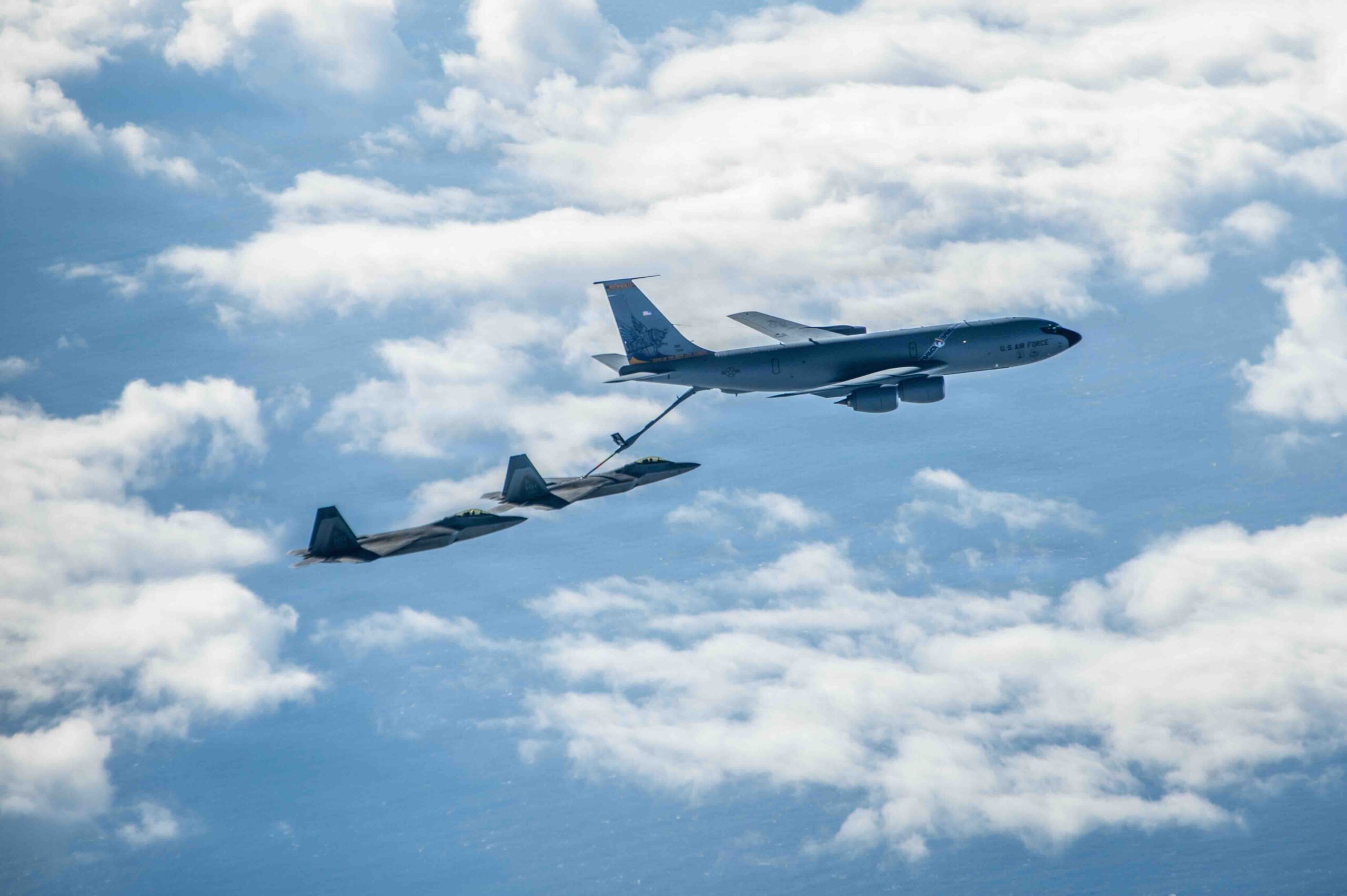
【軍傳媒/國際軍事新聞】2026年3月12日,美軍在伊拉克西部的空中行動中發生一起引起軍事界關注的事故。兩架隸屬美國空軍的KC-135空中加油機在執行任務時發生未知狀況,其中一架最終墜毀,另一架則被迫中止任務並離開行動區域。這起事件發生在美軍加強對伊朗空中行動的背景下,美軍中央司令部澄清該事件並非受到友軍誤擊或敵方攻擊導致,外界推測有可能是發生空中擦撞的意外。
空中加油能力使戰鬥機與轟炸機得以突破航程限制,維持長時間滯空與遠距離打擊。沒有這種能力,大多數現代戰機的作戰半徑將被大幅壓縮,跨洲部署與長時間巡弋任務也將變得困難。空中加油機長期被視為現代空軍投射力量的關鍵支撐,在現代空戰體系中,決定作戰範圍與持續力的往往不是戰鬥機,而是空中加油機。


KC-135加油機的設計與性能
KC-135「同溫層加油機」(Stratotanker)是由波音公司於1950年代研製,設計源自波音367-80原型機,與後來的波音707民航客機具有相同技術背景。1957年KC-135正式進入美國空軍服役後,迅速成為冷戰時期支援戰略轟炸機部隊的重要平台,並逐漸擴展到支援戰鬥機與各類軍用飛機,甚至彼此可以互相加油延長滯空支援時間。
雖然機型誕生於冷戰初期,但KC-135透過多次升級仍持續服役至今,成為全球服役時間最長的軍用飛機之一。對美國空軍而言,它不僅是歷史悠久的機型,更是維持全球空中行動能力的重要工具。
KC-135的設計重點在於穩定的長時間飛行能力與高效率燃料輸送。其機尾裝有硬式飛行加油桿,由機尾加油操作員控制。當受油機飛至加油機後方時,加油操作員會透過操控桿與翼面微調,使加油桿精確對接受油機的加油接口。接合完成後,燃料便可透過高流量管線輸送至受油機油箱。
與軟管式加油相比,飛行加油桿系統輸油速度更快,因此特別適合為大型飛機或高速戰鬥機補充燃料。美國空軍的大多數戰機與轟炸機均採用此類接口。
KC-135的主要性能諸元如下:
機組人員:3人(機長、副駕駛、加油操作員)
機長:約41.5公尺
翼展:約39.9公尺
最大起飛重量:約146噸
巡航速度:約0.8馬赫
航程:約15000公里(依載油量與任務而定)
最大可輸送燃料:約90噸
這樣的燃料輸送能力意味著一架KC-135可以在一次任務中為多架戰鬥機補充燃料。例如在典型任務中,一架加油機可為四至六架戰鬥機提供補給,使其延長作戰時間或完成更遠距離的任務。

空中加油如何改變現代戰爭
空中加油技術的出現徹底改變了空軍作戰模式。在沒有空中加油能力的年代,戰鬥機的作戰範圍完全取決於內部燃料與副油箱容量,因此基地必須接近戰場,且為了攜帶更多燃油,往往需要減少載彈量。然而當空中加油成為常態後,戰機可以從遠距離基地起飛或是全掛載起飛,在途中與加油機會合補充燃料,再飛往作戰區域。
這種能力使空軍能夠從數千公里外投射戰力,也讓戰鬥機能在戰場上空維持長時間巡弋,同時一次任務的攜彈量大幅提高,例如美軍戰機從美國本土飛往歐洲或中東部署時,往往需要數次空中加油才能完成整段航程。
在作戰行動中,加油機通常會在相對安全的空域巡航。戰鬥機完成任務後返回該區域補充燃料,再繼續執行任務或返回基地。透過這種方式,戰機在空中的停留時間可以從原本的一至兩小時延長至數小時以上。1991年的波斯灣戰爭中,美軍動用了數百架加油機支援大規模空中行動,使戰鬥機與轟炸機能持續對伊拉克目標發動攻擊。此後在阿富汗與伊拉克戰爭中,空中加油任務幾乎每日進行。

伊拉克事故對美軍行動的影響
此次伊拉克上空兩架KC-135的事故,使外界再次注意到加油機在作戰中的敏感地位,雖然美國空軍仍擁有全球規模最大的加油機機隊,但在同一戰區同時損失或暫停兩架加油機,仍可能對行動節奏產生影響。
空中加油任務通常需要精確規劃。戰鬥機與轟炸機的飛行時間、航線與油量都必須與加油機配合。一旦某架加油機無法按計畫執行任務,原先安排與其會合的戰機可能需要重新規劃航線,甚至延後或取消任務。加油機往往必須同時支援多架戰機,一架KC-135無法執行任務時,可能影響數個飛行編隊的作戰安排。若在短時間內可用加油機數量下降,指揮單位可能需要降低任務密度或調整作戰節奏。可以預見的是,此次損失會大幅降低美國空襲伊朗的頻率,因此可能會從其他戰區迅速抽調增援彌補空缺。
此外,KC-135機隊本身已進入高齡階段。許多機體的服役時間超過六十年,維修與保養需求逐漸增加,且任何事故都可能引發更嚴格的安全檢查,短期內進一步壓縮可用機隊數量。若同型機為了飛安全部停飛,將大幅影響美軍在中東的空襲能力。
這也是美國空軍積極推動KC-46「飛馬座」加油機計畫的原因之一。KC-46將逐步取代KC-135與KC-10機隊,提供更現代化的航電與防護能力。不過在未來十餘年間,KC-135仍將是美軍空中加油力量的重要組成。
伊拉克上空的事故提醒外界,維持空中戰鬥能力並非理所當然,現代戰爭中,並不是只有戰鬥機才代表戰力,每一架飛機都代表著整個空軍作戰能力的一部分,當這些飛機無法投入任務時,影響的不只是單一飛行,而可能牽動整個戰區的空中作戰規模與持續時間。

Has U.S. Combat Power Reached a Critical Threshold After a Tanker Crash?
On March 12, 2026, a U.S. military incident during air operations in western Iraq drew attention across the defense community. Two U.S. Air Force KC-135 aerial refueling aircraft encountered an unknown situation while conducting a mission. One aircraft ultimately crashed, while the other was forced to abort the mission and withdraw from the operational area.
The incident occurred during intensified U.S. air operations against Iran. U.S. Central Command clarified that the event was not caused by friendly fire or enemy attack, and outside observers have speculated that it may have involved an in-flight collision.
Aerial refueling enables fighters and bombers to overcome range limitations, remain airborne longer, and conduct long-distance strike missions. Without it, the operational radius of most modern aircraft would shrink significantly, making long-range deployments and sustained patrols far more difficult. For this reason, aerial refueling aircraft have long been regarded as a key foundation of modern airpower.
KC-135 Design and Capabilities
The KC-135 Stratotanker was developed by Boeing in the 1950s from the Boeing 367-80 prototype, the same technological foundation that later led to the Boeing 707 airliner. Entering service in 1957, the KC-135 quickly became a critical platform supporting U.S. strategic bomber forces during the Cold War and later expanded to support fighters and other military aircraft.
Despite its Cold War origins, the aircraft has undergone multiple upgrades and remains in service today, making it one of the longest-serving military aircraft in the world.
A defining feature of the KC-135 is its rigid flying boom system located at the rear of the aircraft. Controlled by a boom operator, the boom connects directly to the receiving aircraft’s refueling receptacle and transfers fuel at high rates. Compared with hose-and-drogue systems, the flying boom allows faster fuel transfer, making it well suited for refueling large aircraft and high-performance fighters used by the U.S. Air Force.
Key specifications include:
Crew: 3 (pilot, co-pilot, boom operator)
Length: about 41.5 m
Wingspan: about 39.9 m
Maximum takeoff weight: about 146 tons
Cruising speed: around Mach 0.8
Range: roughly 15,000 km depending on mission profile
Maximum transferable fuel: about 90 tons
A single KC-135 can refuel several fighters during one mission, allowing them to extend endurance or conduct longer-range operations.
How Aerial Refueling Shapes Modern Warfare
Aerial refueling fundamentally changed air operations. Before its introduction, fighters had to operate near the battlefield due to limited fuel capacity, often sacrificing weapons load to carry additional fuel. With aerial refueling, aircraft can depart from distant bases or launch with full weapons loads, rendezvous with tankers en route, and continue toward the target.
This capability allows air forces to project power across thousands of kilometers while keeping aircraft over the battlefield for extended periods. U.S. fighters deploying from the continental United States to Europe or the Middle East typically require multiple refueling events during transit.
During combat operations, tankers usually orbit in relatively safe airspace. Fighters return to these areas after missions to replenish fuel before continuing operations or returning to base. This process can extend airborne time from one or two hours to several hours.
In the 1991 Gulf War, hundreds of tanker aircraft supported large-scale air operations, enabling sustained strikes against Iraqi targets. Similar aerial refueling operations continued daily during the wars in Afghanistan and Iraq.
Operational Impact of the Iraq Incident
The incident involving two KC-135 aircraft highlights the critical role tankers play in military operations. Even though the United States maintains the world’s largest tanker fleet, the loss or withdrawal of multiple tankers within the same theater can influence operational tempo.
Aerial refueling missions require precise coordination. If a tanker cannot perform its task, the fighters scheduled to meet it may need to reroute, delay, or cancel missions. Because one tanker often supports several aircraft, a single unavailable KC-135 can affect multiple flight formations.
In the short term, the incident could reduce the frequency of U.S. airstrikes against Iran until additional tanker support is moved from other regions.
Another challenge is the aging KC-135 fleet. Many aircraft have served for over sixty years, increasing maintenance demands. Any accident may trigger safety inspections that further reduce available aircraft. If aircraft of the same type are temporarily grounded, U.S. airstrike capacity in the Middle East could be affected.
To address this issue, the U.S. Air Force is introducing the KC-46 Pegasus tanker to gradually replace the KC-135 and KC-10 fleets. However, KC-135 aircraft will remain a major component of U.S. aerial refueling capability for at least another decade.
The accident over Iraq underscores an important reality: in modern warfare, combat power is not defined solely by fighters. Support aircraft such as aerial refueling tankers are essential to sustaining air operations. When they become unavailable, the scale and endurance of air campaigns can be directly affected.