

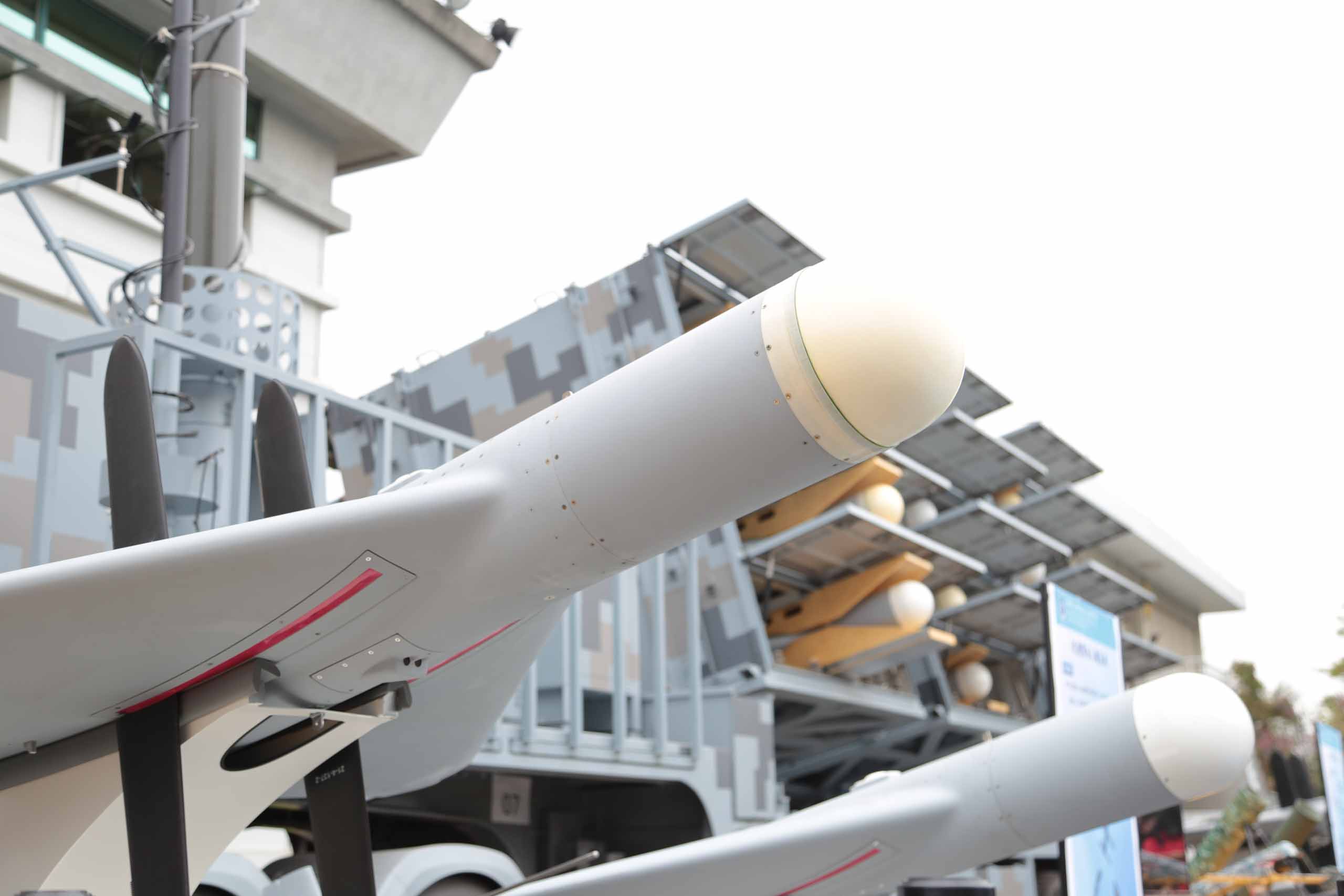
【軍傳媒/國內軍事新聞】在上週的外交國防委員會中,中科院院長李世強針對中共遠火部隊所發射的遠程火箭彈威脅,中科院目前研製「低成本防空彈藥」已有一定的成果,最快明年展開反無人機用的實彈測試。也算正式回應美伊戰爭顯示的美軍防空體系面對大量低價無人機顯示捉襟見肘狀況的回應。現有反無人機手段,往往建立在傳統防空架構的延伸之上,但這種延伸在面對新型威脅時逐漸顯得力不從心。首先是偵測層面的困難。小型無人機通常具有極低的雷達反射截面,飛行高度又貼近地面,使其容易被地面雜訊掩蓋。此外,部分無人機採用預設航線飛行,幾乎不發射無線訊號,使依賴RF偵測的系統難以發現其存在 。即便成功偵測,下一步的判斷同樣充滿挑戰。在現代空域中,合法的民用無人機活動與潛在威脅往往交錯存在。防禦方若缺乏足夠資訊,很難迅速區分敵我。白皮書中提到,單一感測來源已無法提供可靠判斷,必須透過多種資料交叉分析,例如飛行軌跡、地理限制區域、RF特徵與行為模式等,才能提高識別準確度 。
更嚴峻的問題出現在反制階段。電子戰手段雖然能干擾無人機控制,但在城市或複雜電磁環境中,其效果往往受到限制。大量民用訊號與建築物遮蔽會降低干擾效率,同時也可能對合法通訊造成影響。另一方面,使用動能武器如防空飛彈進行攔截,雖然有效,卻在成本上極不對稱。當敵方使用低價無人機進行持續消耗時,防禦方若以高價武器回應,最終將在資源上陷入劣勢。
在現代戰場中,防空與飛彈防禦的核心問題,早已不再只是「能否攔截」,而是「是否負擔得起」。這一點,從俄烏戰爭到中東衝突,再到台海潛在衝突態勢,都呈現出高度一致的趨勢。面對大量廉價、可消耗的攻擊手段,包括無人機與遠程火箭彈,傳統高價防空飛彈體系逐漸暴露出結構性困境。台灣近期推動低成本攔截彈藥的發展,正是回應這一戰場現實的重要轉折。
昂貴攔截體系的結構性困境
俄烏戰爭中,烏克蘭初期在面對俄軍使用伊朗製Shahed-136自殺無人機時,曾大量動用NASAMS與IRIS-T等先進防空系統進行攔截。這些系統單發攔截成本往往在數十萬至數百萬美元之間,而敵方無人機成本僅數萬美元甚至更低。由於烏軍多數防空飛彈來自於免費軍援,但這種「成本交換比失衡」的問題,在軍援耗盡之後,烏克蘭不得不逐步轉向使用機槍、機動防空砲與低成本攔截手段,並逐漸發展自身的無人機反制系統。
同樣情況也出現在以色列面對哈瑪斯與葉門胡塞武裝的火箭攻擊。鐵穹系統雖具高度攔截成功率,但其攔截彈價格仍遠高於對方火箭。當攻擊數量達到一定規模時,即使技術上可攔截,經濟上也難以長期承受。

台海威脅型態:從精準打擊轉向飽和消耗
從國防部「強化防衛韌性及不對稱戰力計畫」可以清楚看出,未來防空作戰將面臨的是「飽和攻擊」而非單一高價目標。共軍可能以戰術彈道飛彈、巡弋飛彈、遠程火箭與無人機同時發動聯合火力打擊,尤其提到解放軍遠程火箭與無人機的「數量優勢」,將使既有防空系統在密度與消耗上承受極大壓力。在這種環境下,單純依賴愛國者或天弓等高價攔截手段,將迅速耗盡戰備資源,形成防空破口。
解放軍遠程火箭部隊具備大規模齊射能力,可在短時間內對機場、雷達站與指揮節點實施密集打擊。這類武器單價遠低於飛彈,但其戰場效果卻足以癱瘓關鍵設施。同時,無人機的大量使用,將進一步消耗防空火力,迫使防禦方在有限時間內做出大量攔截決策。

低成本攔截彈的戰術定位與設計邏輯
在此背景下,根據軍政人士私下表示,台灣之盾最主要的核心就是整合偵測與防空裝備的核心大腦,而中科院發展低成本攔截彈藥,其意義不在於取代既有防空系統,而是在現有防空體系中應對威脅補足不。
要達到低成本攔截彈仍能發揮效用,根據專業人士的看法,最重要就是偵測器的整合。也就是說,飛彈自身的尋標器距離較短,要達到有效攔截,就要利用其他的感測器來引導,也就是MESH網路的概念。任何一個偵測器都能導引任何一個精準武器,T-dome最重要的不是買更多的飛彈,而是要將整合概念融入形成有效的防空。
所謂的低成本攔截彈,是相對低的成本而不是絕對,而要降低成本,就是將軍規零件降規,以工規及商規零件取代。過往期待每個武器性能越高越好,不斷堆需求的情況下成本越墊越高,追求高命中率、高環境抵抗力等,自然成本就高。因此先將攔截飛彈的需求效能定義,可以接受需要3-4發攔截一發,低成本攔截的核心並非單發必中,而是透過多發齊射提升整體攔截概率。這種思維與傳統高價飛彈的精準攔截模式截然不同,更接近火砲或近迫防禦系統的概念,整個飛彈主要的成本來源是尋標頭,推進的火藥、彈頭只佔成本的一小部分,當減少尋標頭的偵測距離,所需的規格降低,就能降低成本,只要成本仍比對方便宜,就是所謂的低成本飛彈。
而面對類似大量見證者無人機威脅,新思維的攔截器是以無人機攔截無人機,採取類似遊蕩彈藥的滯空設計,例如烏克蘭最初是以人為控制無人機攔截,如今隨著AI發展,已經可以自動攔截。根據2026 年 1 月打下的 1,704 架無人機中,有七成都是用無人機攔截,而非使用攔截飛彈或是機砲。用無人機在空中巡弋並尋找目標的攔截方式,這意味著速度不再是唯一指標,續航與搜索能力反而更重要,如今烏克蘭單價2500美金的Sting攔截無人機,對比單價超過十萬美金的美國雷神公司使用電磁微波攔截蜂群的郊狼3反無人機,仍具有一定的低成本效益。

台灣建立多層防空體系的必要拼圖
未來台灣防空體系,高層由愛國者與強弓系統負責攔截高價值目標,如彈道飛彈與巡弋飛彈,中層則由NASAMS、天弓飛彈與區域防空系統應對戰機與部分飛彈。低層與近程防禦,目前是以陸射劍二、復仇者、刺針飛彈等支撐,未來則必須由低成本攔截彈、反無人機系統與各式軟殺手段共同構成。
國防部報告中強調「重層防禦」與「降低非必要彈藥耗損」的概念 ,正是這種體系化思維的體現。低成本攔截彈的引入,將使高價飛彈不再被迫用於攔截低價目標,從而大幅提升整體作戰效率。但前提是國軍必須放棄舊有美國使用就是好的觀念,放開心胸接近不完美,才能真正達到低成本思維。
國防部已明確指出,未來戰爭將呈現高消耗特性,若無法確保彈藥自產與補給能力,將嚴重影響防衛作戰。在共軍可能實施封鎖的情況下,外部補給極不可靠,國內產能成為關鍵。
中科院的低成本彈藥若採用商規零件與ODM模式生產,更容易快速擴充產線,並動員民間產業參與。這不僅提升戰時補給能力,也有助於建立非紅供應鏈,降低對外依賴。未來戰爭將是一場成本與數量的競賽,而非單純的技術對抗,對台灣而言,低成本攔截彈的成功與否,將是決定台灣之盾能撐多久的關鍵。

Low-Cost Interceptor Missiles: A Critical Element in Taiwan’s Future Air Defense
Taiwan’s development of low-cost air defense munitions marks a significant shift in response to evolving battlefield realities. Recent statements from the National Chung-Shan Institute of Science and Technology (NCSIST) indicate that such systems are progressing toward live-fire testing, particularly for counter-drone operations. This reflects lessons drawn from recent conflicts, where even advanced air defense systems have struggled against large volumes of low-cost threats.
Traditional counter-drone approaches are largely extensions of conventional air defense systems. However, these methods are increasingly insufficient. Detection remains a major challenge: small drones have low radar signatures and fly at low altitudes, often blending into ground clutter. Some operate without emitting RF signals, limiting the effectiveness of RF-based detection systems.
Even after detection, identification is difficult. Civilian and hostile drones often coexist in the same airspace, making rapid discrimination complex. Effective identification now requires multi-source data fusion, including flight patterns, geofencing, RF characteristics, and behavioral analysis. Single-sensor systems are no longer adequate.
The most critical issue arises during interception. Electronic warfare can disrupt drone control but is less effective in dense urban or complex electromagnetic environments. Meanwhile, kinetic interception using missiles is effective but economically unsustainable. When adversaries employ low-cost drones in large numbers, defenders using high-cost interceptors face a fundamental disadvantage.
Modern air defense is no longer defined solely by interception capability, but by affordability and sustainability. This trend is evident in conflicts from Ukraine to the Middle East. Against mass-produced, expendable threats such as drones and rockets, traditional high-cost missile systems reveal structural limitations.
The experience of Ukraine illustrates this imbalance clearly. Early in the war, Ukraine used advanced systems like NASAMS and IRIS-T to intercept Iranian-made Shahed-136 drones. However, interceptor costs ranged from hundreds of thousands to millions of dollars, while the drones themselves cost only tens of thousands or less. As external supplies declined, Ukraine increasingly relied on machine guns, mobile air defense systems, and low-cost interception methods, while also developing indigenous counter-drone capabilities.
A similar cost imbalance is seen in Israel’s use of the Iron Dome system. Although highly effective, its interceptors are significantly more expensive than the rockets they engage. At scale, even successful interception becomes financially difficult to sustain.
Taiwan faces a comparable challenge. According to the Ministry of National Defense, future conflicts in the Taiwan Strait are likely to involve saturation attacks combining ballistic missiles, cruise missiles, long-range rockets, and drones. The PLA’s advantage in quantity will place immense pressure on Taiwan’s air defense systems, both in terms of capacity and resource consumption.
In such a scenario, reliance on high-cost interceptors like Patriot or Tien Kung missiles alone would quickly deplete available stockpiles. PLA long-range rocket forces can conduct rapid, large-scale salvos against critical infrastructure such as airfields and radar sites. These weapons are relatively inexpensive but highly disruptive. At the same time, large numbers of drones can further exhaust defensive resources.
Low-cost interceptors are designed to address this gap. Their purpose is not to replace existing systems, but to complement them. By using commercial or industrial-grade components instead of expensive military-grade ones, production costs can be significantly reduced, allowing for large-scale manufacturing.
The key concept behind low-cost interception is not perfect accuracy, but probability. Instead of relying on a single high-cost interceptor with a high kill probability, multiple low-cost interceptors can be used to achieve similar results. This approach resembles artillery or close-in defense systems, where volume of fire compensates for lower individual effectiveness.
Reducing cost often involves simplifying the seeker, which is the most expensive component of a missile. By relying on external sensors and networked targeting—similar to a mesh network—interceptors can function effectively with shorter-range guidance systems. This shifts the focus from individual weapon performance to system-level integration.
Another emerging approach is the use of drones to intercept drones. These loitering interceptors remain airborne and search for targets, prioritizing endurance and coverage over speed. In Ukraine, a significant portion of drone interceptions is now conducted by interceptor drones rather than missiles or guns. Low-cost systems, costing only a few thousand dollars, have demonstrated strong effectiveness compared to much more expensive alternatives.
For Taiwan, integrating low-cost interceptors into a layered air defense system is essential. High-end systems like Patriot will continue to handle high-value threats such as ballistic missiles. Mid-tier systems will address aircraft and some missile threats. Low-cost interceptors, combined with counter-drone systems and electronic warfare, will form the lower layer, dealing with mass, low-cost threats.
This layered approach improves overall efficiency by ensuring that expensive interceptors are reserved for high-value targets. It also enhances sustainability by reducing unnecessary expenditure of limited resources.
The Ministry of National Defense has emphasized the importance of reducing ammunition consumption and maintaining long-term operational capability. In a potential blockade scenario, external resupply may be unreliable, making domestic production capacity critical. Low-cost interceptors, particularly those using commercial components and scalable manufacturing models, can support rapid expansion of production and greater involvement from civilian industry.
Ultimately, future warfare will be defined not only by technology, but by cost and quantity. For Taiwan, the ability to field large numbers of affordable interceptors may determine whether its air defense system can endure prolonged conflict. Low-cost interceptor missiles are therefore not just a technical development, but a strategic necessity.