

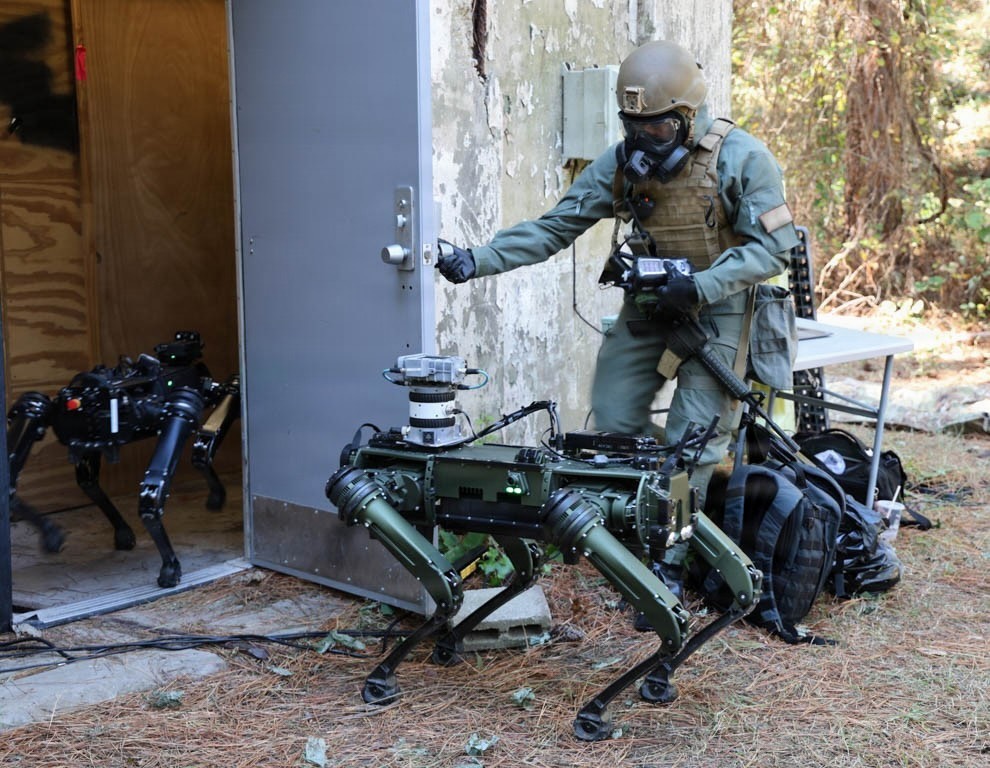
【軍傳媒/軍事科技】隨著無人作戰系統快速發展,戰場已逐步從「有人主導」轉向「有人與無人協同」的混合型態。相較於無人機已在俄烏戰場與中東衝突中廣泛驗證,甚至無人艇在封鎖荷姆茲海峽有有一定的貢獻,地面無人載具的發展相對沒有太突出的表現。然而,四足機器狗的成熟,正在填補傳統地面無人載具在複雜地形中的限制,使其成為能夠進入建物、階梯、瓦礫與狹窄空間的前出節點。對於以島嶼防衛、城鎮作戰與關鍵設施防護為核心的台灣而言,這類平台若被解放軍整合進登陸與城鎮作戰體系,將對既有防禦模式產生結構性衝擊。
第一種具體威脅,是灘岸與登陸後第一波的近接偵察。根據解放軍的宣傳影片,兩棲或空降部隊先放出小型四足平台,去探查灘岸障礙區的防禦部署,就能在不先暴露士兵的情況下建立近距離畫面,甚至擔任自殺爆破的平台。這種任務過去常需要尖兵、工兵或偵察兵冒險完成的任務,未來可能先由機器狗承擔,而對防守方而言,這代表隱蔽陣地、伏擊點、誘殺區被提早曝光的風險提高。
第二種威脅,是城鎮戰中的樓房、地下空間與狹窄地形探查。解放軍公開宣傳影片已多次出現機器狗上下樓、協助突入、載槍瞄準等內容,說明其主要的工作可能不是野戰決戰,而是複雜地形內的先遣任務。對台灣來說,若未來作戰區域延伸到港區、機場、都會邊緣、工業區、捷運設施或地下通道,四足平台將會比部分輪型UGV更容易進入,它未必要直接射殺目標,只要能先把畫面、熱源、動靜、障礙物位置傳回去,就足以幫助後續突擊部隊縮短決策時間。不過目前烏克蘭戰場上自殺無人機已經做到上述的任務項目,畢竟在空中移動更快速,更能不受地形的限制。
第三種威脅,是「便宜火力載具」的形成。即使機器狗本身載重有限,它仍可能搭載步槍、榴彈、一次性反裝甲武器、偵毒器材、煙霧裝置或電子干擾模組。美國陸戰隊曾測試以機器狗平台發射M72 LAW,Ghost Robotics也已推出機械臂模組;中國公開資訊更頻繁出現槍械化、協同化展示。這顯示未來威脅未必是大量重火力,而是分散、短暫出現、可前出試探的火力點。國軍若仍只用傳統「找人、看人、打人」思維,容易低估這種無人前哨對陣地的消耗作用。
第四種威脅,是與其他無人載具協同後形成的多層偵打一體。國防部近期研究也提醒,UGV與UAV協同會放大資訊共享與定位效率,這對國軍最麻煩之處在於,防守方不只要處理空中的小型無人機,還要處理地面的無人感測器,一個在低空盤旋,一個貼地前進,會讓傳統觀測死角大幅縮小。

不過,國軍也不必把機器狗神化。若解放軍真在侵台作戰中大量使用,機器狗仍會面臨幾個硬限制:首先是通訊鏈路與導航依賴,戰場電磁環境惡化時效能未必穩定,但AI的發展將會使這部分的限制降低;其次是續航與電池補給問題,登陸部隊若補給受阻,四足平台很容易先變成負擔;第三是脆弱度,機器狗對破片、近距離槍火、障礙設置、網具、壕溝與複雜地面條件並非無敵。它比人更可犧牲,但也比履帶平台更輕、更容易被打壞,真正需要警惕的是它被大量、分散、前伸地使用,而不是把它當成某種刀槍不入的新兵種。
整體而言,機器狗並不會顛覆戰爭本質,但會改變戰場資訊的取得方式與節奏。對進攻方而言,它是降低人員風險、延伸感知距離的工具;對防守方而言,則意味著隱蔽空間與戰術縱深正逐步被壓縮。台灣若僅將其視為新型裝備,而未同步調整戰術思維與反制手段,將難以應對其帶來的複合威脅。未來關鍵不在於是否擁有機器狗,而在於能否在整體防衛體系中整合無人載具、電子戰與感測網絡,並建立有效的反無人作戰能力,才能在新一代戰場環境中維持防衛優勢。

The Threat of Robotic Dogs in a Taiwan Strait Conflict
As unmanned systems rapidly evolve, the battlefield is shifting from human-led operations to manned–unmanned teaming. While drones have proven their value in Ukraine and the Middle East, and unmanned surface vessels have played roles in maritime operations, ground unmanned systems have been less prominent. However, quadruped robotic dogs are now addressing key limitations of traditional UGVs, enabling movement through buildings, stairs, rubble, and confined spaces. For Taiwan, where defense centers on island warfare, urban combat, and critical infrastructure protection, such platforms—if integrated into PLA amphibious and urban operations—could significantly impact existing defense concepts.
The first major threat is close-range reconnaissance during beach landings. PLA concepts suggest deploying small quadruped platforms ahead of troops to probe defenses, map obstacles, and gather real-time imagery without exposing personnel. These systems could even act as expendable explosive platforms. Tasks once carried out by scouts or engineers may increasingly be assigned to robotic systems, raising the risk of early exposure of defensive positions.
The second threat lies in urban warfare and confined environments. PLA demonstrations show robotic dogs climbing stairs, supporting entry operations, and potentially carrying weapons. Their primary role is likely not direct combat, but forward sensing in complex terrain such as ports, airports, industrial zones, and underground facilities. By transmitting visual, thermal, and environmental data, they can significantly shorten decision cycles for follow-on forces. However, many of these functions are already performed by drones, which retain advantages in speed and terrain independence.
The third threat is the emergence of low-cost, distributed firepower. Despite limited payload, robotic dogs can carry rifles, grenades, anti-armor weapons, sensors, or electronic warfare modules. U.S. and Chinese developments indicate a trend toward modular weaponization. Rather than concentrated heavy firepower, the future threat may consist of dispersed, short-duration, forward-deployed firing points. Traditional target-detection and engagement methods may underestimate their cumulative impact.
The fourth threat comes from integration with other unmanned systems. Coordination between ground robots and aerial drones enhances situational awareness and targeting efficiency. This creates a multi-layered sensing and strike network, combining aerial observation with ground-level detection, reducing blind spots and increasing pressure on defenders.
Despite these concerns, robotic dogs have clear limitations. They rely on communication and navigation systems that may degrade in contested electromagnetic environments, though AI autonomy may reduce this dependency over time. Endurance and power supply remain constraints, especially during sustained operations. They are also vulnerable to small arms fire, obstacles, and harsh terrain. While expendable, they are more fragile than tracked vehicles.
Overall, robotic dogs will not fundamentally change warfare, but they will alter how battlefield information is gathered and used. For attackers, they extend sensing and reduce risk; for defenders, they compress concealment and depth. Taiwan’s challenge is not simply acquiring such systems, but integrating unmanned platforms, electronic warfare, and sensor networks into a cohesive defense. Without adapting doctrine and countermeasures, it will be difficult to address the emerging multi-domain threat environment.