

【軍傳媒/軍風大觀園】今年極端天氣發威,近日梅雨季每日雷聲隆隆、豪雨傾盆而下,許多人最先想到的是塞車、淹水、濕答答的天氣,甚至會抱怨雨下得太急、太猛。過往夏季臺灣其實曾多次面臨水庫水位下探、降雨不均、旱象逼近的壓力。當民眾習慣把「下雨」視為理所當然時,有一群人卻必須在乾旱來臨前,緊盯雷達回波、衛星雲圖與大氣條件,等待稍縱即逝的增雨窗口。他們不是站在第一線作戰的飛行員,卻同樣與時間賽跑;他們不在鎂光燈下,卻可能在關鍵時刻,為水庫、農業、工業與民生用水爭取多一分降雨。
在多數人印象中,空軍的任務與戰機、空防與制空權緊密相連。而臺灣這座高度依賴降雨補高水資源的島嶼上,空軍氣象聯隊還肩負一項低調卻極具戰略價值的任務:人工增雨。這項任務不僅關係民生用水,更牽動產業穩定與國家安全。空軍人工增雨是運用「雲物理學原理」,趁著集水區上方有水氣充足的大氣條件,但又達不到降雨程度時,利用人為於雲中灑水加速降雨發生過程,提高降雨率,又稱「種雲(Cloud Seeding)」。
當水庫水位持續下降、旱象擴大之際,一旦大氣狀態合適,就會啟動人工增雨作業,利用「暖雲種雲」方式,以空軍C-130H運輸機飛至暖雲(溫度高於0度的雲層)上方,噴灑清水至雲中,藉以激發雲中水滴的碰撞結合,促使雲層中水滴飽和產生降雨。由於人工增雨必須在大氣條件具足夠雲量與水氣的情況下,發揮催化作用,需要將水灑至過冷水層、上升氣流區、雲體發展核心等,因此空中增雨不受地形限制(可以在山區、平原及雲系上方作業),才能有效增加原本可能產生的降雨量,是最合適的方式。而如果成功,每次人工增雨能增加10%-15%的累積雨量,當然必須落在集水區內才是有效增雨。
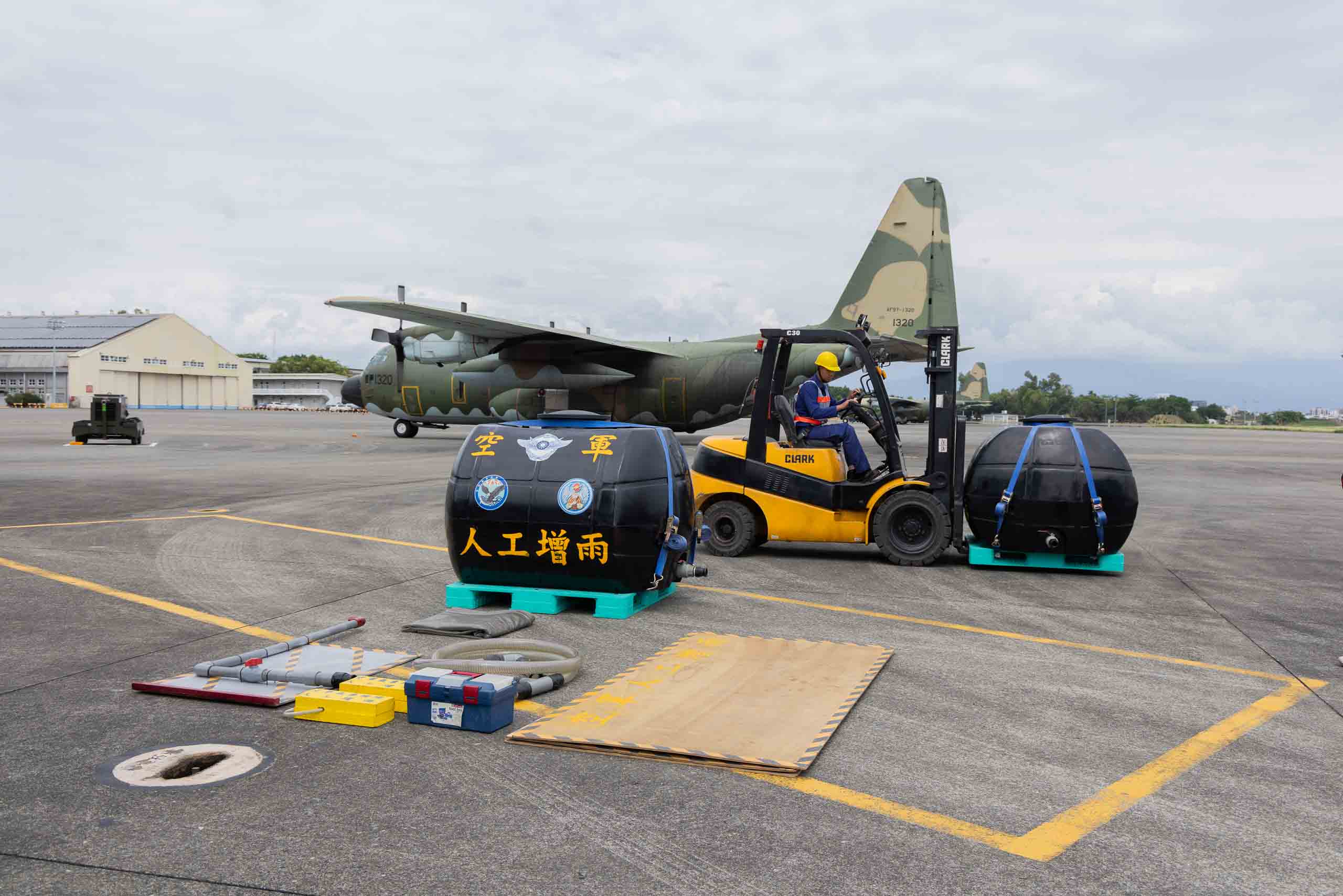
接到人工增雨任務後,地勤人員會將蓄水桶等相關裝備,以中型戰術輪車搬運至運輸機旁,接著人員先鋪防水墊,再以油壓推高機將水桶上機,接上水管裝備鋪上木材夾板避免裝備刮破,之後將兩個空桶以叉車運上機艙固定後,再利用水箱車將水加滿,最後將管線安裝完成。


人工增雨的核心
人工增雨的本質,並非「製造降雨」,而是「提升既有降雨效率」,也就是若大氣條件不具備降雨潛力,即便噴灑再多水也難以成功。因此氣象聯隊首要任務,就是判斷「是否存在可作業雲系」,包括:
- 雲層厚度是否足夠(通常需發展至一定垂直高度)
- 雲中是否具備過冷水滴(利於凝結成雨)
- 上升氣流是否穩定(維持雲體發展)
- 風場是否適合(避免作業後水氣迅速流失)
- 溫度結構是否符合催化條件

這些條件除了透過雷達回波、衛星雲圖、高空探測氣球回傳的資料等綜合數值模式判讀,氣象人員不僅要看現在的天氣,更要預測「接下來幾小時天氣會如何演變」,若判斷條件成熟,才會進入下一階段的任務規劃。
人工增雨的難度,在於其時間窗口極為短暫,一團適合的對流雲,可能僅維持數小時甚至更短時間,若執行任務過早,雲尚未成熟未達降雨條件,若執行任務過晚,雲層已開始消散,錯過降雨時機,就很考驗氣象人員的判斷。另外人工增雨任務並非執行完即結束,氣象單位仍須持續監測雲系發展,評估作業成效,並回饋至後續決策。
空軍氣象聯隊的官兵,沒有直接面對敵人,卻每天面對變化莫測的大氣環境、沒有槍砲聲,卻承擔決策壓力、沒有榮耀舞台,卻支撐著整體任務成功。他們的武器,是數據與經驗、他們的戰場,是天氣不斷變化的天空,人工增雨的目標,是在最關鍵的時刻,為這片土地多增加降雨。

Extreme weather has made its presence felt this year. In recent days, the plum rain season has brought daily thunder, torrential downpours, and relentless storms. For many people, the first things that come to mind are traffic jams, flooding, damp weather, and complaints that the rain has fallen too hard and too fast. Yet in past summers, Taiwan has repeatedly faced the pressure of falling reservoir levels, uneven rainfall distribution, and approaching drought conditions. While the public often takes “rain” for granted, there is a group of people who must closely monitor radar echoes, satellite imagery, and atmospheric conditions before drought arrives, waiting for fleeting windows of opportunity to enhance rainfall. They are not combat pilots standing on the front line, but they also race against time. They are not under the spotlight, yet at critical moments, they may help secure additional rainfall for reservoirs, agriculture, industry, and civilian water supply.
In most people’s minds, the Air Force is closely associated with fighter jets, air defense, and air superiority. Yet on Taiwan, an island highly dependent on rainfall to replenish its water resources, the Air Force Weather Wing also shoulders a low-profile but strategically valuable mission: artificial rainfall enhancement. This mission is not only related to civilian water supply, but also affects industrial stability and national security.
The Air Force’s artificial rainfall operation applies the principles of cloud physics. When atmospheric conditions above reservoir catchment areas contain sufficient moisture but have not yet reached the point of natural rainfall, water is artificially sprayed into clouds to accelerate the rain-forming process and increase the probability of precipitation. This is also known as cloud seeding.
When reservoir levels continue to fall and drought conditions expand, artificial rainfall operations are launched once atmospheric conditions become suitable. Using a warm-cloud seeding method, Air Force C-130H transport aircraft fly above warm clouds—cloud layers with temperatures above 0°C—and spray clean water into them. This stimulates the collision and coalescence of water droplets within the cloud, helping cloud droplets reach saturation and produce rainfall.
Because artificial rainfall must work under atmospheric conditions with sufficient cloud cover and moisture, its role is catalytic rather than generative. Water must be delivered into areas such as supercooled water layers, updraft zones, and the core of developing cloud systems. As a result, aerial rainfall enhancement is not restricted by terrain and can be conducted over mountains, plains, or above cloud systems. This makes it the most suitable method for increasing rainfall that might otherwise have occurred naturally. If successful, each artificial rainfall operation can increase accumulated rainfall by about 10% to 15%, though the added rainfall must fall within reservoir catchment areas to be considered effective.
After receiving an artificial rainfall mission, ground personnel transport water tanks and related equipment to the transport aircraft using medium tactical wheeled vehicles. Personnel first lay down waterproof mats, then use hydraulic lifting equipment to load the water tanks onto the aircraft. They connect water hoses and place wooden boards to prevent equipment from being scratched or damaged. Two empty tanks are then moved into the cabin by forklift and secured in place, after which water trucks fill the tanks. Finally, the piping system is installed and checked.
The Core of Artificial Rainfall Enhancement
The essence of artificial rainfall is not to “create rain,” but to “improve the efficiency of existing rainfall potential.” In other words, if the atmosphere does not possess the conditions for precipitation, no amount of sprayed water can make the operation succeed. Therefore, the Weather Wing’s primary task is to determine whether workable cloud systems exist. This includes assessing:
whether cloud thickness is sufficient, usually requiring a certain level of vertical development;
whether the cloud contains supercooled water droplets, which are favorable for condensation into rain;
whether updrafts are stable enough to sustain cloud development;
whether the wind field is suitable, preventing moisture from rapidly dispersing after the operation;
and whether the temperature structure meets the conditions for seeding.
These conditions are assessed through radar echoes, satellite imagery, data returned from upper-air sounding balloons, and integrated numerical weather models. Meteorological personnel must not only observe current weather conditions, but also forecast how the weather will evolve over the next several hours. Only when conditions are judged to be mature will the mission proceed to the next stage of planning.
The difficulty of artificial rainfall lies in its extremely narrow time window. A suitable convective cloud may last only a few hours, or even less. If the mission is carried out too early, the cloud may not yet be mature enough to produce rain. If it is carried out too late, the cloud may have already begun to dissipate, causing the opportunity to be missed. This places considerable pressure on the judgment of meteorological personnel. Moreover, an artificial rainfall mission does not end once the operation is completed. Meteorological units must continue monitoring cloud development, evaluate the effectiveness of the operation, and feed the results back into future decision-making.
The officers and enlisted personnel of the Air Force Weather Wing do not face the enemy directly, but they confront an ever-changing atmosphere every day. There is no sound of gunfire, yet they bear the pressure of critical decision-making. There is no spotlight of glory, yet they support the success of the broader mission. Their weapons are data and experience; their battlefield is the constantly shifting sky. The goal of artificial rainfall enhancement is to bring additional rainfall to this land at the most critical moment.