

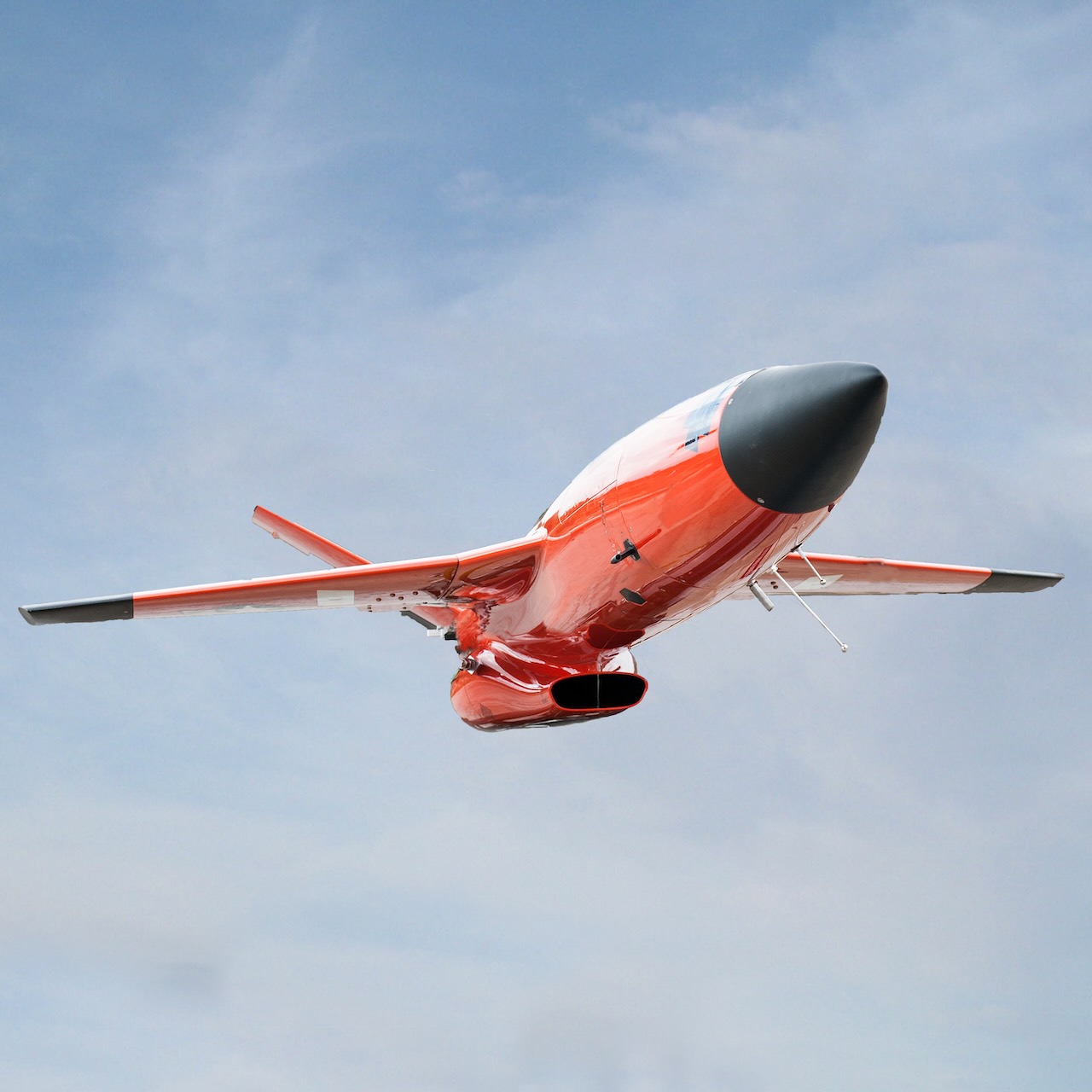
【軍傳媒/國內軍事新聞】在全球軍事科技快速轉向「無人化、分散化、低成本高消耗」的當代戰場環境中,如何在可承受的預算範圍內,快速建立具備實戰韌性的空中戰力,已成為各國防務規劃的核心命題。美國 Kratos Defense & Security Solutions 近二十年來所走出的發展路線,正是此一思維的具體實踐;而近日公開中山科學研究院(中科院)與 Kratos 合作開發的「勁蜂四型(Mighty Hornet IV)」高速攻擊無人機,則可視為這套理念在台美防務合作脈絡下的在地化落實。
Kratos,從系統工程起家的國防公司
Kratos Defense & Security Solutions 成立於 1994 年,最初並非以硬體武器平台聞名,而是一家專注於國防系統工程、通訊、模擬訓練與網路安全的技術服務公司。進入 2000 年代後,隨著美軍在伊拉克與阿富汗戰場上深刻體會到「數量、持續性與成本交換」的重要性,Kratos 逐步將重心轉向無人系統與靶機市場,並以併購方式整合多家航空無人載具與噴射靶機製造商,建立今日的無人航空產品線。
Kratos 與傳統大型軍工企業最大的差異,在於其鮮明的產品哲學:「不追求單一平台的極致性能,而是以可量產、可快速整合、可承受損失為核心目標」。這樣的策略,使其在美國空軍「可消耗(attritable)」與「協同作戰飛行器(Collaborative Combat Aircraft, CCA)」概念興起時,能迅速站上關鍵位置提供支援。舉例來說,目前 Kratos 在無人航空領域最廣為人知的產品,包含 MQM-167、MQM-178 Firejet 等高速噴射靶機家族,以及進一步衍生成具備實戰潛力的攻擊與協同作戰無人機。其中,諾斯羅普·格魯曼公司將以其自身的無人作戰能力和自主指揮能力與Kratos 公司的XQ-58A(女武神)無人機結合,於2026年1月獲得美國海軍陸戰隊聯盟特遣部隊(MCCA)的標案,這正是其戰略轉型的象徵性成果。

XQ-58A 女武神:為「協同空戰」而生的可消耗噴射無人機
XQ-58A 由 Kratos 與美國空軍研究實驗室(AFRL)合作開發,是低成本技術示範機(LCAAT)計畫的重要成果,其核心概念並非取代有人戰機,成為有人戰機的「戰力倍增器」,負責搭在更多的武器、成為可犧牲的誘餌,透過前進部署、分散作戰與協同攻防,將昂貴且數量有限的主力戰機,從高風險任務中部分解放,至於戰場相對安全的位置,遠端操控一且切。
在作戰概念上,XQ-58A 被定位為忠誠僚機(Loyal Wingman)與 CCA 的早期實體化版本,可依任務需求擔任偵察節點、電子戰平台、誘餌、通信中繼,甚至有限度的武裝打擊載具。
依 Kratos 公開資料,XQ-58A 採用具匿蹤外型設計的次音速噴射構型,具備內置彈艙與翼下掛載能力,能在低至 50 呎的超低空與高達 45,000 呎的高空環境中操作。其巡航速度可達0.7馬赫以上,航程與滯空時間亦足以支援跨區域的前推部署。
XQ-58A屬於無人飛行器,並未被設計成高度依賴傳統跑道的航空器,Kratos 在多次測試中,使用火箭軌道發射的方式,驗證其分散部署、簡易發射與傘降回收等概念,顯示此型無人機並非僅適用於和平時期的標準化基地,而是可在高威脅環境下的戰場上執行起降。
XQ-58A 的真正價值,不在於單機性能是否能媲美五代戰機,而在於它重新定義了空戰中的成本交換關係。當對手必須以昂貴的防空飛彈或主力戰機,來攔截一架「可承受損失」的無人機時,戰場主動權便開始傾斜。這種思維,也正是 Kratos 在其他無人系統專案中一再重複的核心邏輯,藉由過往開發無人噴射靶機的豐富經驗,與大廠的飛控系統結合,快速推出合適產品就是目前Kratos的強項。
從 Firejet 到勁蜂四型:台美合作的工程與戰略意涵
依 Kratos 與中科院於 近日公布的新聞稿,勁蜂四型(Mighty Hornet IV)高速攻擊無人機係以 Kratos MQM-178 Firejet 噴射靶機平台為基礎,Firejet 噴射靶機採用三角翼和V型尾翼,長3.3公尺,高0.6公尺,翼展1.9公尺。其淨重為59公斤,最大發射重量為145公斤,內部有效載荷為32公斤,整合中科院研製的任務酬載、導控與相關系統所形成的高速攻擊無人機構型。Firejet 本身具備次音速高速、高機動與高空操作能力,長年累積的飛行時數與量產經驗,使其成為風險相對可控的改裝機體。
此次整合測試的關鍵意義,在於驗證「無需進行重大平台修改」即可完成系統整合,代表雙方在介面設計、系統架構與工程流程上的高度契合。這不僅縮短研發期程,也為後續量產與任務多樣化鋪平道路。
在此合作案中,Kratos 提供成熟的飛行平台與製造體系,而中科院則負責任務系統、酬載整合與導控架構。這樣的分工,象徵台灣在無人機領域的角色,正從單純平台採購,轉向系統整合與任務設計的高附加價值層級研製,這種模式為未來潛在的外銷與第三方合作提供示範案例,台灣不僅是使用者,更是無人作戰系統的共同設計者,也讓中科院跳出自己的框架看看外面真實的世界。

勁蜂四型在台灣的潛在作戰運用
- 不對稱作戰中的「第一波消耗者」
在台海高強度衝突想定中,勁蜂四型最具價值的角色,是可以成為第一波進入高威脅空域的消耗性打擊與干擾平台,透過高速、低空或多方向接近,迫使對手防空系統提前暴露、消耗彈藥,除了增加中國攔截的難度,也可以為後續主力打擊創造窗口。 - 防空體系壓力測試與誘餌運用
若能搭配不同任務酬載,勁蜂四型亦可作為防空壓力測試平台,模擬多批次、多軸向來襲威脅,對於高度依賴整合防空系統的對手而言,這類「以量取勝」的戰術,將大幅提高其指揮與火力分配的複雜度,因此藉由平時的演訓,以較低的成本了解自身的缺失從而改進。 - 海空聯合作戰中的前推節點
在反登陸與反艦作戰中,勁蜂四型可扮演前推偵蒐與打擊武器,配合岸置飛彈、海上平台與其他無人載具,形成多層次火力網,加上其高速特性,使其特別適合用於時間敏感型目標(TST)的攻擊處置。 - 分散部署與戰力再生
由於噴射無人機體系相對不需複雜後勤,勁蜂四型若能在數量上形成規模,將有助於台灣降低對固定空軍基地的依賴,提升戰力保存、再生速度與整體生存性,同時多了對源頭目標的偵查與打擊能力。
從示範案到體系化戰力的關鍵一步
從 XQ-58A 女武神到勁蜂四型,可以清楚看見 Kratos 一貫的產品與戰略邏輯:以成熟平台為基礎,快速整合任務系統,透過可負擔的數量,改變戰場成本結構。對台灣而言,勁蜂四型的意義,並不僅是一款新型無人機,而是一次將無人作戰理念真正導入體系、工業與戰術層面的重要嘗試。
在國軍115年春節加強戰備媒體邀訪活動中,海軍使用中科院的小型攻擊無人機模擬攻擊敵方船隻,結果在媒體面前一發射就失控墜地,而根據軍方私下表示,此行無人機的妥善率很差,已經出現多次類似情況,相關軍種對該無人機的評價並不好甚至抱怨被強迫購買不想要的裝備。這是一個嚴重的警訊,中科院作為台灣尖端的軍武研發單位,若只想擔任統包而不真正加強科研實力,對國軍戰力將形成重大延誤。與Kratos公司的合作是正確的一步,確也戳破過往編織的假象,中科院承製國軍靶機數十年,卻仍需與國外把幾公司合作。不過若後續飛行測試與量產規劃順利,勁蜂四型有潛力成為台灣空中不對稱戰力的重要一環,並為未來更高階的有人—無人協同作戰,奠定現實可行的工程與戰術基礎。

As modern warfare rapidly shifts toward unmanned, distributed, and low-cost–high-attrition paradigms, the challenge for many nations is how to field resilient and combat-effective air power within constrained budgets. Over the past two decades, Kratos Defense & Security Solutions has emerged as a practical embodiment of this logic. The recently unveiled Mighty Hornet IV, jointly developed by Taiwan’s National Chung-Shan Institute of Science and Technology (NCSIST) and Kratos, represents the localization of this philosophy within the framework of Taiwan–U.S. defense cooperation.
Kratos: From Systems Engineering to Affordable Combat Power
Founded in 1994, Kratos initially focused on defense systems engineering, communications, simulation, and cybersecurity rather than weapons platforms. Following U.S. operational experiences in Iraq and Afghanistan, which underscored the importance of quantity, persistence, and cost exchange, Kratos gradually shifted toward unmanned systems and jet target drones. Through acquisitions, it built a robust portfolio of high-speed UAV platforms.
Unlike traditional prime contractors, Kratos emphasizes producibility, rapid integration, and acceptable attrition over maximizing single-platform performance. This approach positioned the company well as the U.S. military adopted concepts such as attritable systems and Collaborative Combat Aircraft (CCA). Its MQM-167 and MQM-178 Firejet families, and their evolution into operational UAVs, illustrate this transition. A notable milestone came in early 2026, when Northrop Grumman, pairing its autonomous combat capabilities with Kratos’ XQ-58A Valkyrie, secured a U.S. Marine Corps task force contract—symbolizing Kratos’ strategic maturation.
XQ-58A Valkyrie: An Attritable UAV for Collaborative Air Combat
Developed with the U.S. Air Force Research Laboratory (AFRL) under the LCAAT program, the XQ-58A Valkyrie is not intended to replace manned fighters, but to act as a force multiplier. It can carry additional weapons, function as a decoy, and operate forward in high-risk environments, allowing manned aircraft to remain at safer stand-off ranges while retaining control.
Conceptually, the XQ-58A is an early physical realization of the Loyal Wingman/CCA idea. It can serve as a reconnaissance node, electronic warfare asset, decoy, communications relay, or limited strike platform. Featuring a stealth-influenced subsonic jet design with internal and external payload options, it operates from extremely low altitudes up to approximately 45,000 feet, with cruise speeds exceeding Mach 0.7.
Importantly, the Valkyrie is not dependent on conventional runways. Kratos has demonstrated rocket-assisted launch, dispersed basing, and parachute recovery, enabling operations under high-threat conditions. Its true value lies not in matching fifth-generation fighters, but in reshaping cost exchange dynamics: forcing adversaries to expend high-value interceptors against an attritable platform shifts operational advantage.
From Firejet to Mighty Hornet IV: Strategic Meaning of the Taiwan–U.S. Collaboration
According to recent disclosures, Mighty Hornet IV is based on the MQM-178 Firejet jet target platform, integrated with NCSIST-developed mission payloads and command-and-control systems. The Firejet’s subsonic speed, high maneuverability, and proven production history make it a low-risk conversion platform.
A key outcome of recent integration tests was confirming that full system integration could be achieved without major airframe modifications, reflecting strong compatibility in architecture and engineering processes. This shortens development timelines and supports future mass production and mission flexibility.
In this partnership, Kratos provides the mature air vehicle and manufacturing base, while NCSIST contributes mission systems and integration expertise. This marks a shift for Taiwan—from simple platform procurement to high-value system integration and mission design—and positions Taiwan as a co-developer rather than merely an end user.
Potential Roles of Mighty Hornet IV in Taiwan’s Defense
In high-intensity Taiwan Strait scenarios, Mighty Hornet IV’s primary value would be as a first-wave expendable strike and disruption platform, entering contested airspace to expose air defenses and consume interceptors. With modular payloads, it could also be used to stress-test integrated air defense systems through multi-axis, multi-wave attack simulations.
In maritime and counter-landing operations, Mighty Hornet IV could function as a forward reconnaissance and strike node, coordinating with shore-based missiles, naval assets, and other UAVs to form layered fire networks. Its speed makes it well suited for time-sensitive targets. If deployed in sufficient numbers, it could also support distributed basing, reducing reliance on fixed airfields and improving force survivability and regeneration.
Conclusion
From the XQ-58A Valkyrie to Mighty Hornet IV, Kratos’ strategic logic is consistent: build on mature platforms, integrate mission systems rapidly, and use affordable mass to alter battlefield cost structures. For Taiwan, Mighty Hornet IV is more than a new UAV—it represents a critical step toward embedding unmanned warfare concepts into operational doctrine and industrial practice.
Recent reliability issues observed in some domestically developed UAVs highlight the risks of prioritizing contracting roles over genuine R&D strength. Cooperation with Kratos is therefore both necessary and corrective, even if it exposes past shortcomings. If follow-on flight testing and production proceed as planned, Mighty Hornet IV could become a meaningful component of Taiwan’s future asymmetric air power and lay a practical foundation for more advanced manned–unmanned teaming.