

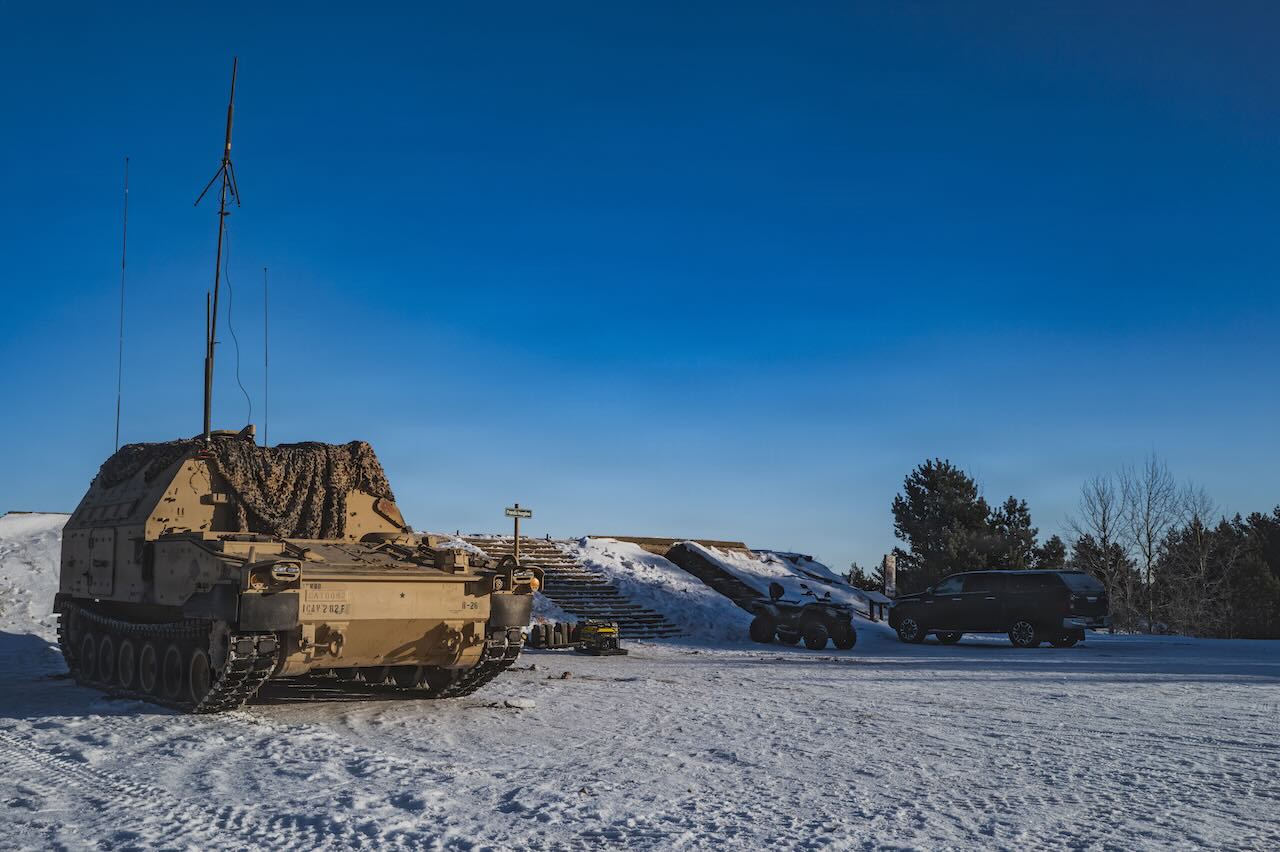
【軍傳媒/軍事科技】近年來,國軍地面部隊在火力現代化的推動下,逐步由傳統機械化砲兵體系,邁向高機動、高精準與高存活性的整體作戰架構。其中,美製海馬士多管火箭系統的到來,以及未來M109A7自走砲的採購,不僅代表射程、射速與射控能力的提升,更重要的是牽動整個砲兵後勤與補給體系的重構。伴隨此一轉型,長期服役的CM24履帶式彈藥車逐步退役,將由新一代M992A3野戰砲兵彈藥補給車接替,其背後所反映的,正是國軍的作戰思維轉變。
在過去數十年間,CM24彈藥車扮演國軍砲兵部隊重要的後勤支援角色。該車以M113系統為基礎發展,具備最基本的裝甲防護與履帶機動能力,能在一定程度上跟隨砲兵單位前進,將155公厘或203公厘彈藥送至射擊陣地。其最大優勢在於結構簡單、維護容易,並能在有限資源條件下提供基本的戰術補給能力。然而,隨著戰場環境的改變與作戰節奏的加快,CM24的設計顯露其侷限性,已經不符合現代戰場的需求。
CM24彈藥補給車的彈藥補給仍高度依賴人力搬運,即便後期改良型加入簡易輸送軌道,其實際補給效率仍受限於操作人員的體力與熟練度。在高強度火力支援任務中,這種補給方式難以支撐長時間、高射速的射擊需求,同時也增加風險。另外由於該車是基於M113底盤改造,動力與承載能力有限,無法完全跟上現代化自走砲的機動節奏。再者,其防護能力僅能抵禦輕武器與破片,在無人機監視與精準火力普及的環境下,生存性明顯不足。
與此同時,現代砲兵作戰概念已不再是單純的「射擊後補給」,而是強調在持續機動與射擊過程中維持穩定火力輸出。這樣的轉變,使得傳統彈藥車的角色產生根本性變化,也促使國軍配合M109A7自走砲的採購,打算導入M992A3彈藥補給車,形成一體化作戰系統。
過去的補給模式多採取分離式運作,彈藥車在相對安全區域裝載彈藥後,再前推至射擊陣地附近進行補給。這種方式在低強度衝突中尚可運作,但在現代高威脅環境下,補給車輛往往成為敵方優先打擊目標。M992A3的導入,使補給車能與自走砲同步行動,並在短時間內完成補給作業,降低停留時間與暴露風險,提升整體生存性。

M992A3為美軍野戰砲兵彈藥補給系統的一部分,與M109系列自走砲採用相同底盤與動力系統,具備高度機動一致性。其最大特色在於內建完整的機械化彈藥輸送與裝填系統,可透過輸送帶與液壓裝置,快速將砲彈由車內傳送至自走砲,大幅降低人員搬運負擔與暴露時間。這種設計使彈藥補給不再是間歇性的作業,而能在短時間內完成大量彈藥轉移,支撐持續射擊。
此外,M992A3的載彈量與CM24相近,但其內部配置更為優化,能有效提升空間利用與操作效率。車組人員數量亦相對減少,代表在同樣補給任務下所需人力更少,整體後勤負擔降低。另外該車與M109A7在指管通訊與戰術運用上具備高度整合性,使砲兵單位能在更短時間內完成部署、射擊與再補給循環。
現代砲兵強調多波次射擊與快速火力轉換,尤其在反砲兵作戰與機動防禦中,火力間斷往往意味著戰術劣勢。M992A3透過機械化補給與高效率作業流程,使自走砲能在短時間內恢復戰備狀態,維持高頻率射擊能力。除了火力的維持,在無人機偵察與精準打擊普及的背景下,補給過程中的人員暴露成為重大風險來源。M992A3透過自動化系統減少人員在車外操作的時間,同時加強車內作業能力,使補給過程更為快速安全,這對於提升整體部隊存活率極火力輸出能力具有關鍵意義。
M109A7與M992A3的組合,相同底盤意味著維修、零件與訓練可共通化,降低後勤複雜度,同時使指揮官能更精準掌握火力與補給狀態,提升作戰決策效率。不過這項轉型亦對國軍的訓練與戰術運用思維提出挑戰,傳統砲兵部隊習慣以固定陣地與分段補給方式運作,而新體系強調快速機動與同步補給,必須重新調整戰術流程與人員分工。此外自動化系統的導入,也意味著操作與維修人員需具備更高技術能力,相關人員訓練與後勤支援體系水平亦需同步升級。
總體而言,CM24的退役象徵國軍告別以人力為主的傳統補給模式,而M992A3的導入則標誌著砲兵體系邁向現代化整合的關鍵一步。在未來戰場環境中,火力的價值不僅在於射程與威力,更在於能否持續、穩定地發揮作用。透過新一代自走砲與彈藥補給車的整合運用,國軍砲兵部隊的整體作戰效能,將從單點火力輸出,轉變為具備高度連續性的火力運作能力,進一步強化防衛作戰的整體韌性。

Key Transformation of the ROC Military’s Artillery Sustainment System
In recent years, the Republic of China (Taiwan) Army’s ground forces have steadily advanced their firepower modernization, transitioning from a traditional mechanized artillery structure toward an operational framework characterized by high mobility, precision, and survivability. The introduction of the U.S.-made HIMARS multiple launch rocket system, along with the planned acquisition of M109A6/A7 self-propelled howitzers, represents not only improvements in range, rate of fire, and fire control, but more importantly a fundamental restructuring of the entire artillery logistics and sustainment system. As part of this transformation, the long-serving CM24 tracked ammunition carrier is being phased out and replaced by the next-generation M992A3 Field Artillery Ammunition Supply Vehicle, reflecting a deeper shift in operational thinking.
For decades, the CM24 played a vital logistical support role within Taiwan’s artillery units. Developed from the M113 platform, it provided basic armor protection and tracked mobility, enabling it to accompany artillery units forward and deliver 155mm or 203mm ammunition to firing positions. Its primary strengths lay in its simplicity, ease of maintenance, and ability to sustain basic resupply operations under constrained resources. However, as the battlefield environment has evolved and operational tempo has increased, the limitations of the CM24 have become increasingly apparent.
The CM24 relies heavily on manual handling for ammunition transfer. Even with later modifications such as basic conveyor rails, its resupply efficiency remains constrained by the physical capacity and proficiency of personnel. In high-intensity fire missions, this approach struggles to support sustained, high-rate firing and exposes crews to elevated risk. Additionally, the M113-based chassis limits both mobility and payload capacity, preventing it from keeping pace with modern self-propelled artillery systems. Its protection level—sufficient only against small arms and fragmentation—is inadequate in an era defined by drone surveillance and precision strikes, significantly reducing survivability.
Modern artillery doctrine has also evolved. Rather than operating on a “shoot-then-resupply” model, contemporary forces emphasize maintaining continuous fire output while maneuvering. This shift fundamentally alters the role of ammunition carriers and has driven Taiwan’s decision to integrate the M992A3 alongside the M109A7, forming a unified and synchronized artillery system.
Historically, resupply operations were conducted in a segmented manner. Ammunition carriers would load in relatively secure rear areas and then move forward to support firing units. While viable in low-intensity conflicts, such methods are increasingly vulnerable in high-threat environments where logistics vehicles become priority targets. The M992A3 addresses this issue by enabling synchronized movement with self-propelled howitzers and completing resupply operations rapidly, thereby minimizing exposure time and enhancing survivability.
The M992A3 is part of the U.S. Army’s modern artillery sustainment system and shares a common chassis and powertrain with the M109 series. This high degree of mobility compatibility ensures that both systems can operate seamlessly together. Its defining feature is a fully mechanized ammunition handling system, incorporating conveyors and hydraulic mechanisms to transfer rounds directly from the carrier to the howitzer. This significantly reduces manual labor and exposure while enabling rapid, high-volume resupply to sustain continuous fire missions.
Although the M992A3 carries a similar ammunition load to the CM24, its internal layout is far more optimized, improving space utilization and operational efficiency. It also requires fewer crew members, reducing manpower demands and overall logistical burden. Furthermore, its integration with the M109A7 in command, control, and communications enhances coordination, allowing artillery units to execute deployment, firing, and resupply cycles more quickly and effectively.
Modern artillery operations increasingly emphasize rapid fire sequencing and continuous engagement. In counter-battery warfare and mobile defense scenarios, interruptions in fire support can create significant tactical disadvantages. The M992A3’s mechanized resupply capability enables howitzers to return to combat readiness quickly, sustaining a high rate of fire. At the same time, in an environment dominated by drone reconnaissance and precision targeting, reducing crew exposure during resupply has become critical. Automation allows more operations to be conducted within the vehicle, enhancing both safety and efficiency.
From a logistical perspective, the pairing of the M109A7 and M992A3 offers substantial advantages. Sharing a common chassis simplifies maintenance, spare parts management, and training, reducing system complexity. It also enables commanders to better track firepower and resupply status in real time, improving decision-making efficiency. However, this transition also presents challenges. Traditional artillery units accustomed to static positions and phased resupply must adapt to a model emphasizing rapid maneuver and synchronized sustainment. The introduction of automated systems further requires personnel to develop higher technical proficiency, necessitating upgrades in training and support infrastructure.
In summary, the retirement of the CM24 symbolizes the end of a manpower-intensive logistical model, while the introduction of the M992A3 marks a critical step toward a modern, integrated artillery system. On the future battlefield, the value of firepower will depend not only on range and destructive capability, but on the ability to sustain consistent and reliable output. Through the integration of next-generation self-propelled howitzers and advanced ammunition carriers, Taiwan’s artillery forces are transitioning from isolated fire missions to a continuous and resilient firepower system—one that significantly enhances overall defensive capability and operational endurance.