

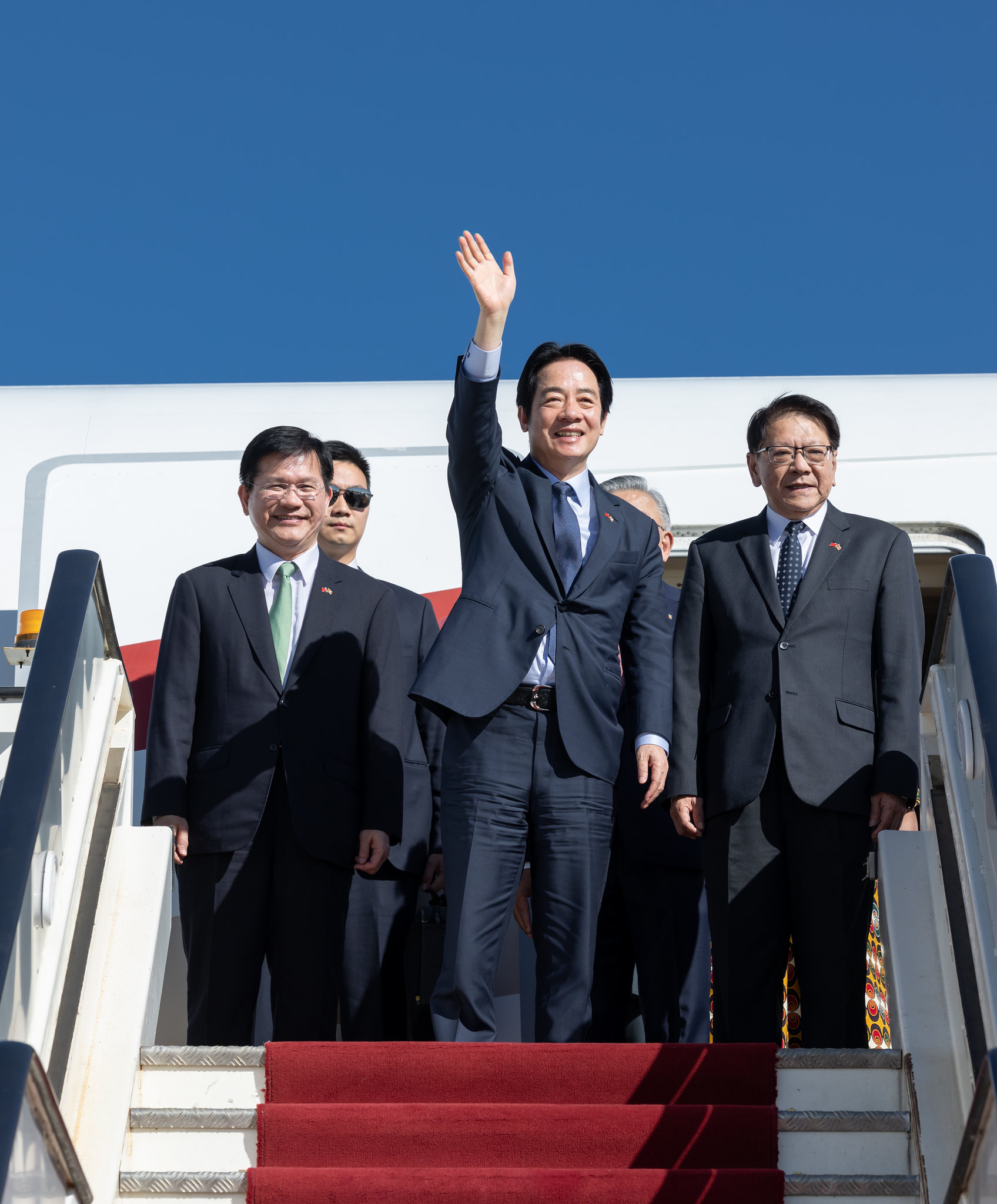
「軍傳媒」在多數人尚未察覺之際,一架載著賴清德的專機,悄然離開既定航線。沒有預告、沒有媒體鋪陳,甚至沒有太多可供外界解讀的訊號。當消息對外公開時,他已經站在非洲友邦史瓦帝尼王國的土地上。這不是一場單純的出訪,而更像一次經過精密規劃的「外交突擊」。
長期以來,台灣總統出訪多採公開透明模式,雖有助於對內外傳遞政治訊號,卻同時暴露各項行程時間地點,容易受到外部干預壓力,尤其是在中國持續透過外交與政治手段壓縮台灣空間的情況下,這種「可預測性」實際上降低了外交行動的成功率,也抹煞了外交人員的努力。
此次非洲行則呈現出明顯戲劇性轉變,從一開始受到打壓,對外宣布因三國拒絕開放領空導致出訪受挫,一直到總統站在非洲友邦的土地上對外公開,可以說是外交行動的一大成功。整體行程在時間上高度壓縮,對外資訊採延後釋出,航線等相關資訊亦刻意降低透明度,使外界難以及時掌握動態。這種操作本質上與軍事行動中的「時間優勢」概念一致,在對手收到消息完成決策與反制前,迅速達成既定目標。
對中國而言,過去仰賴預測台灣行程並施加外交壓力的模式,在此案例中顯現出台灣的彈性應對。當中國資訊掌握仍沉浸在成功喜悅時,台灣的外交突破已然達陣,中國外交部在反應時間被壓縮情況下,即使具備資源優勢,也難以有效轉化為實際阻斷能力。
從地緣政治角度觀察,非洲並非台灣外交的核心區域,也只有唯一一個友邦國家,但非洲戰略價值正在顯著提升。中國在過去十餘年間透過大規模基礎建設投資與金融工具,逐步在非洲建立長期影響力,這也使得使該區域成為全球權力競逐的重要場域之一。台灣於非洲維持邦交國的意義,每一個邦交國,皆代表台灣在國際體系中的一個存在據點,亦是對中國在國際上「單一敘事」的一種結構性挑戰,因此中國特別要防堵台灣的外交空間就是如此,對中國來說,不能容忍自己黨以外的任何不同意見與聲音。

對中國外交封鎖體系的實質測試
中國對台外交壓制的主要方式,在於透過制度性與政治性手段形成「封鎖網絡」,其運作依賴多層次協調,包括對邦交國施壓、影響第三國政策,以及利用其在國際組織中的地位,限制台灣參與國際組織等,世界衛生組織就是被中國掌控的最明顯範例。
然而,此次台灣成功的外交行動險示出這套體系的一項關鍵限制,即其反應高度依賴「事前情報」與「時間緩衝」,其影響力在事前知道台灣的計劃時能發揮最大的作用,因此當台灣採取低可預測、快速完成的行動模式時,封鎖機制便難以及時啟動。
由中國的反應就可知,這次台灣成功的外交行動,使得中國封鎖的完整性被削弱,顯示其並非無懈可擊,未來若中國欲全面阻止類似行動,勢必需投入更高的外交與政治成本,甚至影響其對其他國家的關係。由於台灣行動的不確定性提高,使中國在決策上面臨更高風險,降低其壓制策略的效率。對美國與其盟友而言,台灣展現出在壓力環境下仍具備自主行動能力,將有助於提升其在區域安全架構中的戰略可信度,也是向國際社會傳遞的重大訊號。外媒對此次事件的大幅報導,使得台灣不花額外的費用,就提升國際上的能見度和正面形象,隨著北大西洋公約組織與印太戰略逐步交織,台灣的外交韌性亦將被納入整體評估,若一個國家能在高度壓力下維持對外聯繫,其在潛在衝突中的戰略價值將顯著提升。
小國戰略的轉型與未來走向
此次事件凸顯一項長期被外界忽略低估的事實,外交並非獨立於國防之外,而是國防體系的一部分。外交空間的存在與否,直接影響軍購來源、情報合作與國際支持程度。當外交行動受到限制時,相關軍事能力的發展亦將受到牽制,反之,成功的外交突破,等同於為國防體系爭取更多操作空間。
此次行動亦提供台灣一項重要思考方向,即在資源有限的情況下,如何透過策略調整創造最大效益。與其追求全面對等競爭,不如在特定領域建立優勢,透過不對稱方式提升整體戰略效果,不對稱戰略在這次的外交行動中是一個成功的案例,足以被列入後世史冊。
綜合觀察,其核心不在於規模,而在於操作方式的改變——;從依賴傳統外交模式,轉向融合不對稱思維的戰略行動。
在當前國際體系中,小國的競爭力已不再單純取決於資源多寡,而在於是否能有效運用有限資源,總統賴清德此次非洲行不僅是一場外交活動,更是一項具體展現小國戰略轉型的案例,從被動回應壓力,轉向主動塑造環境,台灣正逐步朝此方向發展。對台灣而言,關鍵將在於如何制度化這種能力,使其成為可不斷複製創新的思考模式,使這次的成功從單一事件,轉化成可持續發生的戰略效益。

Night Flight to Africa: A Breakthrough Diplomatic Blitz
Before most observers had even noticed, a presidential aircraft carrying Lai Ching-te quietly deviated from its expected route. There was no advance notice, no media buildup, and almost no signals for external interpretation. By the time the news became public, he was already standing on the soil of an African ally.
This was not a routine state visit—it resembled a carefully planned “diplomatic blitz.”
For years, Taiwan’s presidential trips abroad have largely followed a transparent model. While such openness helps convey political signals domestically and internationally, it also exposes itineraries, timing, and locations, making them vulnerable to external pressure and interference. Under sustained diplomatic and political pressure from China, this predictability has often reduced the success rate of such engagements and undermined the efforts of diplomatic personnel.
This African visit marked a dramatic shift. Initially, external messaging suggested setbacks, with reports that three countries had refused overflight clearance. Yet by the time the president appeared in Africa, the operation had already succeeded. The itinerary was highly compressed, information release was deliberately delayed, and flight path details were kept opaque. This approach mirrors the concept of “time advantage” in military operations—achieving objectives before an adversary can react.
For China, which has long relied on anticipating Taiwan’s diplomatic movements to apply pressure, this case revealed a critical vulnerability. By the time Beijing could respond, Taiwan had already completed its objective. Even with greater resources, China found it difficult to translate its advantages into effective disruption when reaction time was compressed.
From a geopolitical perspective, Africa has not traditionally been central to Taiwan’s diplomacy, with only a single formal ally on the continent. However, Africa’s strategic importance has grown significantly. Over the past decade, China has expanded its influence through infrastructure investments and financial leverage, turning the region into a key arena of global competition. Each diplomatic partner Taiwan maintains represents a point of presence in the international system—and a structural challenge to China’s preferred “single narrative.”
A Real-World Stress Test of China’s Diplomatic Containment System
China’s strategy to constrain Taiwan’s diplomatic space relies on a multilayered “containment network,” including pressure on diplomatic partners, influence over third-party nations, and leveraging its position in international organizations such as the World Health Organization to limit Taiwan’s participation.
However, this incident exposed a key limitation: the system depends heavily on advance intelligence and reaction time. When Taiwan adopts a low-predictability, rapid-execution model, the containment mechanism struggles to activate in time.
China’s response indicates that its diplomatic blockade is not airtight. To fully prevent similar actions in the future, Beijing would need to invest significantly greater diplomatic and political resources, potentially straining its broader international relationships. Taiwan’s increased unpredictability also raises decision-making risks for China, reducing the efficiency of its pressure tactics.
For the United States and its allies, Taiwan’s ability to act independently under pressure enhances its strategic credibility within regional security frameworks. International media coverage of the event further amplified Taiwan’s visibility and positive image—without additional cost. As NATO and Indo-Pacific strategies increasingly intersect, Taiwan’s diplomatic resilience is likely to become a factor in broader strategic assessments.
Transformation of Small-State Strategy
This episode underscores a frequently overlooked reality: diplomacy is not separate from defense—it is part of it. Diplomatic space directly affects arms procurement, intelligence cooperation, and international support. Constraints on diplomacy can limit military capability development; conversely, successful diplomatic breakthroughs expand strategic options.
The operation also highlights how Taiwan can maximize effectiveness with limited resources. Rather than pursuing symmetrical competition, focusing on targeted advantages and asymmetric strategies can yield greater results. This diplomatic maneuver stands as a successful example of such an approach.
Ultimately, the significance lies not in scale, but in method. Taiwan is shifting from reliance on traditional diplomatic practices to a model that integrates asymmetric strategic thinking.
In today’s international system, a nation’s competitiveness is no longer determined solely by resources, but by how effectively those resources are used. Lai Ching-te’s African visit was more than a diplomatic trip—it was a demonstration of strategic transformation. Taiwan is gradually moving from reactive responses toward actively shaping its environment.
The key challenge ahead will be institutionalizing this capability—turning a one-time success into a repeatable strategic model that can continuously generate long-term advantages.