

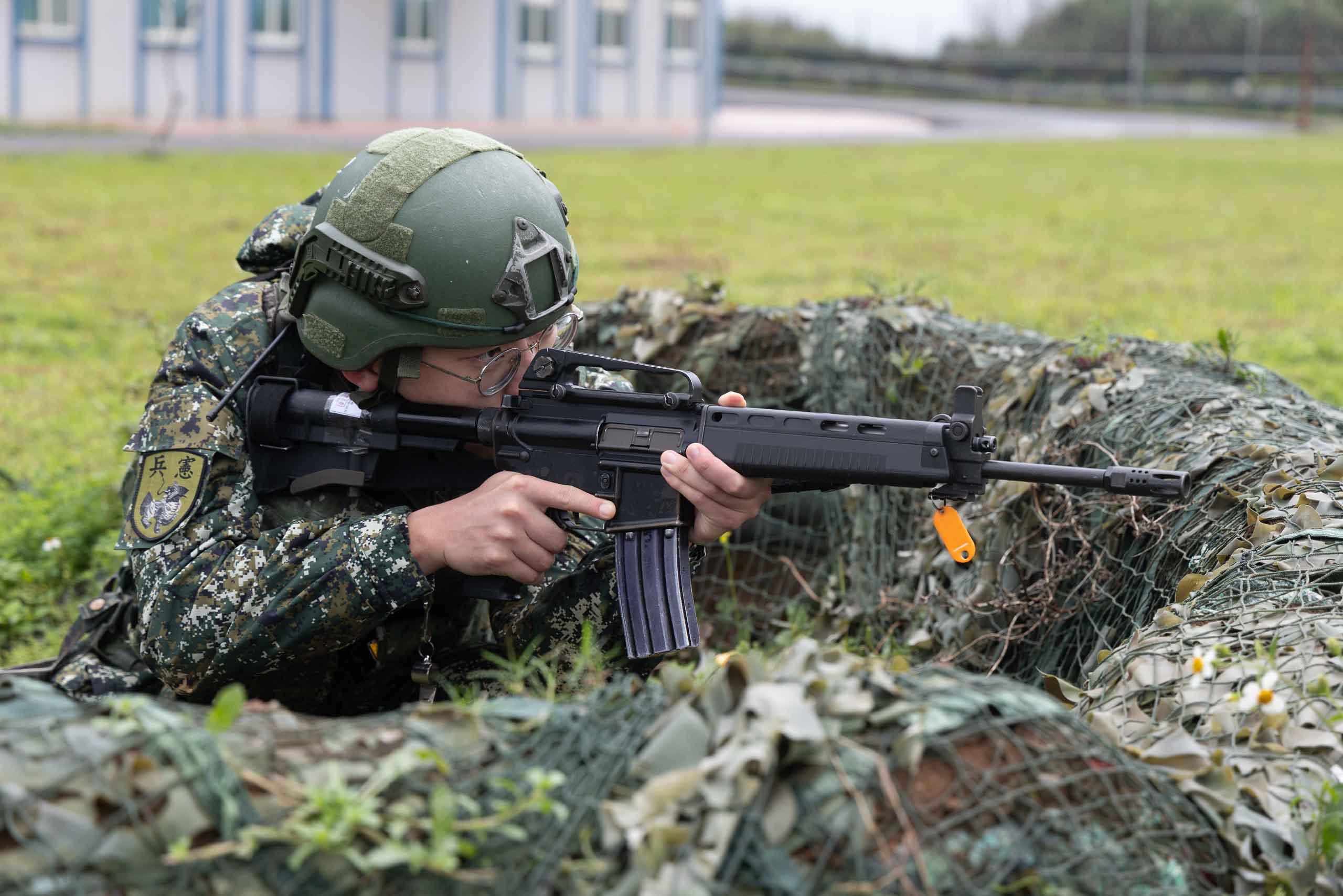
【軍傳媒/從軍我驕傲】因應兵力結構調整,空軍未來編成的雷達警衛排,負責駐守本島的高山、海邊,以及外島的雷達站,兵力就從現有的憲兵分隊轉成警衛排,此次專訪位於北台灣石門海邊的空軍第六雷達中隊石門雷達站,一窺憲兵十二中隊石門分隊在駐地的任務。
憲兵十二中隊石門分隊主要任務就是維護營區安全,與竹子湖附近的陽明山雷達站(嵩山雷達站)只有固定雷達不同,石門雷達站也有配屬機動雷達車,由於固定雷達設備戰時是優先被打擊的對象,因此平時也會不定期到營區外戰術地點待命,降低被敵軍摧毀的機會。
憲兵十二中隊石門分隊是負責營區安全,但當機動雷達車移動至營區外時,分隊便會派遣小分隊跟隨戒護,各項戰演訓時都會有次任務,此時憲兵小分隊就會負責機動雷達車最內層的戒護工作,同時會協調戰區陸軍單位支援外圍戒護(例如陸射劍二防空飛彈、復仇者飛彈等),避免受到敵方攻擊。

空軍第六雷達中隊石門雷達站配備TPS-117與AN/TPS-77雷達,AN/TPS-77 為美國Lockheed Martin研製的長程三維(3D)空中監視雷達,屬於著名 TPS-117 系列的機動化衍生型,該系統主要用於早期預警、防空監視與戰場空域管制。AN/TPS-77 採用 L 波段主動電子掃描陣列(AESA)技術,具備長距離探測與良好抗干擾能力。
根據公開資訊,AN/TPS-77可同時提供目標的距離、方位與高度資訊,並具備對多目標同時追蹤能力。探測距離可達約200海里、探測高度可達10000英呎。雷達本身具備頻率捷變(frequency agility)、低旁瓣設計與電子反反制(ECCM)能力,能在電子戰環境中維持穩定運作。對於現代戰場常見的干擾壓制、欺騙干擾具有較強抵抗力。另外整套系統是由數個模組化單元構成(天線、發射接收單元、電源、操作站),可透過卡車、空運甚至戰術運輸機快速部署,一般可在數小時內完成架設並投入運作。
石門分隊平時要負責防範及處理營區滋擾事件,因此都有一分種待命班,由分隊人員24小時輪值,除了過往有發生民間人士到營區試圖討債的情況外,其餘情況較少發生。而除了地面上的防護,空中的小型無人機反制也是其任務之一。
由於石門地區是屬於無人機禁飛區,因此一般民用無人機無法超過120呎,人屬於目視可見範圍,當發現有無人機意圖拍攝營區或飛越營區上空時,會先通報總值,再通知大門衛兵敲響急促五短聲的警鐘,警鐘感覺原始,卻是最有效且傳達距離遠的方式,一分鐘待命班會迅速取槍取裝備,2個伍的人員分別攜帶無線電、無人機干擾槍、滅火器以及封鎖線,依據無人機的出現位置應對就定位,建立目視目標後回報總值等待處置命令。當總值判斷有維安因素,就會下達干擾或擊落後,待命班成員會發出安全告警,由於除了軟式干擾槍之外,緊急情況下也會授權使用步槍擊落,不過因為營區附近也有民宅,也怕誤擊中高價值資產(例如營區內的雷達)因此硬殺的方向及區域也有規定限制。


截至目前為止,自109年配發DroneVision的干擾槍後,的確有實際碰到小型無人機直接飛進營區拍攝的情況,也有成功將無人機干擾強迫降落,後續交由警方處置,不過該干擾槍六年前採購,超過10公尺的距離就無法干擾,在科技日新月異的現代已經不敷使用,的確需要更新更好的設備以因應威脅。
從專訪石門雷達站的憲兵分隊實際運作,傳統營區警衛逐步轉型為能隨作戰節奏機動支援的單位,空軍計畫採購的皮卡車也是基於此種作戰需求。隨著未來編制調整為警衛排,無論是伴隨機動雷達車前推部署、執行最內層戒護,或是營安維護在面對無人機威脅時迅速反應並建立處置流程,憲兵分隊其任務將更增加繁重,尤其是面對越來越多的威脅,提供更合適的裝備,包括足夠的防護(護膝護肘)、先進的戰場情資裝備(ATAK),而不是寫著機密連外觀都不能拍攝到的過時戰鬥手板,落實配賦及滿足官兵任務的需求裝備,將是國軍高層不可迴避的重責大任,也期望民眾能一起支持國軍。

From Fixed Bases to Mobile Units: Military Police Detachments Transition Toward Guard Platoons
In response to ongoing force structure adjustments, the Air Force is planning to reorganize radar security units into dedicated guard platoons. These platoons will be responsible for protecting radar installations located across Taiwan, including mountainous regions, coastal areas, and offshore islands. As part of this transition, existing military police detachments will be restructured into guard platoons. This report focuses on the Shimen Radar Station of the Air Force’s 6th Radar Squadron, located along the northern coast, to examine the current roles and operations of the 12th Military Police Company’s Shimen Detachment.
The primary mission of the Shimen Detachment is base security. Unlike fixed radar installations such as the Yangmingshan (Songshan) Radar Station near Zhuzihu, the Shimen site is also equipped with mobile radar vehicles. Because fixed radar systems are high-priority targets during wartime, mobile radar units are periodically deployed to off-base tactical locations during peacetime to reduce vulnerability and enhance survivability.
While the detachment is primarily responsible for securing the base, it also plays a critical role when mobile radar units operate outside the compound. In such cases, a military police team is dispatched to provide close protection. During exercises and operations, this team forms the innermost security layer around the radar vehicle, while coordinating with Army units for outer perimeter defense. These supporting forces may include air defense systems such as the land-based Sky Sword II missiles or Avenger systems, ensuring layered protection against potential threats.
The Shimen Radar Station is equipped with TPS-117 and AN/TPS-77 radar systems. The AN/TPS-77, developed by Lockheed Martin, is a long-range three-dimensional (3D) air surveillance radar and a mobile variant of the TPS-117 series. It is designed for early warning, air defense surveillance, and airspace management. Utilizing L-band active electronically scanned array (AESA) technology, the radar offers long detection range and strong resistance to electronic interference.
Open-source information indicates that the AN/TPS-77 can simultaneously provide range, bearing, and altitude data while tracking multiple targets. Its detection range extends to approximately 200 nautical miles, with altitude coverage reaching around 10,000 feet. The system incorporates features such as frequency agility, low sidelobe design, and electronic counter-countermeasures (ECCM), enabling reliable operation even in contested electronic warfare environments. Additionally, the radar system is modular, consisting of components such as the antenna, transmitter/receiver units, power supply, and control stations. It can be rapidly deployed via trucks, airlift, or tactical transport aircraft, typically becoming operational within hours.
On a daily basis, the Shimen Detachment maintains a one-minute response team to handle security incidents. Personnel are on 24-hour rotational duty, ready to respond to emergencies. While incidents are relatively rare—aside from occasional civilian disturbances such as individuals attempting to enter the base—the unit must remain constantly prepared. In addition to ground security, countering small unmanned aerial systems (UAS) has become an increasingly important task.
As the Shimen area is designated a no-fly zone for drones, civilian UAVs are restricted to low altitudes and must remain within visual line of sight. When a drone is detected attempting to film or fly over the base, the unit first reports the situation to the duty officer. The main gate guard then sounds an emergency alarm using a distinctive bell signal. Although simple, this method remains one of the most effective means of alerting personnel over long distances. The one-minute response team quickly retrieves weapons and equipment, deploying in two squads equipped with radios, drone jammers, fire extinguishers, and perimeter control tools. After visually confirming the target, they report back and await further instructions.
If the duty officer determines a security threat, orders may be issued to jam or neutralize the drone. In such cases, the response team initiates safety alerts before taking action. While soft-kill measures such as jamming are preferred, rifle fire may be authorized in urgent situations. However, strict rules govern engagement angles and areas due to nearby civilian residences and the risk of damaging high-value assets such as radar systems.
Since the introduction of DroneVision jamming guns in 2020, the unit has encountered multiple incidents of small drones entering the base for surveillance purposes. In some cases, the jammers successfully forced drones to land, after which they were handed over to law enforcement. However, the current equipment has clear limitations. With an effective range of less than 10 meters, it is increasingly inadequate against modern UAV threats. As drone technology continues to evolve rapidly, there is an urgent need to upgrade counter-UAS capabilities.
Observations from the Shimen Detachment highlight a broader transformation: traditional static base security units are evolving into mobile, responsive elements capable of supporting operational deployments. The Air Force’s planned procurement of pickup trucks reflects this shift toward mobility. As these units transition into guard platoons, their responsibilities will expand significantly—ranging from escorting mobile radar units and providing close protection, to rapidly responding to drone threats and executing established countermeasures.
Given the growing complexity of threats, it is essential to equip personnel with appropriate tools, including adequate protective gear such as knee and elbow pads, as well as modern battlefield information systems like ATAK. Reliance on outdated equipment, even if classified, no longer meets operational needs. Ensuring that frontline units are properly equipped and supported is a critical responsibility for senior military leadership. At the same time, continued public support will be vital in sustaining the armed forces as they adapt to an increasingly challenging security environment.