

【軍傳媒/記者採訪報導】隨著台灣近年加速引進標槍、刺針、無人機、無人船及各式不對稱作戰裝備,部隊面臨的不只是換新裝備的問題,更是如何在有限場地、有限實彈與有限安全條件下,讓操作人員快速熟悉新裝備形成戰力。國內模擬訓練業者全球動力科技(Big x Reality)近日展示「XR協同作戰整合模擬平台」,從小部隊戰術、無人船操控、無人機協同,到標槍飛彈、50機槍與C2指揮圖台,企圖將單一裝備模擬,推進到跨載具、跨場域的整合訓練架構。
現代作戰正朝資訊整合、協同作戰與高擬真模擬發展,傳統訓練常受限於場地、安全、耗材與裝備損耗。全球動力科技其旗下品牌Big x Reality開發的XR協同作戰整合模擬平台,涵蓋小部隊戰術演練、無人船模擬操控、無人機操作、戰場指揮官決策平台、重裝武器模擬與高壓心理訓練等領域,目標是在可控、可重複的虛擬環境中,協助訓練單位提升操作熟悉度、戰場感知與跨系統協同效率。

從現場展示觀察,這套系統的重點並非宣稱取代實彈射擊或野外操演,主要是補足「大量重複練習」與「流程肌肉記憶」,也就是專注在訓練SOP部分。全球動力也坦言,XR模擬器無法訓練出神射手,也無法完全複製實彈發射的後座力及臨場感,其核心價值在於訓練學員大腦反應、標準作業程序、團隊協作、溝通與指揮能力。因為刺針、標槍等人員攜行武器若要發揮戰力,操作員必須在壓力、噪音、時間限制與敵情變化下完成火力協調、開機、搜索、鎖定與射擊程序,由於每枚實彈造價昂貴,也無法滿足大量部隊的訓練消耗,在只有少數實彈射擊的機會下,就必須靠模擬系統來建立腦袋及肌肉記憶。
標槍飛彈模擬器也是這次展示重點之一,模擬訓練系統支援直攻模式、攻頂模式與夜視環境切換,能讓學員反覆熟悉發射流程。對國軍部隊來說,標槍飛彈的訓練瓶頸不只在單枚飛彈成本,台灣本島的實彈射擊場地有限,再加上年度訓練流量額度,當兵過程中有沒有機會打到實彈都不一定,若能先透過VR模擬建立標準操作流程,再將少數實彈射擊用於驗證,訓練效率將明顯提高,而「軍傳媒」前陣子採訪中科院展示的紅隼二型反裝甲火箭的VR模擬訓練系統也是出自全球動力科技,而近期國防部也採購刺針飛彈的模擬訓練系統加以驗證,顯見其在相關領域的深耕已初步呈現成果並受到肯定。

另外現場也展示USV無人船操作模擬系統,該系統可模擬目視離靠港、編隊航行與遠程海上偵蒐任務,並整合地面控制站與光學酬載操作流程。對島嶼防衛而言,無人船未來可能用於港口偵蒐、近岸監控、水面目標識別,甚至與無人機、岸置感測器共同構成海上監視網。由於實體無人船訓練涉及海象、碼頭調度、裝備損耗與安全風險,若能先在虛擬環境中熟悉操控邏輯與協同流程,將有助於降低新裝備導入初期的操作門檻。
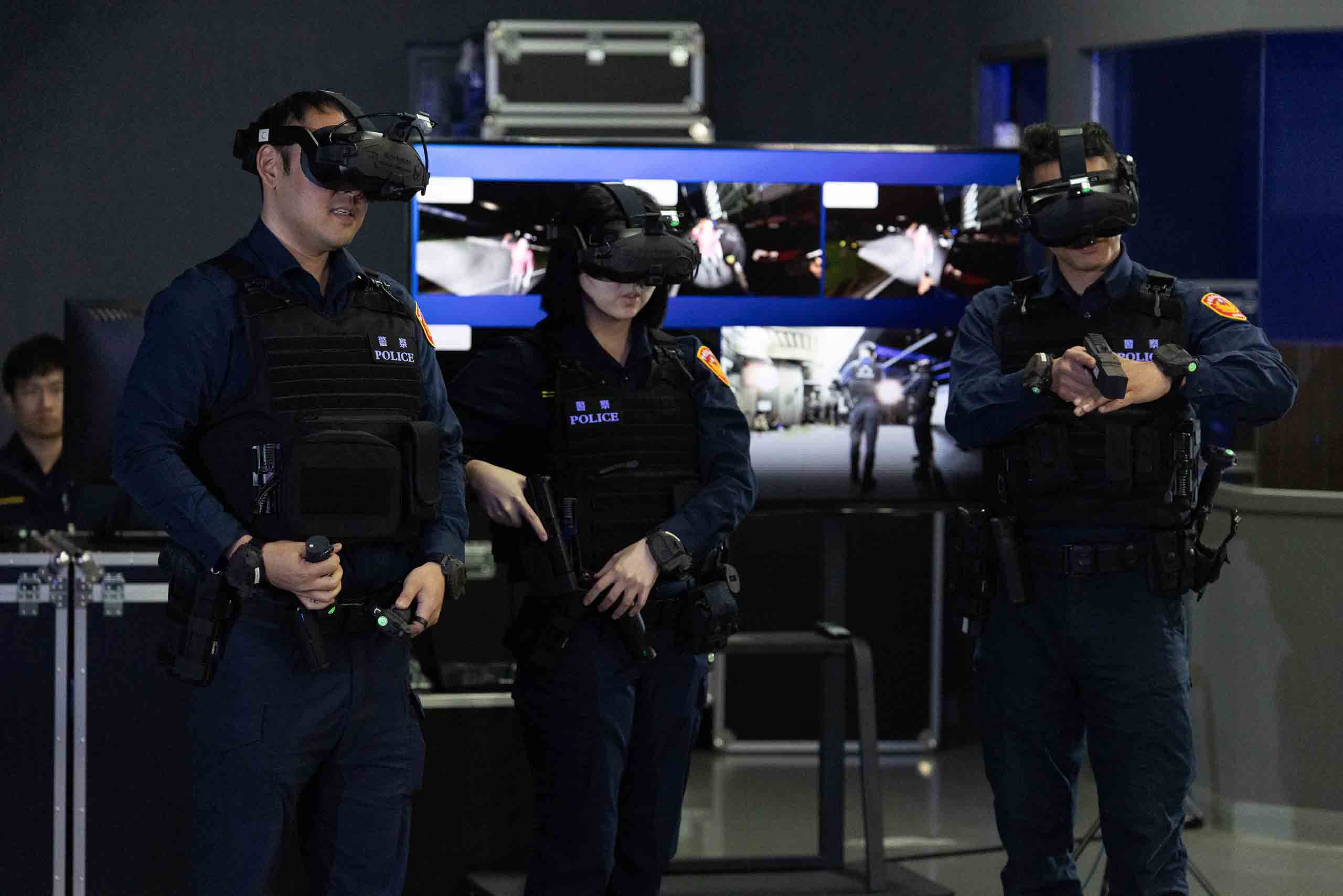
小部隊訓練方面,全球動力科技目前已經在警察系統建立模擬訓練,內容涵蓋平常任務會碰到的情境訓練、基礎射擊、CQB限制空間戰鬥等,針對軍中使用,模擬訓練系統也導入UAV情資回傳與協同操作概念,這使得訓練不再只是傳統訓練單兵射擊穩定度與熟練度,而是實際模擬小隊如何接收空中影像、分配火力、改變隊形、判斷目標與進行攻擊。另外CQB模擬戰鬥也可以針對測繪後的建築物理空間進行感知,省去大量重複改變格局的訓練,也讓NPC假想敵不會出現穿牆等不合現實的突兀行為,提升模擬情境真實度。

另外C2兵棋圖台則較具整合性,該圖台可整合陸、海、空多維資訊,進行即時戰術推演、動態航線規劃與協同任務管理,並透過混合實境與手勢辨識操作,支援異地協同與數位沙盤。這次展示類似「台灣之盾」概念的數位兵棋圖台,將防空武器偵搜與攔截範圍以3D方式視覺化,當紅軍目標進入範圍時,系統可顯示高度、經緯度與航向等資訊,未來這類兵棋模擬系統設計若持續成熟,不僅可用於教育訓練,也可作為指揮官理解防空、反制無人機與跨軍種協同的輔助工具。
整體來看,全球動力科技的XR平台反映出台灣國防產業正在從「製造硬體」走向「建立訓練生態系」。對國軍而言,大量採購反裝甲飛彈、防空飛彈與無人載具後,真正決定戰力生成速度的,是官兵能否快速熟悉裝備、單位能否建立共通戰術語言,以及指揮層能否在多來源資訊中做出有效決策。XR模擬訓練無法取代野外實兵、實車、實彈訓練,但它可以讓昂貴且有限的實體訓練更有效率,也能讓即將換裝新裝備的部隊,能先建立一套可重複、可檢討、可量化的訓練流程。前美國陸軍太平洋司令弗林也公開強調,訓練是軍隊戰力的根本,對面臨高強度威脅的台灣來說,有效而非表面化的訓練,才是國軍真正需要的。

As Taiwan accelerates the acquisition of Javelin anti-tank missiles, Stinger air defense systems, unmanned aerial vehicles (UAVs), unmanned surface vessels (USVs), and other asymmetric warfare capabilities, the challenge facing the military is no longer simply purchasing new equipment. The greater challenge lies in rapidly transforming operators into combat-ready personnel under the constraints of limited training ranges, restricted live-fire opportunities, safety requirements, and high operational costs.
To address this growing training gap, Taiwanese simulation technology company Big x Reality, a subsidiary of Global Dynamics Technology, recently unveiled its XR Collaborative Combat Integrated Simulation Platform. The system combines small-unit tactical training, unmanned vessel operations, UAV coordination, command-and-control (C2) decision-making, heavy weapons simulation, and stress-inducing combat scenarios into a unified training ecosystem. Rather than focusing on a single weapon system, the platform aims to create a comprehensive environment where soldiers can train across multiple domains and systems simultaneously.
Modern warfare increasingly depends on information integration, joint operations, and realistic simulation. Traditional training methods are often constrained by safety concerns, ammunition expenditure, equipment wear, and limited training space. The XR platform seeks to overcome these limitations by placing trainees inside a repeatable and controlled virtual environment where they can repeatedly practice procedures, improve situational awareness, and enhance coordination among different units and systems.
Company representatives emphasize that XR simulation is not intended to replace live-fire exercises or field maneuvers. Instead, its primary purpose is to reinforce standard operating procedures, repetitive practice, and muscle memory. While virtual systems cannot fully replicate the recoil, physical stress, and unpredictability of live combat, they excel at training cognitive responses, teamwork, communication, command decision-making, and procedural discipline.
This capability is particularly important for systems such as the Javelin and Stinger missiles. Operators must perform target acquisition, system activation, identification, tracking, and engagement procedures under conditions of stress, noise, time pressure, and changing battlefield situations. Given the high cost of live missiles and the limited opportunities for actual firing exercises, simulation systems provide a practical means of building proficiency before soldiers transition to live-fire validation.
One of the platform’s featured capabilities is its Javelin missile simulator. The system supports both direct-attack and top-attack modes, along with day and night operational environments. Trainees can repeatedly practice launch procedures and engagement sequences, significantly increasing familiarity with the weapon system. For Taiwan’s military, where training ranges are limited and live-fire opportunities remain scarce, such simulation platforms can dramatically improve training efficiency.
Big x Reality has already gained recognition in this field. The company previously developed the VR training simulator for Taiwan’s Indigenous Defense Industry Institute’s Kestrel II anti-armor rocket system and has recently participated in the development and validation of simulation systems associated with Stinger missile training programs.
Another major component demonstrated was the Unmanned Surface Vessel (USV) simulation platform. The system allows operators to practice visual navigation, harbor departure and entry procedures, formation maneuvering, and long-range maritime surveillance missions. Integrated ground control stations and electro-optical payload management functions provide a realistic training environment for future maritime operations.
For an island nation like Taiwan, unmanned surface vessels are expected to play increasing roles in port surveillance, coastal security, maritime reconnaissance, target identification, and networked operations alongside UAVs and shore-based sensor systems. Because real-world USV training is affected by sea conditions, port scheduling, equipment wear, and safety considerations, virtual simulation offers an effective method for lowering operational barriers and accelerating force development.
The company also demonstrated small-unit tactical training systems that have already been employed by Taiwan’s law enforcement agencies. These modules include scenario-based exercises, marksmanship training, and close-quarters battle (CQB) simulations. Military versions further integrate UAV intelligence feeds, allowing squads to practice receiving aerial reconnaissance data, adjusting formations, assigning fire support, and conducting coordinated attacks.
A particularly noteworthy feature is the ability to create digital replicas of real buildings and operational environments. This allows CQB training to take place within accurately modeled structures while eliminating the need for repeated physical reconfiguration of training facilities. Non-player characters (NPCs) behave more realistically and avoid immersion-breaking issues such as moving through walls or acting unnaturally.
The platform’s command-and-control component further expands its capabilities. The digital C2 battle management table integrates land, sea, and air information into a unified operational picture. Commanders can conduct real-time tactical planning, route management, mission coordination, and battlefield visualization using mixed-reality interfaces and gesture-based controls.
One demonstration featured a “Shield of Taiwan”-style digital air defense model that visualized detection and engagement zones in three dimensions. When simulated enemy aircraft or drones entered defended airspace, the system displayed altitude, coordinates, heading, and engagement information in real time. Such capabilities not only support training but also help commanders better understand air defense operations, counter-drone missions, and joint-force coordination.
Overall, Big x Reality’s XR Collaborative Combat Integrated Simulation Platform reflects a broader shift within Taiwan’s defense industry—from manufacturing hardware alone to building a complete training ecosystem. As Taiwan continues to field advanced missiles, air defense systems, and unmanned platforms, the speed at which combat power is generated will increasingly depend on how quickly personnel can master new equipment, how effectively units develop common tactical procedures, and how efficiently commanders process information and make decisions.
XR simulation cannot replace live-fire exercises, field maneuvers, or real-world operations. However, it can maximize the value of those limited training opportunities by ensuring that personnel arrive better prepared. More importantly, it provides newly equipped units with a repeatable, measurable, and continuously improvable training process.
Former U.S. Army Pacific Commander General Charles Flynn recently emphasized that training remains the foundation of military effectiveness. For Taiwan, which faces an increasingly complex and high-threat security environment, realistic and effective training—not simply the acquisition of new equipment—may ultimately be the most important factor in transforming capability into combat power.