

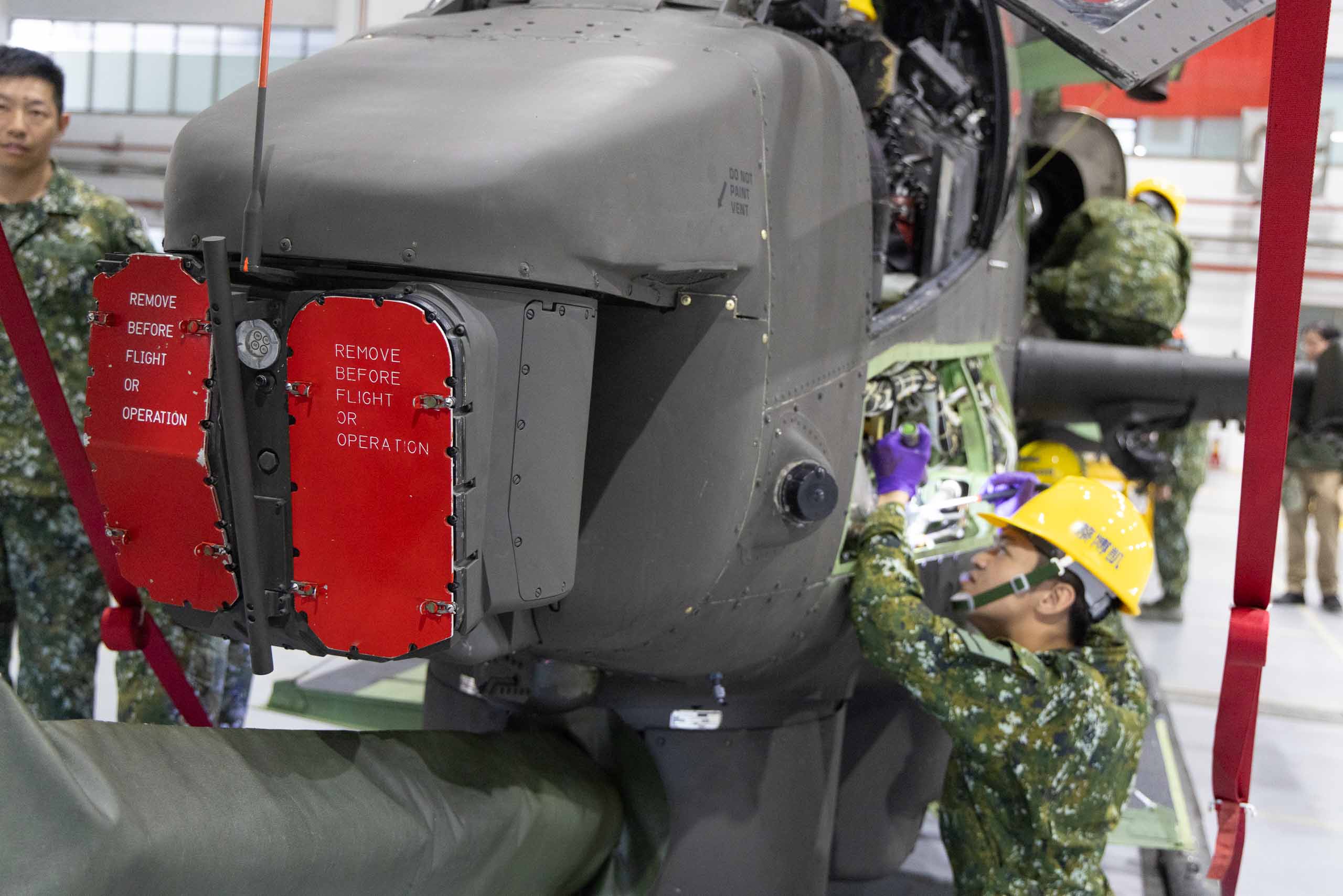
【軍傳媒/軍風大觀園】任職於陸軍航空基地勤務廠品質管理科的陸軍高中66期(94年班)士官長 曾泰銡,負責於各型機的光電、數位系統及武器系統的品質檢驗。

戰時前進維修,2小時恢復戰力的關鍵機制
直升機維修在平時是按正常時序進廠維保,但是戰時就不同。當進入到戰爭狀態時,陸軍航勤廠的前進維修小組就會分派到三個陸軍航空旅,這些前進維修小組會聯合戰損評估小組,針對現地遇到的狀況來做戰損的即時評估,採現地併修及調校的方式,目的在立即排除飛機的故障,使青筍的飛機在2小時內能完成恢復妥善。
在戰地維修下,主要的重點首先一定是武器系統,在儘量短的時間內將飛機恢復妥善重新投入戰鬥序列,因此前進維修小組對於陸軍航空旅戰力的持續是很重要的支援單位。
至於受到中損/重損的直升機,戰損評估小組評估無法於短時間修復者,就會考量直升機的狀況,採取一次性飛行或是利用路上載具載運至後方基地或野保站、合約商地方等進行修復,且戰時航勤廠也會組成基地搶修組,針對後送的裝備進行24小時不間斷輪班制維修,以期能盡快恢復裝備妥善支援部隊的戰力需求。


高度整合航電時代,檢驗士的技術與經驗考驗
另外現代的科技日新月異,AH-1W跟AH-64E的電子系統差異就很大,而在不斷更新下,新式航電系統高度整合(包括FCR、TADS/PNVS、IFF、Link-16等)此時一有故障最先於電腦上產生故障訊息或故障代碼,此時檢驗士就必須先詢問飛行員或操作手當下遇到的問題情況,再配合技術手冊、電子技令(IETM)的指引及自身的保修經驗來判斷可能的故障位置,之後由廣泛測試開始然後慢慢地收斂,直到最後鎖定確定故障的裝備次總成。
國內現有各型機雖然射控系統等都大同小異,但是技令查閱上各型機就很多不同,這部分很吃檢驗士官長的經驗,這也是為什麼航勤廠的士官長都是有一定的英語能力,熟悉各系統的技令,以及在航勤廠有一定的年資,幾乎都出國受過訓。
找到問題之後,再來就是修復,如果是可修建的零件,就會先由備用零件替換,受損部件則進入修製管道由相關的承修單位來恢復妥善後繳庫,如此完成循環。至於未來國軍可能採購的裝備,包括中大型無人機、新式戰甲車上許多精密光電系統,目前是由另外單位負責,航勤廠維修的仍以旋翼機為主
由於能獲得原廠授權跟技術轉移,利用工合點數於龍潭成立特殊射控系統修復站,針對光電射控系統能做更深入的檢修,包含眼鏡蛇直升機、OH-58D等光電射控學習到特殊的維修方式、更多模組更換的能力等,當然最核心的技術一定掌握在美方手裡,但藉由工合系統的確提高原本沒有的維修技術與能量。


給有志從事相關工作的建議
曾泰銡 士官長回憶其軍旅生涯中,最難忘的是臨危授命撰寫一份工合的合約,合約內容要建立維修的能量,同時包括後續交貨驗收、安裝、組裝測試,然後教育訓練等,雖然有法務單位的支援,但是與國內外廠商的溝通,加上同時間前述龍潭特殊射控系統修復廠的建立,等於是蠟燭兩頭燒,那次的印象特別深刻,但也是很好的人生歷練。
對於想進入相關領域的後進,提出一些個人的建議。像他自己是機械系畢業,後來才主攻光學系統,除了語言能力一定要有,能查閱原文資料跟理解吸收其內的意涵,最重要是開放心態勇於學習,剩下的其實在這個單位都能學習到,每年也都有名額可報考公費赴美受訓,工作穩定又有專業技能,曾士官長很慶幸當初的正確選擇。

Returning to Combat in Two Hours: An Analysis of the Army Aviation Wartime Maintenance System
Sergeant Major Tseng Tai-Chi, a graduate of Army Senior High School Class 66 (2005), currently serves in the Quality Management Section of the Army Aviation Logistics Depot. He is responsible for quality inspection of electro-optical, digital, and weapon systems across various aircraft platforms.
Forward Wartime Maintenance: The Key Mechanism for Restoring Combat Readiness Within Two Hours
Under normal conditions, helicopters undergo scheduled maintenance cycles at designated facilities. However, wartime operations require a fundamentally different approach.
Once in a combat environment, forward maintenance teams from the Aviation Logistics Depot are deployed to three Army aviation brigades. These teams operate alongside battle damage assessment units, conducting real-time evaluations based on on-site conditions.
Through on-site repair and calibration, the objective is to rapidly eliminate faults and restore affected aircraft to operational status within approximately two hours.
In battlefield conditions, priority is given to weapon systems to ensure aircraft can quickly return to the combat rotation. As a result, forward maintenance teams play a critical role in sustaining the operational capability of aviation brigades.
For helicopters suffering moderate to severe damage that cannot be repaired immediately, assessment teams determine whether the aircraft can conduct a one-time ferry flight or be transported via ground vehicles to rear bases, field maintenance stations, or contracted facilities for repair.
Meanwhile, depot-based rapid repair teams operate on a 24-hour shift system, working continuously to restore equipment and support frontline operational requirements.
The Era of Integrated Avionics: A Test of Inspector Expertise
With rapid technological advancement, significant differences exist between platforms such as the AH-1W and AH-64E. Modern avionics systems are highly integrated, incorporating systems such as FCR, TADS/PNVS, IFF, and Link-16.
When a malfunction occurs, fault messages or error codes are typically generated within onboard systems. Inspectors must first gather operational feedback from pilots or crew members, then consult technical manuals and Interactive Electronic Technical Manuals (IETM), combined with personal maintenance experience, to identify possible fault locations.
The diagnostic process begins broadly and gradually narrows down until the faulty component or subsystem is confirmed.
Although many platforms share similar fire control principles, technical documentation varies significantly. This places high demands on the experience of senior inspectors, who must possess strong English proficiency and extensive familiarity with system documentation. Most have also received overseas training.
Once a fault is identified, repair procedures begin. Repairable components are replaced with spare parts, while damaged units are routed through maintenance channels for restoration before being returned to inventory, completing the maintenance cycle.
While future systems such as medium-to-large UAVs and advanced armored vehicle electro-optical systems are handled by other units, the Aviation Logistics Depot remains primarily focused on rotary-wing aircraft maintenance.
Through original manufacturer authorization and technology transfer programs, a specialized fire control system repair facility has been established in Longtan. This facility enhances capabilities in electro-optical system maintenance, including platforms such as the AH-1W and OH-58D.
Although core technologies remain under U.S. control, industrial cooperation programs have significantly improved domestic maintenance capabilities.
Advice for Future Professionals
Sergeant Major Tseng recalls that one of the most challenging moments in his career was being tasked with drafting an industrial cooperation contract under pressure. The contract covered maintenance capability development, delivery acceptance, installation, testing, and training.
Despite legal support, coordinating with both domestic and international vendors while simultaneously establishing the Longtan repair facility created immense pressure. However, it became a valuable professional experience.
For those interested in entering this field, he emphasizes the importance of language skills, particularly the ability to read and interpret technical documents. Equally important is maintaining an open mindset and a willingness to learn.
The unit provides structured training and opportunities for government-sponsored overseas programs, offering both stability and professional growth. Sergeant Major Tseng considers his career choice a fortunate one.