

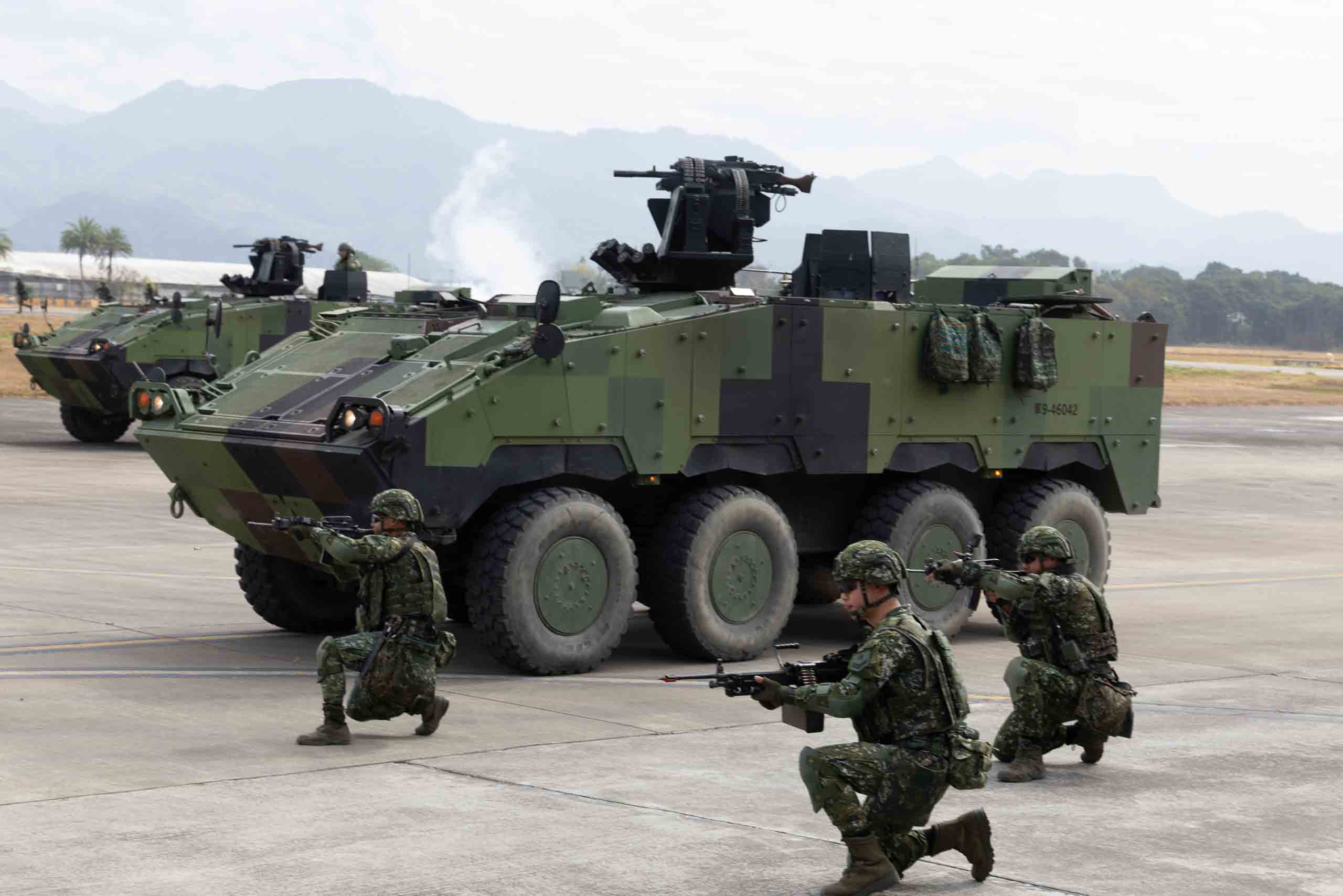
【軍傳媒/國內軍事新聞】農曆春節前夕,國軍依例實施春節加強戰備整備,除確保節日期間防衛戰力不中斷,並逐步轉化為接近實戰條件的即時應變演練。陸軍第十軍團指揮部日前舉辦「國軍115年春節加強戰備媒體邀訪活動」,結合防空接戰、第五縱隊反制、無人機偵蒐與機動反擊等課目,呈現出陸軍在地面防衛思維上的顯著轉變。
本次邀訪操演場域選定於台中新社龍翔營區,想定情境設定為敵特攻分遣隊企圖滲透、奪占關鍵設施,並搭配空中突擊與低空威脅。操演由機步戰鬥隊擔任主體,結合特戰分遣隊、防空部隊與無人機系統,完整呈現陸軍地面部隊在現代戰場下的整體作戰樣貌。

從正面接戰到複合威脅操演想定
本次操演最關鍵的特點,在於不再以傳統野戰或灘岸對抗作為主軸,而是將作戰想定包含「敵特攻分遣隊滲透」、「空中突擊」、「內部策應」等複合威脅場景。
整個演練想定中,敵軍並非一次性大規模進攻,而是透過低空運兵直升機、潛伏第五縱隊與攻擊直升機協同運作,企圖奪占關鍵營區與節點設施。這樣的設計,明顯對應近年現代戰場常見的混合戰(Hybrid Warfare)與灰色地帶行動。
對陸軍而言,這類威脅對傳統防禦體系衝擊極大,交戰防線不再清楚,敵我界線模糊,作戰單位必須在高度不確定的情況下迅速判斷、部署並接戰。

加入陸射劍二的野戰防空角色定位
操演初期由防空部隊模擬使用陸射劍二防空飛彈系統接戰敵方突入之運兵直升機,但在敵軍低空攻擊直升機與地面第五縱隊的聯合下,原本的防禦基地仍失守,顯示陸軍在基地防護與戰場初期階段,仍高度依賴地面的防空力量爭取反應時間。
這次演練中,陸射劍二並非扮演制空角色,而是作為戰區內低空防護與空中阻絕工具。其主要任務不在於全面消滅空中威脅,而是減少或阻止敵方空中兵力有效投放,避免地面戰場在初期即遭突破。這樣的運用方式,顯示陸軍防空作戰已明確納入「多層防護」概念,並與空軍防空體系形成互補。
操演中段引入第五縱隊突襲與短暫佔領的情境,雖不一定真實,但是作為反派的必須存在。在此想定下,敵方並未以大規模兵力強攻,而是利用潛伏人員配合空中火力,在局部地區製造混亂並佔領要地,迫使防守單位分散兵力,若搭配外部的攻擊,對部隊的指管體系、基層幹部判斷能力,以及營區內部安全管理,都會形成高度壓力。
此次第十軍團的操演並未刻意營造「完全掌控」的情境,而是呈現初期受壓、局部失守,再逐步反制的過程。不過當然對媒體的演練一定都是好的部分,為了畫面戰傷救護也是現場處理,而不是拉到安全後方處理,這樣的設計可以理解,但其實仍可用縮短距離演練呈現,重點是官兵能將實際的反應及應處作為熟練。

無人機從輔助工具到攻擊武器
無人機在本次操演中扮演的角色,終於不是單純偵察。經過一年的調整,此次演練中陸軍偵察排的魔蠍無人機將即時空中影像回傳,指揮所能迅速掌握敵方突襲路線、集結位置與行動方向,並即時調整反擊部署,無人機已成為戰場感知與指揮決策鏈的一部分。
另外偵查無人機、攻擊無人機與地面火力、機步單位之間形成了明確的協同關係,偵查無人機負責監視戰場發現敵軍,指引地面部隊火力攻擊,除了遠程火炮外,還包含指引狙擊手快速發現敵方重要目標加以擊殺,或是引導自殺無人機優先攻擊威脅最大的敵方火力單位,達到掌控戰場的目的,並縮短決策到行動的時間差。這樣的運用方式,顯示陸軍正在逐步吸收近年各地戰場經驗,將人機協同納入標準戰術流程。

快速反擊部隊奪回主動權
操演最後階段由陸軍快速反擊部隊實施反制作戰,主戰車在遠方以火力支援,CM-33/34裝甲車攜帶步兵快速到達交戰位置,以火力支援步兵突襲,此時機步戰鬥隊不再只是防禦單位,而是透過機動、火力與步兵協同,對敵佔領區域實施有節奏的反擊。反擊過程中並未強調單點突破,而是著重於整體推進節奏與兵力協調,避免因過度冒進而暴露側翼。過程中雖然加入了戰傷救護演練,但野戰救護車毫無任何防禦力,應該不是拿來作為交戰場域的緊急後送,這點為了給媒體拍攝而有點失真。
本次操演呈現出操演想定不再抽象,而是明確對應現代威脅樣態,使訓練成果更具實用性。另外營區防護應正式納入作戰層級思維,解放軍可能利用突襲營區,除了取得維持作戰的油料槍彈外,可同時摧毀防禦單位的兵力及武裝,因此台灣內部安全、防滲透與反特攻,已不再只是憲兵或警衛任務,應是納入整體作戰的一環。
另外此次操演指管與感知能力優先於火力展示,操演重點不在於火力多寡,而在於是否能快速掌握情勢並正確用兵,同時讓官士兵在操演過程中模擬作戰的應對,相較以往,最明顯的改變就是空包彈射擊數量變超多,硬要挑毛病就是空包彈射擊仍以機步槍為主,並未納入戰車主砲或是雲豹裝甲車的30鏈砲。
不過此次操演中並未納入防禦無人機的科目,這點就比較脫離現實,當然沒有再拿著效用不大的干擾槍在模擬戰場中是好事,表示真正認知相關裝備在作戰環節是無用的,但卻也必須有一定的替代手段,無論是主被動的防護此次都沒看到,另外陸航尚未將攻擊無人機及躲避無人機的攻擊納入訓練科目中也有些令人費解,這些點算是美中不足之處。
陸軍第十軍團此次春節加強戰備操演,除了歸於單一軍種或單位的展示活動,也是一個觀察國軍地面作戰思維轉型的重要機會,過往為了怕春節期間的鬆懈舉行的戰備操演,如今在威脅下幾乎成了常態。正面來看,軍方思維從「守著不出事」轉變成隨時可能轉入實戰的常態備戰狀態,國軍的戰備文化也正在悄然改變,給媒體看的春節戰備巡弋操演或許不如大型演習來得震撼,卻更貼近真正的戰爭樣貌。

Ahead of the Lunar New Year, Taiwan’s Armed Forces conduct annual enhanced readiness operations to ensure uninterrupted defensive capability during the holiday period, while increasingly transforming these activities into realistic, near-combat contingency drills. The Tenth Army Corps recently hosted the “115th Year Lunar New Year Enhanced Readiness Media Event,” integrating air defense engagements, counter–fifth column operations, unmanned aerial reconnaissance, and mobile counterattacks, highlighting a notable shift in the Army’s ground defense mindset.
The exercise was conducted at Longxiang Camp in Xinshe, Taichung, under a scenario in which enemy special operations detachments attempted to infiltrate and seize key facilities, supported by air assault and low-altitude threats. Mechanized infantry units formed the core force, operating jointly with special operations teams, air defense units, and unmanned systems, presenting a comprehensive picture of modern Army ground operations.
From Linear Defense to Complex Threat Scenarios
Rather than focusing on traditional field battles or coastal defense, the exercise emphasized composite threats, including enemy infiltration teams, air assaults, and internal collaboration. The adversary was depicted not as a single massed force, but as a coordinated network using transport helicopters, attack helicopters, and fifth column elements to seize critical nodes—an approach clearly aligned with contemporary hybrid warfare and gray-zone tactics.
Such scenarios blur front lines and complicate command decisions, forcing units to rapidly assess, deploy, and engage under conditions of high uncertainty, posing a major challenge to conventional defensive concepts.
Field Air Defense and Layered Protection
In the initial phase, air defense units simulated engagements using the land-based Sky Sword II missile system against enemy transport helicopters. Despite these efforts, coordinated low-altitude attacks and fifth column actions led to a temporary breach, underscoring the Army’s reliance on ground-based air defense to gain reaction time during early-stage engagements.
The Sky Sword II was employed not for air superiority, but as a localized low-altitude denial and protection asset, intended to disrupt enemy air insertion rather than eliminate all aerial threats. This reflects the Army’s adoption of a layered air defense approach that complements, rather than duplicates, Air Force capabilities.
Drones as Integral Combat Assets
Unmanned aerial systems played a significantly expanded role. Reconnaissance drones provided real-time imagery to command posts, enabling rapid identification of enemy routes, assembly areas, and movement, and allowing timely adjustments to counterattack plans. Drones are no longer auxiliary tools, but key components of battlefield awareness and decision-making.
Coordination between reconnaissance drones, attack drones, ground fires, and mechanized units was clearly demonstrated. Drones guided artillery, sniper engagements, and loitering munitions toward high-value enemy targets, reducing the gap between detection and action and reflecting lessons drawn from recent global conflicts.
Regaining Initiative Through Mobile Counterattacks
In the final phase, rapid reaction forces launched counteroffensive operations. Main battle tanks provided standoff fire support, while CM-33/34 armored vehicles transported infantry to contact points. Mechanized infantry units transitioned from static defense to coordinated, methodical counterattacks emphasizing tempo and force coordination rather than risky breakthroughs.
While casualty evacuation drills were included for media presentation, the use of unprotected field ambulances in contested areas was somewhat unrealistic. Nonetheless, the exercise deliberately avoided portraying complete control, instead emphasizing recovery under pressure—signaling a shift from flawless choreography to resilience-focused training.
Assessment and Implications
Overall, the exercise featured scenarios closely aligned with modern threat environments, enhancing training relevance. Base security and counter-infiltration were treated as operational-level concerns rather than routine guard duties, recognizing that adversaries could target camps to destroy forces and seize critical supplies.
Command, control, and situational awareness were prioritized over pure firepower, with a notable increase in blank-fire engagements to enhance realism, though heavy weapons such as tank main guns and 30mm cannons were not incorporated. A notable gap was the absence of counter-drone defense training, as well as limited Army Aviation integration against drone threats.
Despite these shortcomings, the Tenth Army Corps’ Lunar New Year readiness exercise offered valuable insight into the evolving mindset of Taiwan’s ground forces. What was once a holiday precaution has become a near-constant state of readiness. While less visually dramatic than large-scale exercises, such drills more closely reflect the realities of modern warfare and signal a gradual but meaningful shift in the Armed Forces’ readiness culture.