

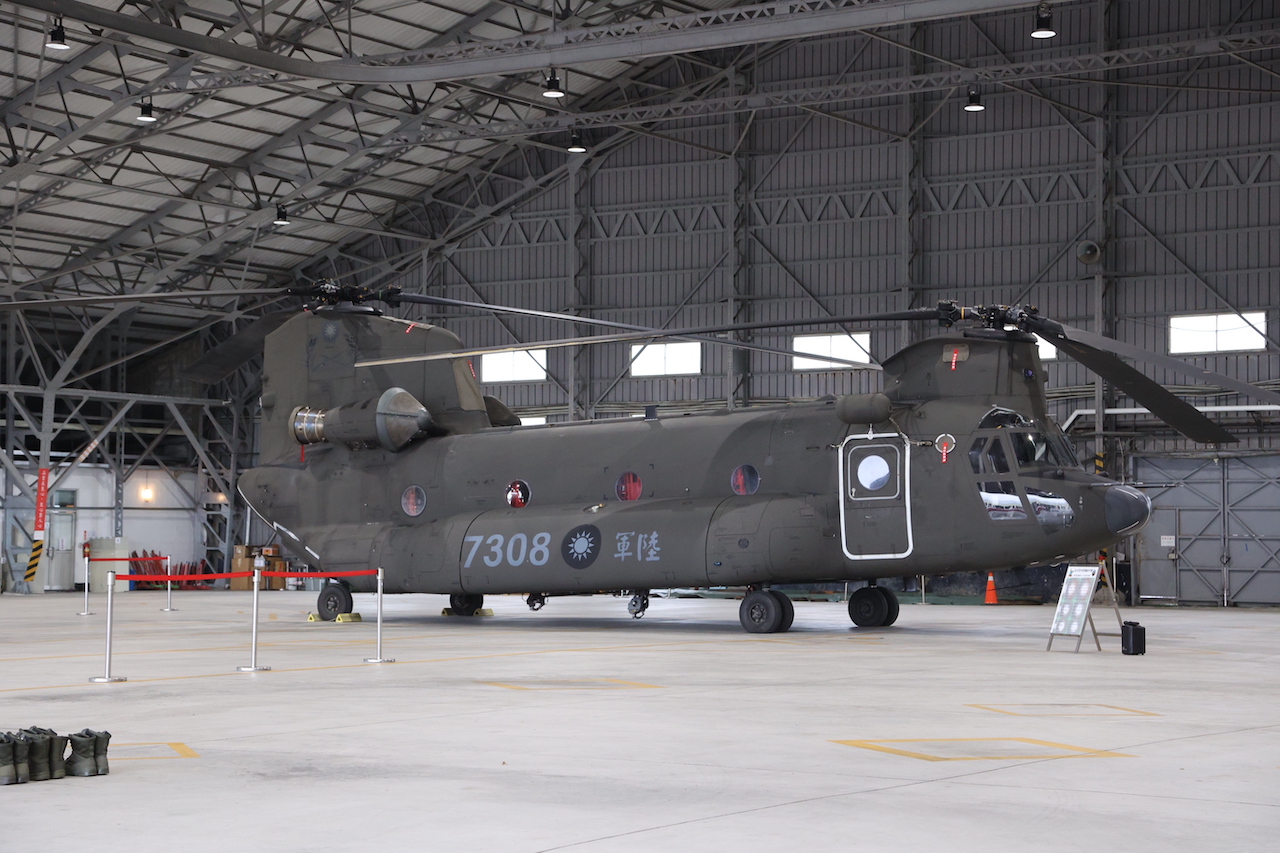
【軍傳媒/軍風大觀園】目前任職於陸軍航空基地勤務廠品質管理科士官長林家瑄,主要負責的是CH-47型的直升機修護檢驗士,國中畢業之後,就是進入到陸軍高中,2年級的時候,依照成績優劣選擇,成績優異的他選則了飛機修護科。

CH-47維修核心,動力與結構的高工時挑戰
一般來說,CH-47維修最耗時的的是引擎、旋翼、傳動系統、結構修理等,這些項目的維修通常包括深度拆解,引擎跟傳動系統算是直升機的心臟跟大動脈,光是拆卸前包括漏空油料及液壓就需要一定的工序,加上完整的檢查、量測、維修或替換零件的工時,可以說非常耗費時間。
此外等到該換的換完,該修的修完,所有零件都安裝回去後,由於旋翼傳動系統還須精準對位與動(靜)態平衡,通常會需要反覆調整與測試,裝至測台驗證性能後,才算真正完成維修。任何飛行器主要動力部分都相同,若有不正常的震動,都會影響到飛行的平衡,甚至造成嚴重的飛安事故。
至於結構修理,由於涉及不同材質的裂損、腐蝕與重建作業,從非破壞性檢測到結構恢復、防腐塗層,作業周期都較長;航電裝備的診斷與重組,尤其是暫態性故障,經常需多次交叉測試釐清故障原因及檢修,因此工時累積就會較長,以確保維修完工品質無虞。


從模組化維修到國外訓練,專業能力的全面養成
目前航勤廠採取計畫性維修,結合主動支援與後送翻修機制,一般來說每架飛機都有自己的保養手冊,因此都會知道預計保養的時間,因此會先行準備進場及拆解鑑定,並被完成備料規劃,同時整合人力與專用設備,並透過平時滾動耗材檢討及長交期料件庫存先行確認,避免因帶料延誤修正進度。另外在實務方面,為了應對不定期的耗損維修需求,航勤廠則是以模組化、更換預防性維修及供應鏈管理為核心。
士官長 林佳勳曾赴美國學機體結構維修,赴美受訓的四個月期間,美軍並沒有區分機型受訓,當時他學的是白鐵結構修理,因此不管是什麼裝備或機型,只要是白鐵結構,林佳勳士官長就知道怎麼修理,另外由於CH-47是雙疊槳,在平衡上會比較困難,這點是與其他機型較為不同的地方。
在美國受訓的期間,結構修理算是最辛苦的班隊,每天都要提15公斤重的工具箱,由於受訓的白鐵維修是人工打卯釘,一整天就是不停的打卯釘。總共學習有六個階段,每個階段有不同的科目,依照不同結構的裂損學習修復結構,計算如何修復才能達到原有結構。


白鐵結構修復目前有個通則,描述個是撞逛下必須具備什麼樣的條件才能修補,而各型機也會有自身的原廠規範準則,得去參照各型機專有的規範來進行維修。
原本是學引擎動力系統維修的他,要升到檢驗士官長,等於要從頭學起,除了原本的動力系統,包括旋翼系統、傳動系統、液壓系統、輔助動力系統通通都要熟悉,因此全部都從原文技令資料開始學,熟悉理解之後,才能在碰到飛機發生狀況時判斷問題的來源。
對於林佳勳士官長來說,航勤廠提供良好的學習環境與資源,協助他能升到檢驗士官長,具備一定專業知識及技能的他,不論未來是繼續留任軍職或退役回到民間,相關的技能都能持續織成他的工作。

Sustaining Heavy-Lift Helicopter Operations: The Professional Development of a CH-47 Maintenance Senior NCO
Sergeant Major Lin Chia-Hsun serves in the Quality Management Section of the Army Aviation Logistics Depot, where he is responsible for inspection and maintenance oversight of CH-47 heavy-lift helicopters. After graduating from junior high school, he entered the Army Senior High School and was selected for the aircraft maintenance program based on his academic performance, laying the foundation for his technical career.
The CH-47 is one of the most complex helicopters to maintain, with its engines, rotor system, transmission system, and structural components requiring extensive time and precision. Maintenance tasks often involve deep disassembly, beginning with procedures such as draining fuel and hydraulic fluids. The engine and transmission system are often described as the “heart and main arteries” of the aircraft, and servicing them requires detailed inspection, measurement, repair, and component replacement. These processes are highly time-consuming but essential for ensuring operational reliability.
After repairs and replacements are completed, reassembly is only part of the process. The rotor and transmission systems must undergo precise alignment and both dynamic and static balancing. This typically involves repeated adjustments and testing, followed by verification on specialized test stands. Any abnormal vibration in the main power system can affect flight stability and potentially create serious safety risks, making accuracy in maintenance critical.
Structural repair adds another layer of complexity. Damage such as cracks, corrosion, and material fatigue must be addressed through non-destructive testing, structural restoration, and anti-corrosion treatment. These procedures require extended work cycles. Meanwhile, avionics systems—especially those with intermittent faults—often demand repeated cross-testing to identify root causes. This significantly increases maintenance time but ensures that systems perform reliably under operational conditions.
To manage these challenges, the Aviation Logistics Depot employs a structured maintenance system that integrates scheduled servicing, forward support, and rear-echelon overhaul. Each aircraft follows its own maintenance manual, allowing teams to plan maintenance cycles in advance. Preparations include disassembly inspection, parts procurement, manpower allocation, and integration of specialized equipment. In addition, the depot conducts ongoing reviews of consumables and prepositions long-lead-time components to avoid delays.
In practice, the depot emphasizes modular replacement, preventive maintenance, and supply chain management. These approaches allow technicians to quickly replace faulty components while ensuring that damaged parts can be repaired and returned to inventory through established maintenance channels.
Sergeant Major Lin also underwent structural repair training in the United States. During the four-month program, training was not limited to specific aircraft types but instead focused on material-based repair techniques, particularly stainless steel structures. This approach enables technicians to apply the same principles across different platforms. However, the CH-47’s tandem rotor configuration presents unique challenges, especially in achieving proper balance, making it more difficult to maintain than many other helicopters.
The training itself was physically demanding. Trainees were required to carry toolkits weighing around 15 kilograms daily and perform manual riveting throughout the day. The program was divided into six phases, each focusing on different types of structural damage and repair methods. Trainees learned how to calculate repair solutions that restore structural integrity to its original standard.
Structural repairs must follow both general engineering principles and original manufacturer specifications. Each aircraft type has its own technical standards, and strict adherence is required to ensure safety and performance.
Originally trained in engine and powerplant systems, Lin had to expand his expertise significantly upon becoming a senior inspector. He needed to master all major systems, including rotor, transmission, hydraulic, and auxiliary power systems. This required studying original technical manuals in detail and developing a comprehensive understanding of the aircraft. Only with this level of expertise can he accurately diagnose and resolve issues when malfunctions occur.
For Sergeant Major Lin, the Aviation Logistics Depot provides a strong professional environment with access to training, resources, and overseas programs. These opportunities have enabled him to build a solid technical foundation. Whether he continues his military career or transitions to the civilian sector in the future, his specialized skills will remain highly valuable.
Ultimately, the work of maintenance personnel like Lin plays a crucial role in sustaining aircraft operations. While their contributions are often less visible, they form the backbone of aviation capability, ensuring that complex platforms like the CH-47 can continue to operate safely and effectively.