

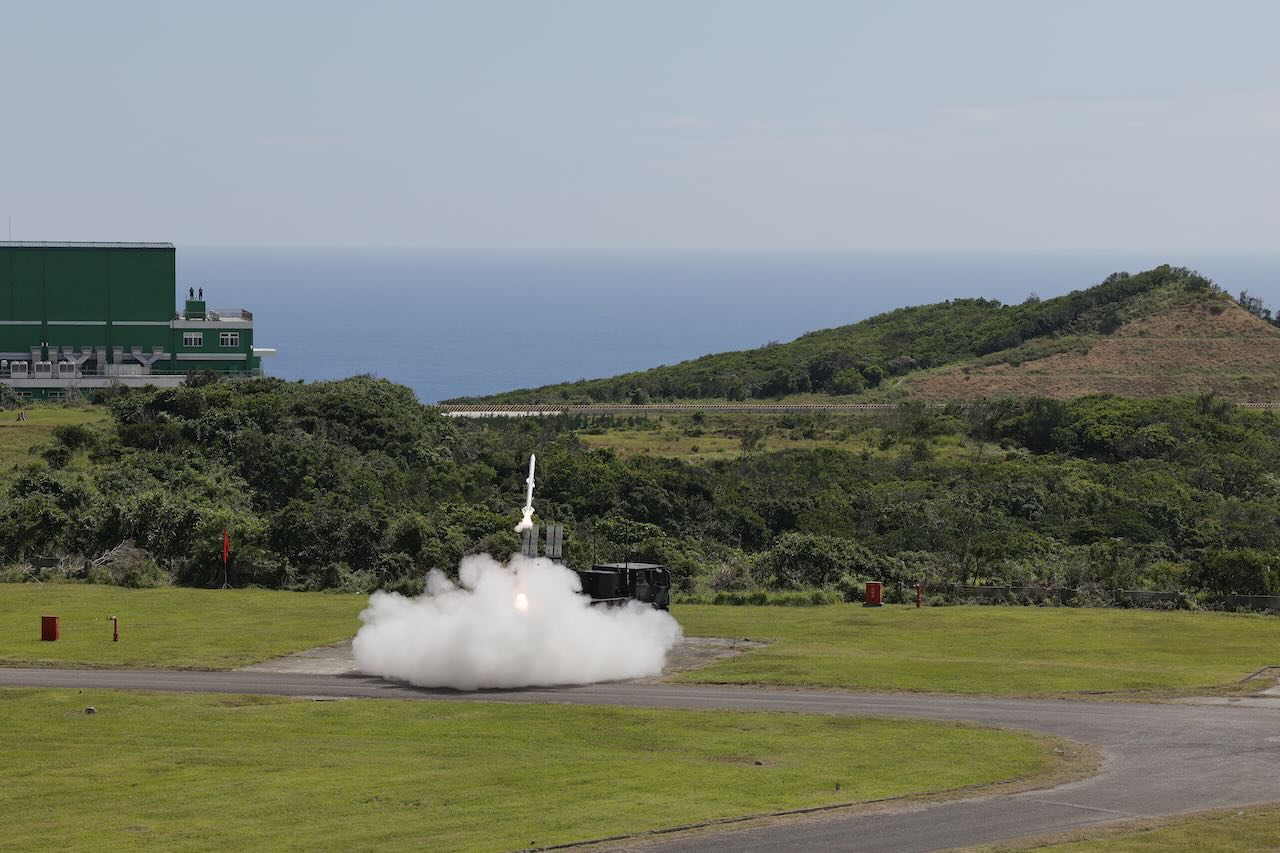
【軍傳媒/外交國防委員會】立法院外交國防委員會本週第一次會議,主題就是「借鏡近期美國與伊朗衝突,檢討我國防空反飛彈系統效能、低成本攔截手段及無人機反制能量」專案報告,國防部在週一的報告中,只有提到在現有飛彈技術基礎上,研製及籌獲可執行遠程火箭彈攔截之低成本防空武器,被動防護方面,則同步籌購及部署誘標、假目標、衛星定位干擾系統及威脅信號產生器等,降低遠程攻擊的損害。從美伊戰爭的經驗來看,開戰前幾天伊朗數千枚彈道飛彈、巡弋飛彈、無人機的反擊,著實對海灣諸國造成一定的困擾,由於伊朗初期廣開地圖炮攻擊周邊國家,一定程度稀釋了防禦壓力,若其針對某一國全力投射,則可能造成更大損害。
從公開數據看,真正考驗防空體系的不是第一次攔得住,而是第幾天開始攔不住。美方對國會說明,對伊作戰前兩天光彈藥就用了約56億美元,六天至少113億美元;美聯社並引述專家指出,美軍在上一輪以伊十二日戰爭中,估計就已用掉約四分之一的THAAD庫存,這次又「很可能再多用掉數百枚」THAAD與愛國者攔截彈。
國2025財年預算文件顯示,PAC-3 MSE的單價約為418.7萬美元;THAAD第17批次攔截彈單價約1277萬美元;SM-3 Block IIA在2025財年的單價約3386萬美元。換句話說,只要敵方逼你持續動用中高層攔截彈,防禦方很快就會進入「每次成功攔截都在燒高價庫存」的狀態。從網路流出的影片,攔截一枚彈道飛彈有用到四枚攔截飛彈才成功的案例,基本的攔截也都是兩枚一組提高攔截率,彈藥消耗將更快速。
攻方的成本結構則完全不同,CSIS對Shahed-136的估計約每架3.5萬美元;Reuters在回顧2024年伊朗大規模攻擊時指出,伊朗那一輪攻擊本身的成本大約只有8000萬到1億美元,但以色列與美英法約旦等國協力攔截的代價卻接近10億美元。這就是現代防空的核心困境,攻方未必要靠高精度武器取勝,只要能用足夠便宜、足夠大量、足夠分波次的目標,把你的高價攔截彈和作戰節奏拖垮,就已經達成戰略效果。


台灣面對解放軍的威脅,除了與伊朗相同的彈道飛彈、巡弋飛彈、長程自殺無人機之外,還多了低價大量的遠程火箭威脅,目前國軍建置長程預警雷達、多元監偵系統、新式機動雷達,用以提早偵測威脅、縮短反應時間、以及提高攔截成功率。不過美軍的鋪路爪雷達及薩德的AN/TPY-2型X波段雷達相繼被低價無人機摧毀,證實美軍過往的防空體系建置觀念在新時代戰爭中已經呈現漏洞,台灣即便通過國防預算增強國防支出,仍可能面臨幾個危機:
- 彈藥存量不足
美伊戰爭前幾天愛國者攔截彈就消耗近千枚,國防部報告強調弓二、弓三、愛國者與機動防空飛彈,也提到強化跑道搶修與重要目標防護,這些都正確;但報告本身並未公開說明在高消耗條件下,各型防空彈能支撐多久。台灣面對的若是解放軍火箭軍、遠火、巡弋飛彈、無人機與消耗型誘餌混合波次,彈藥消耗曲線只會比中東更陡。 - 指管仍過於集中
國防部報告列入新式雷達偵蒐暨干擾系統、陸基雷達、資料鏈路反制與指管系統效能提升,代表已認知電磁與網路戰風險。可是在真正高強度衝突裡,只要少數固定雷達、資料鏈路中繼、指揮所、油彈補給節點被壓制,整體防空即便飛彈尚未打完,也可能先因感測與分配失靈而失效。中東戰事同樣顯示,防空攔截效率仰賴完整感測網與決策鏈,而非單一發射車。 - 高低配失衡
若用中高價攔截彈去打廉價無人機、巡飛彈與誘餌,防禦交換比會快速惡化。美聯社報導就點出,美軍在伊朗戰事中對無人機波次仍感吃力,並引進更便宜的反無人機系統,原因正是「用昂貴飛彈打便宜目標」不可持久。這對台灣尤其重要,因為解放軍最可能先用大量無人機、巡飛彈、電戰與假目標打開窗口,再逼迫我方提早暴露雷達與消耗彈藥。 - 彈藥補充困難
美軍從韓國調動薩德系統,一部分是因爲戰損,一部分是彈藥庫存,外媒包括AP與Bloomberg都指出,攔截彈的問題在於生產速度趕不上消耗速度。台灣在戰時一旦遭封鎖或港空運受威脅,彈藥補給節奏不會像平時軍售交貨那樣運作,台灣之盾若沒有把彈藥再生產能力納入核心設計,則可能很快陷入無彈可用的境地。
立法委員 陳永康就提到,伊朗針對美軍的指揮中心、通訊中心、以色列的淡水淨化廠等加以攻擊並造成一定的破壞,且新型態的反輻射UAV對干擾源造成一定的威脅。空軍自動化防空反制系統從天網、強網、寰網到預計2026年驗收的寰展,的確提高了台灣的防空能力,而目前正在討論的整體作戰指揮系統(Integrated Air and Missile Defense Battle Command System,IBCS)將更整合所有的雷達、感測器與武器。陳永康並指出,防禦很重要,但電網、能源、醫療系統的防護能力則影響整體社會韌性,國防部對於未來的防禦建構,雖然有在規劃,但仍無詳細的報告。
要改進上述的缺陷,雷達與指管系統要更徹底分散。國防部現已列入資料鏈路、雷達與指管整合,下一步應是把更多感測器做成低成本、可替換、可快速轉移的方式,讓防空網在部分關鍵裝備被損毀後仍能繼續分配目標,應該追求整張防空網受到一定損害後還能運作。

立法委員 王定宇在質詢中就提到重點,目前台灣之盾的中高空防禦沒問題,但對遠火的威脅部分應該要加強,國防部承認目前的確沒有有效便宜的方式,但中科院的新攔截系統預計明年會試射,若沒問題將能大幅提升台灣對遠火的防禦能力。另外王委員也提到一個重要觀念,台灣建構長程攻擊能力(例如海馬士),就會迫使解放軍怕被追蹤摧毀而將遠火系統往內陸後退部署,這就能大幅增加台灣的預警時間,隱形的差異很大。
而遠程無人機的防禦部分,王定宇 委員也提到,目前無人機的發展太快,過去標案的方式還沒採購到已經落伍,台灣必須針對這部分加大心力投入,尤其是復合雷達感測的部分,美軍這次在美伊戰爭中也對伊朗的無人機感到頭痛,先進雷達能偵測到高速突穿的飛彈,確將技術層次相對低下的無人機排除,這個經驗國防部必須與美方密切聯繫納入系統建置的評估,也是IBCS的重要性。
國防部已經強調機動地對空飛彈與機動反艦能力,這個邏輯要更完整地延伸到裝填車、補給車、野戰維修、偽裝、假陣地與射後移位程序。從美軍釋出的影片,在絕對空優無差別戰場監視之下真正的問題不是發射車能不能動,而是整個火力單元能否在敵情長時間監偵以及反覆攻擊下生存。
隨著立法院新會期的開始,國防部要能說服在野黨其預算的急迫性,就要破除過往外界的不信任點,另外現代戰爭已經不是單點裝備就能決勝的時代,體系化戰爭考驗的是整體規劃,面對每年國防預算約8.8兆新台幣的解放軍,台灣在國防的投資絕對不能少,但是國家體量的差異,錢要能用在刀口上逐步補足台灣的缺陷,2026年開始世界陷入動盪,台灣必須做好準備。

Can Taiwan Stop the First Wave—and How Many Days Can It Endure?
The U.S.–Iran Conflict Highlights the Attrition Test Facing Taiwan’s Air Defense
At the Legislative Yuan’s Foreign Affairs and National Defense Committee’s first meeting of the new session, the Ministry of National Defense presented a report titled “Drawing Lessons from the Recent U.S.–Iran Conflict: Reviewing the Effectiveness of Taiwan’s Air and Missile Defense Systems, Low-Cost Interception Methods, and Counter-Drone Capabilities.”
In the report delivered yesterday, the ministry primarily mentioned developing and procuring low-cost air defense weapons capable of intercepting long-range rockets based on existing missile technology. In terms of passive defense, it also plans to procure and deploy decoys, dummy targets, satellite navigation jamming systems, and threat signal generators to reduce the damage from long-range strikes.
The recent U.S.–Iran conflict demonstrates that in the first days of war, Iran launched thousands of ballistic missiles, cruise missiles, and drones, causing considerable pressure on the air defenses of Gulf states. Because Iran initially dispersed attacks across multiple countries, the defensive burden was partially diluted. If those attacks had been concentrated against a single country, the resulting damage could have been far greater.
Public data suggest that the real test of an air defense system is not whether it can intercept the first wave, but how many days it can continue intercepting. U.S. briefings to Congress indicated that in the first two days of operations against Iran, about US$5.6 billion worth of munitions were expended, rising to at least US$11.3 billion after six days. The Associated Press also cited experts estimating that during a previous 12-day Iran–Israel conflict, the United States had already used around one-quarter of its THAAD interceptor inventory, and this time hundreds more THAAD and Patriot interceptors were likely expended.
According to U.S. FY2025 budget documents, the unit procurement cost of a PAC-3 MSE interceptor is about US$4.187 million, a THAAD interceptor roughly US$12.77 million, and an SM-3 Block IIA interceptor about US$33.86 million (with a flyaway cost still near US$28.7 million). In other words, once an attacker forces a defender to continually fire mid- to high-tier interceptors, the defender quickly enters a situation where each successful interception consumes extremely expensive inventory. Video circulating online even shows cases where four interceptors were required to destroy a single ballistic missile, while standard doctrine often fires two interceptors per target to improve kill probability—accelerating ammunition consumption.
The attacker’s cost structure is completely different. The CSIS estimates the Iranian Shahed-136 drone costs roughly US$35,000 each. Reuters reported that Iran’s large-scale attack in 2024 cost US$80–100 million, while the combined interception effort by Israel and its partners—the United States, United Kingdom, France, and Jordan—approached US$1 billion.
This reveals the core dilemma of modern air defense: attackers do not need high-precision weapons to achieve strategic effects. By launching large numbers of inexpensive targets in multiple waves, they can exhaust high-value interceptors and disrupt defensive tempo.
For Taiwan, the threat from the People’s Liberation Army includes ballistic missiles, cruise missiles, long-range suicide drones, and large quantities of low-cost long-range rockets. Taiwan has built long-range early-warning radars, multi-layer surveillance systems, and new mobile radar units to detect threats earlier, shorten reaction time, and improve interception rates.
However, recent conflicts show vulnerabilities. U.S. PAVE PAWS radars and the AN/TPY-2 X-band radar used by THAAD have reportedly been destroyed by low-cost drones, demonstrating that traditional air defense architectures face new challenges in modern warfare. Even if Taiwan increases defense spending, several potential risks remain:
1. Insufficient missile stockpiles
Patriot interceptor consumption during the early days of the U.S.–Iran conflict approached a thousand rounds. Taiwan’s air defense network—including Tien Kung II, Tien Kung III, Patriot, and mobile air defense missiles—is expanding, but the government has not publicly explained how long these systems could sustain high-intensity combat. Facing mixed waves of missiles, rockets, drones, and decoys from the PLA, ammunition depletion could occur even faster than in the Middle East.
2. Over-centralized command and control
The defense ministry plans improvements to radar networks, data links, electronic warfare systems, and command infrastructure. Yet in high-intensity conflict, if a small number of fixed radar sites, data-link relays, command centers, or logistics nodes are suppressed, the entire air defense network may fail even before interceptor stocks are exhausted. Modern air defense depends on integrated sensing and decision networks, not individual launchers.
3. Imbalance between high- and low-tier defenses
Using expensive interceptors against cheap drones or decoys quickly worsens the cost-exchange ratio. Reports during the Iran conflict indicated that the U.S. military struggled to counter drone swarms and began deploying cheaper counter-drone systems, because firing expensive missiles at inexpensive targets is unsustainable.
4. Difficulty replenishing munitions
Reports by AP and Bloomberg highlight that interceptor production cannot keep up with wartime consumption. If Taiwan faces blockade or disruption of sea and air transport during conflict, resupply will not proceed like normal arms deliveries. Without domestic production or replenishment capacity, Taiwan’s defensive “shield” could face ammunition shortages.
Legislator Chen Yung-kang noted that Iran targeted command centers, communication hubs, and Israel’s desalination facilities, causing tangible damage, while anti-radiation UAVs also threatened electronic emitters. Taiwan’s automated air defense command systems—from Tien-Wang and Chiang-Wang to Huan-Wang and the upcoming Huan-Zhan system expected in 2026—have strengthened national defense. The future Integrated Air and Missile Defense Battle Command System (IBCS) could further integrate radars, sensors, and weapons.
Chen also stressed that civil infrastructure protection—power grids, energy supply, and healthcare systems—is equally vital to national resilience, though detailed planning remains limited.
To address current weaknesses, radar and command systems must become more distributed and resilient. Sensors should be low-cost, replaceable, and rapidly deployable, allowing the air defense network to continue functioning even if key nodes are destroyed.
Legislator Wang Ting-yu emphasized another issue: while Taiwan’s medium- and high-altitude air defense is relatively strong, defense against long-range rocket artillery must be strengthened. The defense ministry acknowledged that no effective low-cost solution currently exists, but the National Chung-Shan Institute of Science and Technology plans to test a new interceptor next year that could significantly enhance defense against long-range rockets.
Wang also noted that developing long-range strike capabilities such as HIMARS could force the PLA to deploy rocket systems deeper inland, thereby increasing Taiwan’s warning time.
Regarding long-range drones, Wang pointed out that procurement processes cannot keep pace with the rapid development of UAV technology. Taiwan must invest more heavily in this area, particularly in multi-sensor radar detection systems, an area where even the U.S. struggled during the Iran conflict.
The Ministry of National Defense has emphasized mobile surface-to-air missile and anti-ship capabilities, but the concept must extend to reload vehicles, logistics, field maintenance, camouflage, decoys, and shoot-and-scoot procedures. Modern battlefields with persistent surveillance mean survivability depends not only on launchers but on the entire fire unit’s ability to survive continuous detection and attack.
As Taiwan’s legislature begins its new session, convincing lawmakers of the urgency of defense spending requires restoring public trust. Modern warfare is no longer decided by individual weapon systems but by integrated operational architectures. Facing the PLA’s annual defense budget of roughly NT$8.8 trillion, Taiwan must invest carefully but decisively, addressing structural weaknesses.
With global instability rising in 2026, Taiwan must be prepared.
將英文翻譯濃縮
Can Taiwan Stop the First Wave—and For How Long?
The U.S.–Iran Conflict Highlights the Attrition Challenge of Air Defense
Taiwan’s Legislative Yuan recently reviewed a Ministry of National Defense report drawing lessons from the U.S.–Iran conflict, focusing on the effectiveness of Taiwan’s air and missile defense systems, low-cost interception methods, and counter-drone capabilities. The ministry emphasized developing cheaper interceptors for long-range rockets and strengthening passive defenses such as decoys, dummy targets, GPS jamming, and threat signal generators.
Recent fighting showed how large missile and drone barrages can strain air defenses. Iran launched thousands of ballistic missiles, cruise missiles, and drones, creating significant pressure on regional defenses. The key challenge for modern air defense is not stopping the first wave, but sustaining interceptions over time.
U.S. data indicate enormous costs. In the first two days of operations against Iran, about $5.6 billion in munitions were used, rising to over $11 billion within six days. Interceptors are extremely expensive: a PAC-3 MSE costs about $4.2 million, THAAD about $12.8 million, and SM-3 Block IIA over $33 million. Multiple interceptors are often fired at a single missile to increase success rates, accelerating depletion.
By contrast, attackers rely on cheap weapons. The Shahed-136 drone costs roughly $35,000, allowing mass attacks that force defenders to expend costly missiles. This cost imbalance is a core dilemma of modern air defense: large numbers of inexpensive weapons can exhaust advanced defense systems.
For Taiwan, threats include PLA ballistic missiles, cruise missiles, drones, and large numbers of long-range rockets. Taiwan has built long-range early-warning radars and mobile sensors to improve detection and response. However, recent conflicts show vulnerabilities in centralized radar and command networks.
Several challenges remain:
- Limited missile stockpiles – Sustained combat could rapidly deplete interceptors.
- Centralized command systems – Destruction of key radars or command nodes could paralyze defenses.
- Cost imbalance – Expensive missiles used against cheap drones and decoys.
- Resupply difficulties – Wartime blockade could disrupt ammunition replenishment.
Taiwan is improving automation and command systems and plans to integrate future networks such as the Integrated Air and Missile Defense Battle Command System (IBCS). Legislators also stress strengthening defenses against long-range rockets and expanding counter-drone capabilities.
Ultimately, modern air defense depends on distributed sensors, resilient command networks, and balanced interception systems rather than individual weapons. Facing the PLA’s far larger military resources, Taiwan must invest carefully to strengthen overall defense resilience and prepare for prolonged conflict.